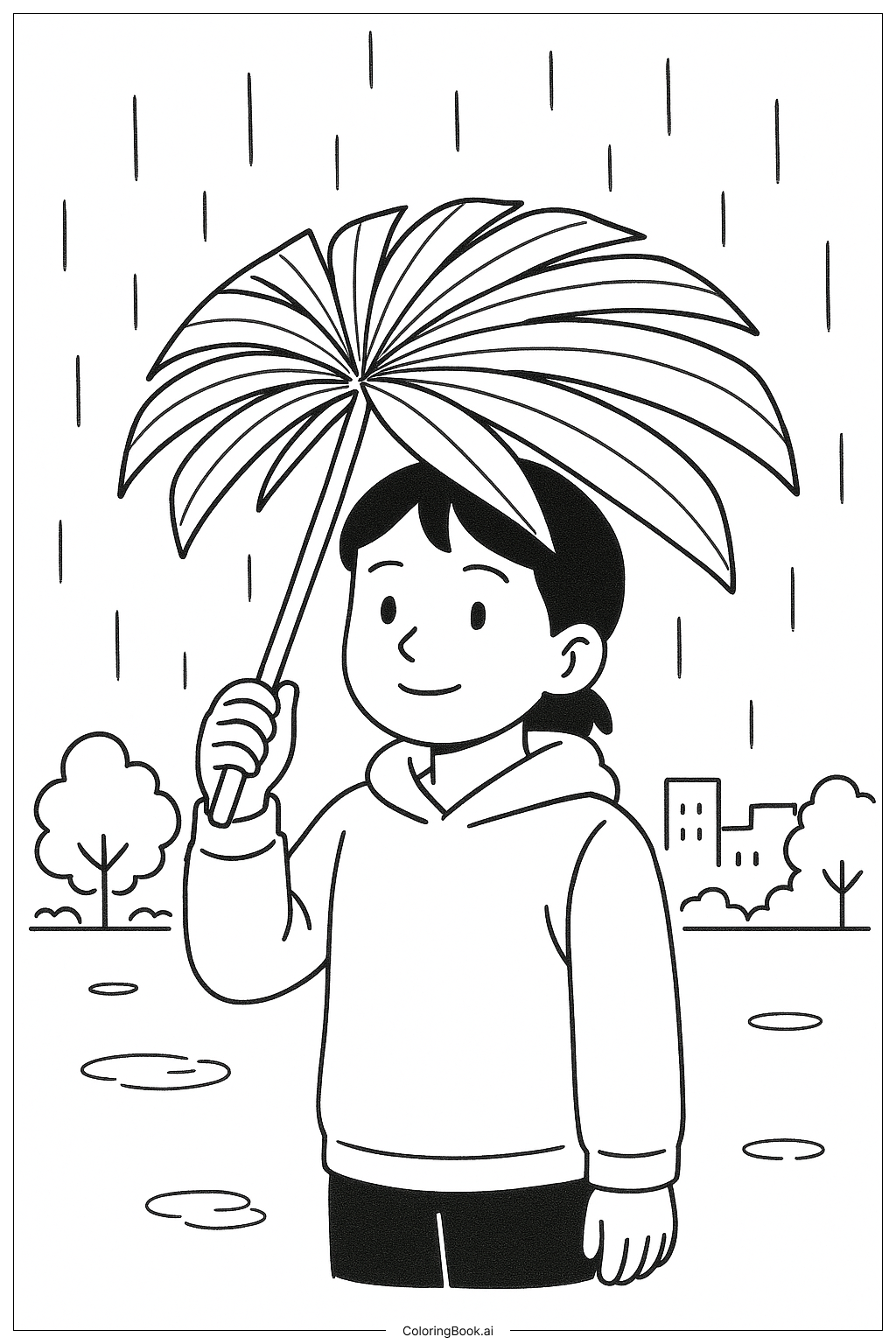
Coloring tips: How to color Palm Leaf Rain Hat coloring page well?
Start by choosing natural, earthy tones for the woven palm leaves. Light yellow, warm tan, golden straw, and soft olive green all work well. Real palm leaf hats range from pale yellow when freshly made to deep brown as they age, so you can pick whichever stage you like. Use a darker shade of the same color to add shadows along the woven strips, which helps the hat look three-dimensional. Color the underside of the brim slightly darker than the top to show depth. If you want a creative look, try mixing green and brown tones across different sections to suggest fresh and dried leaves woven together. Leave some areas lighter near the crown to show where sunlight hits. You can also add a thin colored ribbon or band around the base of the crown for a fun decorative touch.
Coloring challenges: Which parts are difficult to color and need attention for Palm Leaf Rain Hat coloring page?
• Woven Pattern Consistency: The crisscross weave pattern covers the entire surface of the hat. Keeping your colors consistent across all the interlocking strips is tricky. Each strip needs to follow through in one direction while a different strip crosses over it in another direction. Losing track of which strip is on top can make the weave look flat or confusing. Take your time and work section by section.
• Subtle Color Variation: Because the hat is made from natural palm leaves, the color differences between areas are small and gradual. Using colors that are too different from each other can make the hat look unnatural. The challenge is to blend similar tones carefully so the transitions feel smooth and realistic rather than patchy.
• Curved Surface Shading: The brim curves downward and the crown curves upward, so light hits different parts of the hat at different angles. Adding shading to show this curve requires placing darker tones on the undersides and lighter tones on the raised areas. Getting this shading right is challenging, especially around the brim edge where the curve is most pronounced.
• Fine Line Details: The individual leaf strips are drawn with thin, closely spaced lines. Coloring neatly inside such narrow spaces without going over the lines takes a steady hand and a sharp pencil or fine-tipped marker. Younger colorists may find this part especially difficult and may want to use broader strokes across the whole section instead.
Benefits of coloring books: Advantages of drawing Palm Leaf Rain Hat coloring page
Coloring this Palm Leaf Rain Hat is a wonderful activity for kids and adults alike. It helps build fine motor skills as you carefully fill in the narrow woven strips and follow the curved lines of the brim. Staying inside small, detailed areas trains hand-eye coordination and improves pencil control over time. The repetitive nature of coloring the weave pattern is calming and meditative, making this a great way to unwind and reduce stress after a busy day. It also sparks curiosity about traditional crafts and cultures around the world. Children can learn that people in many countries weave palm leaves by hand to make useful, beautiful objects. Choosing colors for the hat encourages creative thinking and decision-making. Experimenting with different shades of tan, green, and brown helps develop an understanding of how color and shading create depth. Completing the full image gives a strong sense of accomplishment. This page is suitable for a wide range of ages, from young children who enjoy filling broad areas to older kids and adults who want to try careful detail work. It is a simple, screen-free way to spend creative time alone or with family.