Coloring tips: How to color Palm Leaf Friendly Turtle coloring page well?
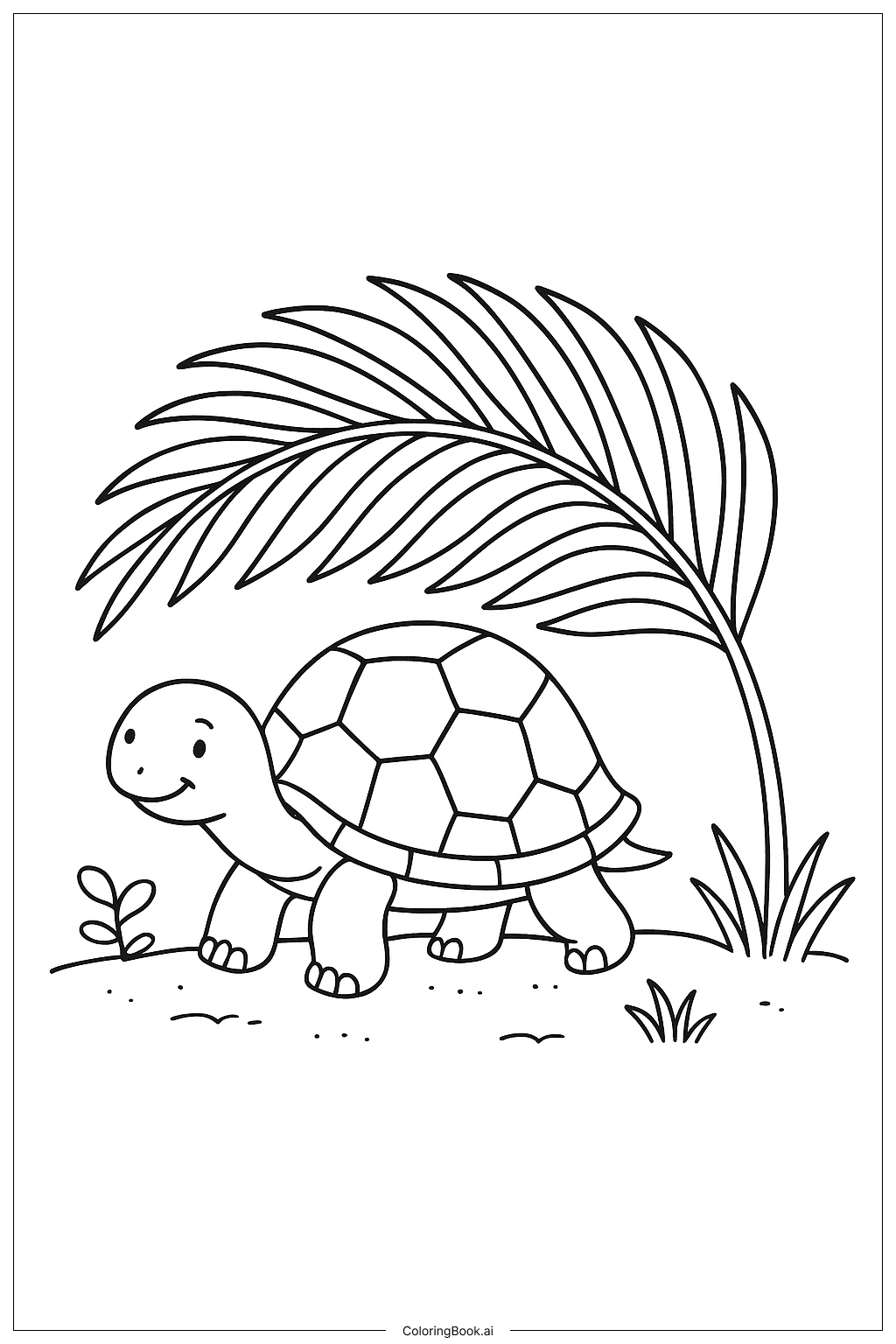
Start with the turtle's shell. Use green shades like olive or forest green for the outer rim, and lighter greens or yellows for the inner shell sections. You can add dark brown lines along the shell's borders to make each segment pop. For the turtle's head, legs, and tail, use a soft medium green or teal. Give the eyes a bright color like black with a white highlight dot to make them look alive. For the palm leaves, try different shades of green — bright lime for younger leaves and deeper emerald for older ones. Add yellow-green tips to the leaflets for a sunny tropical feel. Use light brown or tan for any visible ground or stem areas. Feel free to use a warm blue or soft turquoise in the background to suggest a beachy, tropical atmosphere. Don't be afraid to mix and blend colors to make the scene feel vibrant and full of life.
Coloring challenges: Which parts are difficult to color and need attention for Palm Leaf Friendly Turtle coloring page?
• Shell Pattern Complexity: The turtle's shell is divided into multiple geometric sections, each with its own border. Staying within each small section without bleeding into neighboring areas requires steady hands and careful attention. Using fine-tipped colored pencils or markers will help maintain clean lines throughout the shell.
• Layered Palm Leaves: The palm fronds overlap each other at various angles, making it tricky to decide which leaf sits on top and which one falls behind. Coloring overlapping leaves with slightly different shades of green helps create a natural sense of depth and dimension. This spatial thinking can be a fun challenge for older colorists.
• Small Details on the Turtle's Body: The turtle's face, legs, and tail contain fine texture lines that suggest skin patterns. These small markings are easy to accidentally cover with a single flat color. Taking time to color around them or using lighter pressure near the lines helps preserve the character's charming detail.
• Consistent Color Harmony: With so many different elements — the shell, the skin, and multiple palm leaves — keeping the overall color palette balanced can be difficult. Choosing two or three main greens and sticking to them throughout the image helps everything feel unified rather than chaotic.
• Background Space Management: The open spaces between the palm leaves and around the turtle can be hard to fill without making the image feel crowded. Using soft, cool background tones and applying gentle gradients in these areas helps frame the turtle without overwhelming the main subject.
Benefits of coloring books: Advantages of drawing Palm Leaf Friendly Turtle coloring page
Coloring this friendly turtle among palm leaves offers a wonderful range of benefits for children and adults alike. For younger kids, tracing around the turtle's shell sections and the long palm leaflets helps build fine motor skills and hand-eye coordination. Learning to stay within lines and switch between colors strengthens focus and patience in a fun, low-pressure way. The tropical nature scene also sparks curiosity about real-world animals and plants, making it a gentle introduction to learning about turtles and palm trees. For older children and teens, choosing a cohesive color palette and handling the layered leaves encourages creative decision-making and color theory thinking. The process of blending greens and adding depth to the shell can feel genuinely satisfying and boost confidence. For Adults, the detailed shell pattern and overlapping fronds offer a calming, meditative coloring experience that helps reduce stress and quiet a busy mind. Spending focused time on a creative task like this promotes mindfulness and a sense of accomplishment. Overall, this image combines the joy of nature with the pleasure of art, making it a rewarding coloring experience for everyone.