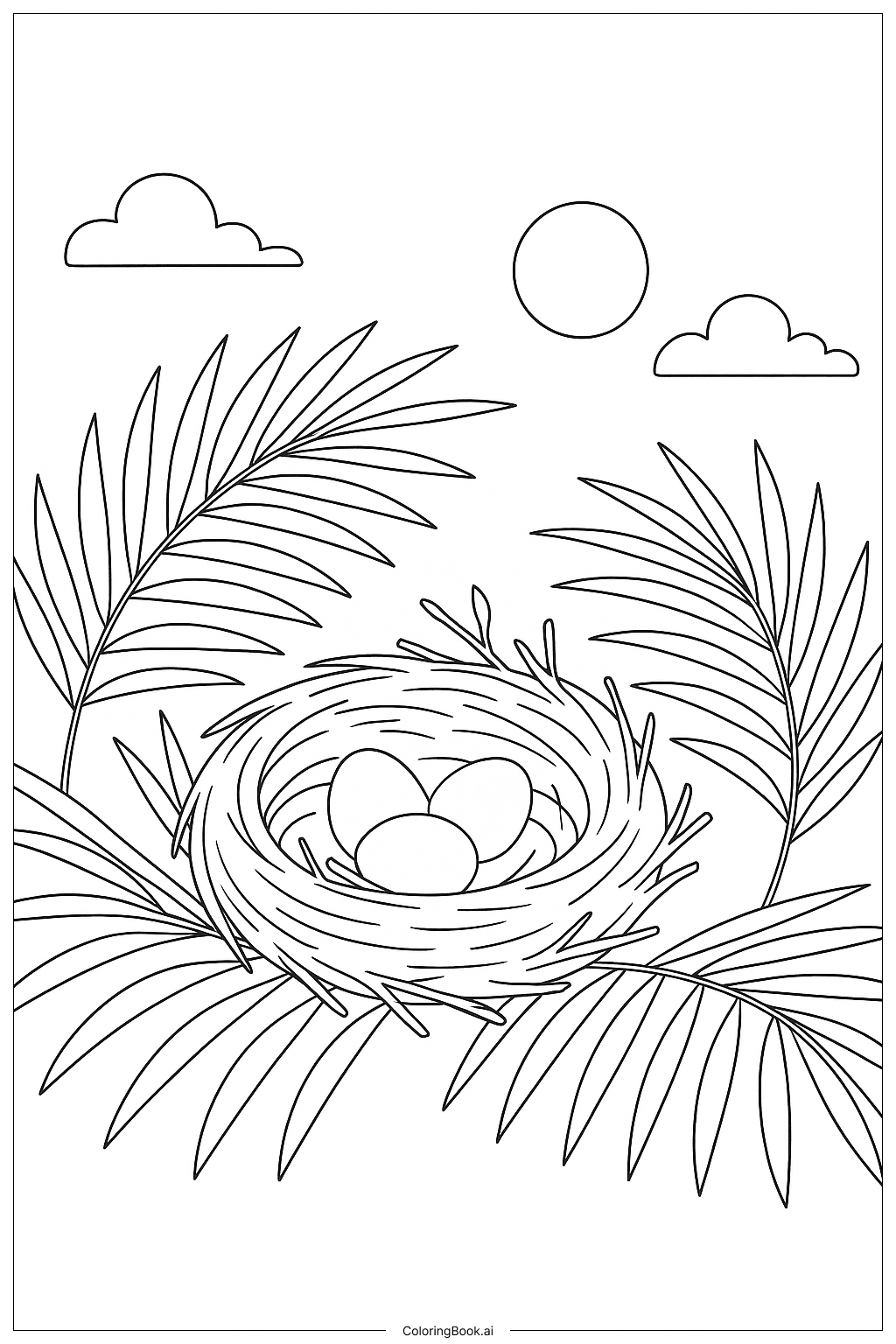
Coloring tips: How to color Palm Leaf Bird Nest coloring page well?
Use different shades of green for the palm leaves to bring the nest to life. Start with lighter greens for the new, fresh parts of the leaves, and add darker greens or browns for the older, more dried parts. You can color the veins with a slightly darker color for contrast. For the base of the nest, try warm browns or tan colors to show the dried fibers and twigs. Adding soft yellow or gold highlights can give a sunlit effect. Feel free to experiment with blending colors softly to show the texture of the leaves. You could also add a little blue or gray in the background to suggest the sky or a peaceful natural setting.
Coloring challenges: Which parts are difficult to color and need attention for Palm Leaf Bird Nest coloring page?
• Leaf Texture Complexity: The detailed veins and lines on the palm leaves require careful coloring to capture their realistic texture. It can be tricky to color small veins without losing detail.
• Overlapping Layers: The nest is made of many overlapping palm leaves. Maintaining the sense of depth while coloring requires shading and color variation to separate the layers clearly.
• Subtle Color Transitions: The natural colors of palm leaves vary from green to brown as they age. Blending these colors smoothly is a challenge to avoid harsh lines and make the nest look natural.
• Fine Detail Areas: Some thin strands and curled leaf edges are very narrow. Coloring within these small spaces without going outside the lines demands patience and a steady hand.
• Balancing Light and Shadow: To show the three-dimensional shape of the nest, you need to add shadows and highlights carefully. Understanding where light falls on curved leaves is essential for realistic coloring.
Benefits of coloring books: Advantages of drawing Palm Leaf Bird Nest coloring page
Coloring this Palm Leaf Bird Nest helps develop fine motor skills because of the detailed leaf veins and small, overlapping sections. It encourages attention to detail and patience as you carefully apply different colors and shading. This image also builds understanding of natural textures and how light interacts with objects, improving observational skills. For children, it can be a fun way to learn about nature, birds, and the use of earthy colors. Coloring the nest inspires creativity in blending colors and making realistic or imaginative choices, which boosts artistic confidence. Overall, it offers a relaxing and educational experience suited for Boys and Girls alike.