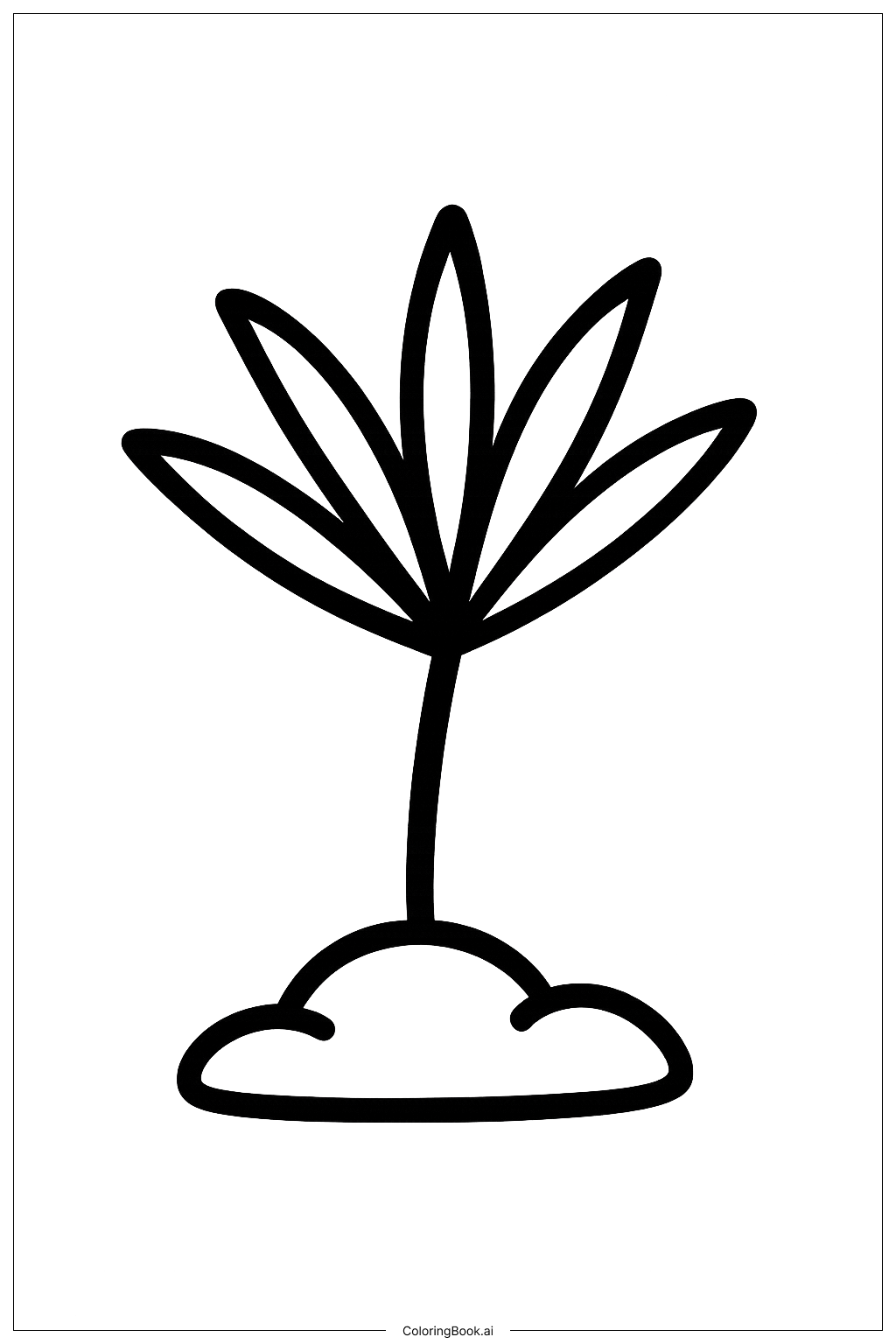
Coloring tips: How to color Palm Leaf Baby Palm coloring page well?
Try using various shades of green to bring the Palm Leaf Baby Palm to life. Start with a light green base for the leaflets, then add medium and dark greens to highlight the natural shadows and depth. You could also experiment with yellow-green for a bright and fresh appearance. For the central stem, consider a slightly brownish green to show its strength. Feel free to add gentle touches of warm colors like light yellow or soft brown along the edges to mimic sunlight hitting the leaves. Using colored pencils or markers with fine tips will help you color within the narrow leaflets carefully.
Coloring challenges: Which parts are difficult to color and need attention for Palm Leaf Baby Palm coloring page?
• Narrow Leaflets: The thin and long shape of each leaflet requires careful and precise coloring to stay within the lines.
• Layered Overlaps: Because the leaflets overlap slightly, distinguishing where one leaflet ends and another begins can be tricky when shading.
• Color Blending: Achieving the natural gradient of greens from light to dark may be challenging, requiring smooth blending techniques.
• Central Stem Detailing: The stem is narrow but holds the entire leaf structure, so coloring it evenly without making it too bold or faint takes practice.
• Maintaining Symmetry: The palm leaf’s balance depends on the symmetry of its leaflets, so uneven coloring could disrupt the natural look.
Benefits of coloring books: Advantages of drawing Palm Leaf Baby Palm coloring page
Coloring this Palm Leaf Baby Palm helps improve fine motor skills and hand-eye coordination by requiring detailed attention and control. It encourages observation of nature, teaching children about plant shapes and structures. The exercise of blending greens enhances understanding of colors and shading. Coloring this image also promotes relaxation and patience due to its repetitive and careful strokes. Overall, it fosters creativity while connecting young artists with natural elements through art.