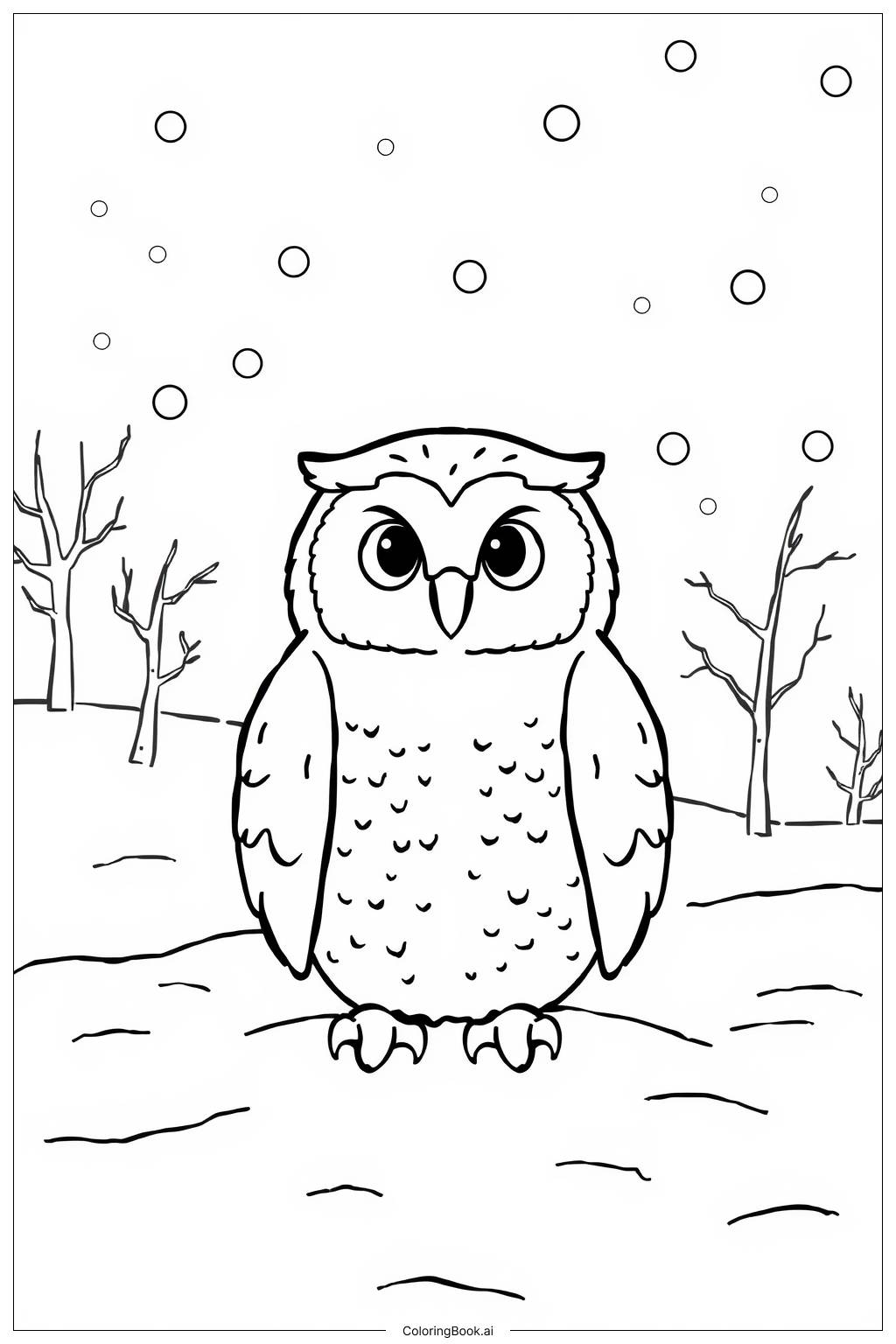
Coloring tips: How to color Snowy Owl in Winter coloring page well?
Start with the owl's body using soft white and very light gray to show its snowy feathers. Add small dark brown or black spots and streaks across the wings and back to bring out the feather texture. Use a warm yellow or golden color for the eyes to make them stand out. The beak can be a light gray or pale blue-gray. For the branch, try dark brown with hints of gray. Use icy blue, pale lavender, and white for the snow and background to create a cold winter feel. Add light blue for shadows in the snow to give it depth. Snowflakes can be left white or colored in pale silver. Pine trees in the background look great in deep green or blue-green with white snow on top. Keep the overall color palette cool and soft to match the peaceful winter mood. Don't be afraid to blend light colors together for a smooth, frosty effect.
Coloring challenges: Which parts are difficult to color and need attention for Snowy Owl in Winter coloring page?
• Feather Detail and Layering: The snowy owl has many overlapping feathers, each with its own spots and fine lines. Coloring each feather individually while keeping the overall look consistent takes patience. It is easy to make the feathers look flat, so try using lighter and darker shades of the same color to create depth and dimension.\n\n• Maintaining a White Base: Since snowy owls are mostly white, it can be tricky to color them without losing that bright, clean look. Pure white space can seem empty, so the challenge is adding just enough light gray or blue shadow to suggest form without making the owl look dirty or dull.\n\n• Eyes as a Focal Point: The large round eyes are the most expressive part of the owl. Getting the gradient right — from a bright yellow or gold center to darker edges — requires careful blending. Adding a small white highlight dot can make the eyes look alive and glossy, but placing it correctly takes a steady hand.\n\n• Snow and Background Depth: The winter background with falling snowflakes, icy branches, and snow-covered trees needs subtle color variation. Using only flat white can make the scene look empty. Layering soft blues, purples, and grays helps create a sense of cold air and distance, but balancing these tones without overpowering the owl requires careful planning.\n\n• Talon and Branch Texture: The owl's talons gripping the branch have sharp curves and fine details. Coloring the rough bark texture of the branch alongside the smooth, curved talons in contrasting tones adds realism but demands precision in small spaces.
Benefits of coloring books: Advantages of drawing Snowy Owl in Winter coloring page
Coloring this snowy owl image offers a wonderful range of benefits for kids and adults alike. The intricate feather patterns encourage focus and fine motor skills, helping younger children practice control with their coloring tools. Staying inside the lines of small details builds patience and concentration over time. For older kids and teens, experimenting with color blending and shading on the feathers introduces basic art techniques in a fun, low-pressure way. The calm winter scene naturally promotes a sense of relaxation and mindfulness. Taking time to color a peaceful nature image can help reduce stress and quiet a busy mind. Learning about snowy owls through this image also sparks curiosity about wildlife and nature. Kids may want to find out where snowy owls live, what they eat, and how they survive in cold climates. This makes coloring both a creative and an educational activity. Sharing the finished artwork with family or friends also builds confidence and a sense of pride. Overall, this coloring page is a great way to combine creativity, learning, and relaxation in one enjoyable activity.