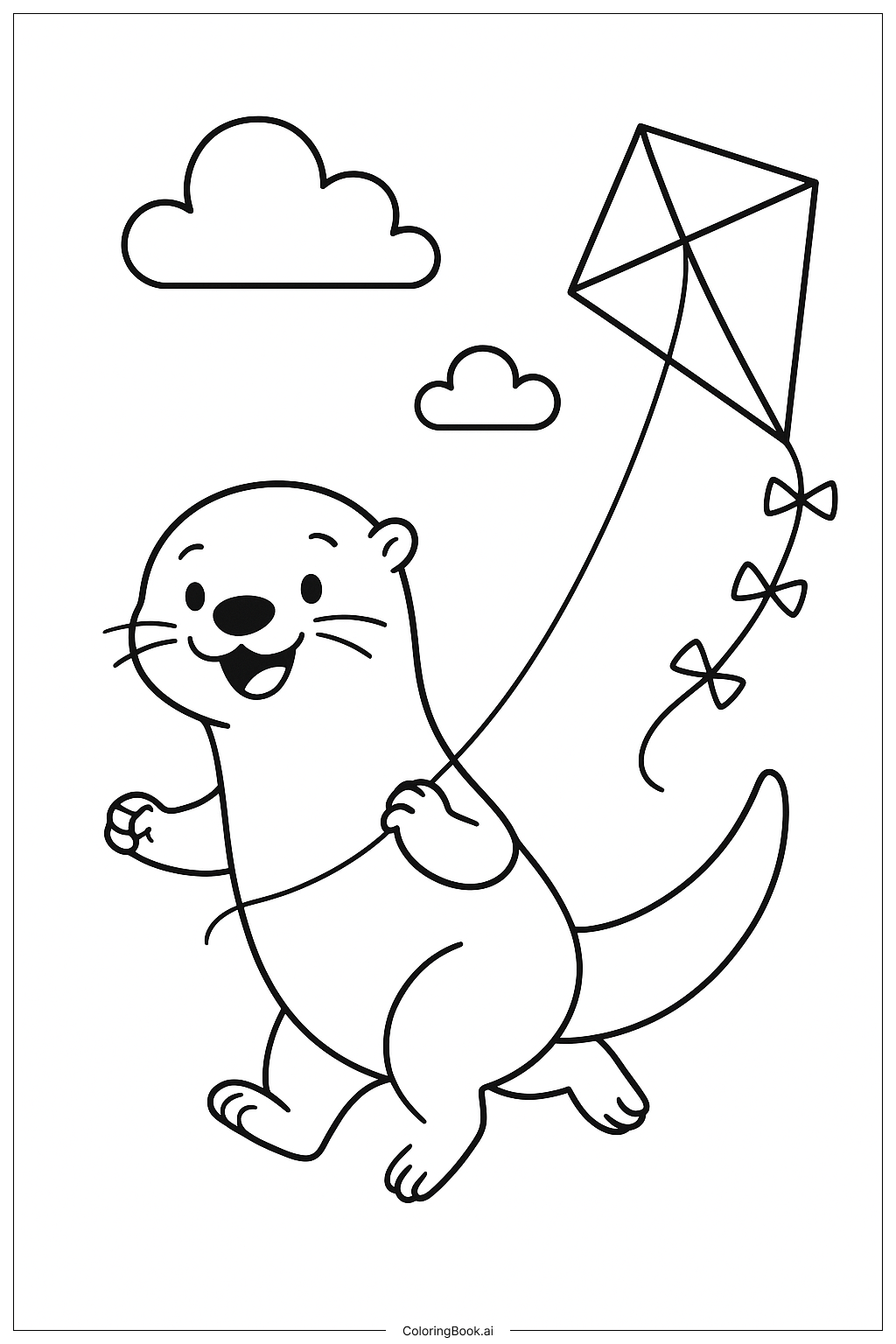
Coloring tips: How to color Otter With Kite coloring page well?
Start with the otter's fur. Use warm brown or golden tan tones for the body and a lighter cream or beige for the belly and face. Add a bit of darker brown around the edges to give the fur some depth.
For the kite, go bold and bright! Try red, yellow, and blue sections to make it pop against the sky. The kite tail ribbons look great in alternating colors like orange and purple.
Color the sky a soft light blue. Add touches of white or pale lavender for the clouds to give them a fluffy feel.
Use bright green for the grass on the riverbank. The reeds near the water can be a darker olive green or tan.
Paint the water in gentle shades of teal or aqua blue. Add wavy lighter blue lines to suggest ripples and movement.
Keep the kite string a simple gray or light yellow so it stands out clearly without overpowering the rest of the image.
This image is perfect for experimenting with a rainbow of colors. Have fun and let your imagination fly just like the kite!
Coloring challenges: Which parts are difficult to color and need attention for Otter With Kite coloring page?
• Otter Fur Texture: The otter's fur has many small curved lines that suggest soft, layered hair. Coloring within these tiny lines without going over the edges can be tricky, especially around the face, paws, and belly area. Using a fine-tipped colored pencil or a thin marker helps keep things neat. Try layering a light base color first, then add darker shades on top to build a natural fur look.
• Kite Sections and Symmetry: The kite is divided into multiple geometric sections. Keeping each section evenly colored without bleeding into the neighboring parts takes patience. If you want the kite to look balanced, try to mirror your color choices on each side. Using markers with a steady hand or colored pencils with careful strokes works best here.
• Kite Tail Ribbons: The long flowing tail has several small ribbon bows spaced along it. Each bow is quite small and detailed. Filling in these tiny shapes with alternating colors adds visual interest, but requires careful control to avoid coloring outside the bow outlines.
• Sky and Background Depth: The background includes both sky and water, and making these two areas look distinct while still feeling connected is a real challenge. Blending light blue into a slightly deeper blue for the water, while keeping the sky soft and airy, helps create a sense of depth and distance in the scene.
• Kite String Line: The thin diagonal line of the kite string stretches from the otter's paw up to the kite. Because it is so narrow, it is easy to accidentally cover it with background color. Consider leaving it uncolored or tracing it carefully with a light gray before filling in the surrounding sky.
Benefits of coloring books: Advantages of drawing Otter With Kite coloring page
Coloring this fun otter and kite scene offers a wonderful mix of creative and developmental benefits for kids and adults alike.
For young children, the image helps build fine motor skills. Carefully coloring the otter's fur, the kite sections, and the small ribbon bows on the tail trains hand-eye coordination and steady pencil control. These are foundational skills that support writing and other detailed tasks.
The outdoor setting sparks creativity and imagination. Kids can invent their own color combinations for the kite and sky, encouraging free thinking and personal expression. There is no single right answer, which builds confidence in creative decision-making.
Focusing on a detailed coloring page also helps children practice concentration and patience. Working through each part of the image, one section at a time, teaches kids how to stay with a task from start to finish.
For older children and adults, the image offers a relaxing and mindful activity. The gentle theme of an otter flying a kite by the water evokes feelings of calm and playfulness. Spending quiet time coloring can reduce stress and provide a healthy mental break from screens and daily pressures.
Completing the page also gives a real sense of accomplishment. Seeing a finished, colorful piece of art that you created yourself is genuinely satisfying and motivating for colorists of all ages.