Coloring tips: How to color Otter With Crab Friend coloring page well?
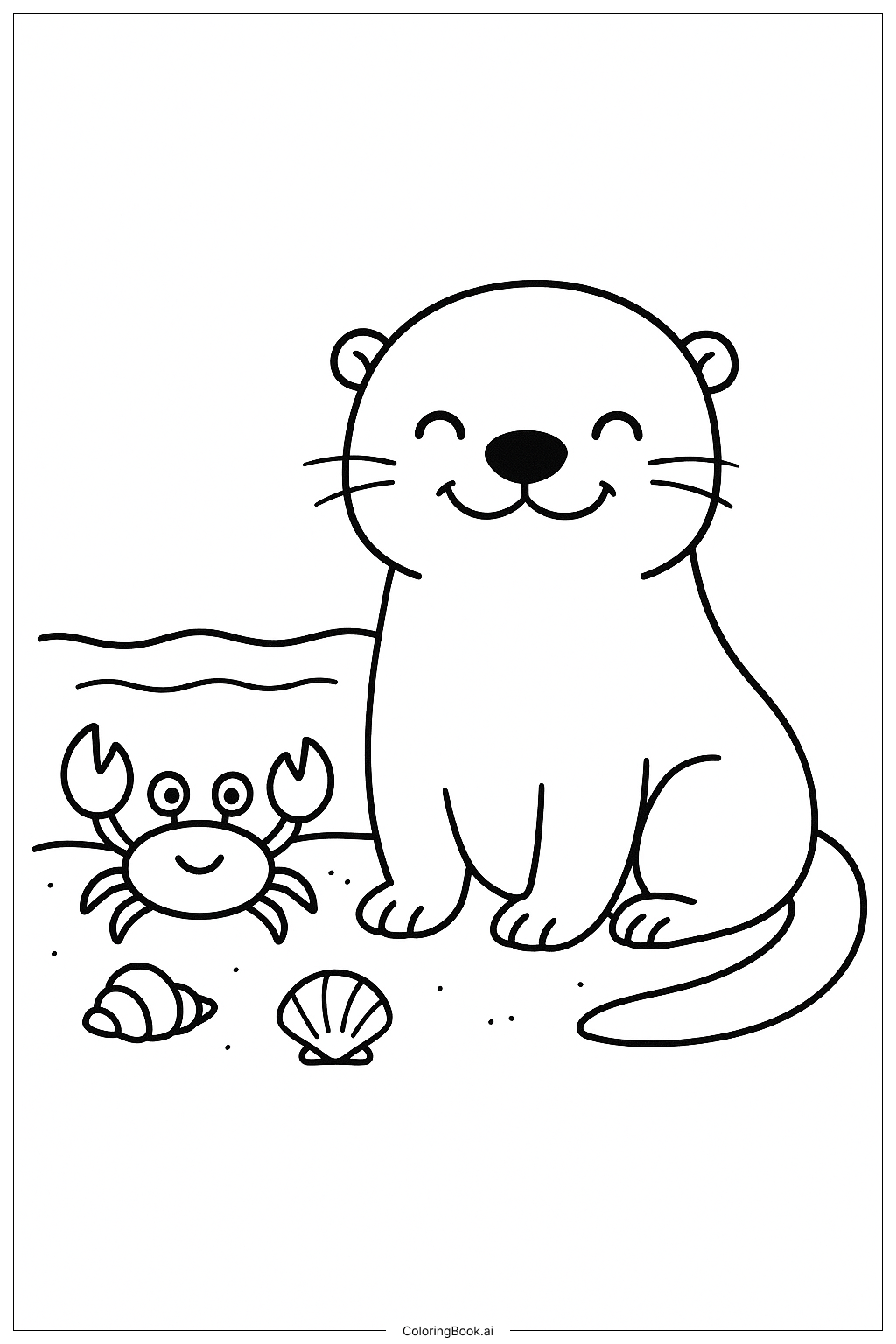
Start with the otter's body using warm shades of brown, like caramel or chestnut, for the main fur. Use a lighter tan or cream color for the belly area to show the softer underfur. The crab looks great in classic orange or red, but you can also try a fun coral or even a bright pink for a creative twist. Color the water in soft blues and teals, adding lighter strokes to show the ripples and bubbles. Use white or very pale blue for the foam and splash details. The otter's eyes can be dark brown with a tiny white highlight to make them look shiny and alive. Feel free to add your own background — a sunny sky, ocean waves, or even an underwater scene. Don't be afraid to mix colors and experiment. There are no wrong choices. Have fun and make it your own!
Coloring challenges: Which parts are difficult to color and need attention for Otter With Crab Friend coloring page?
• Otter's Fur Texture: The otter's fur has many small, overlapping lines that suggest a fluffy, layered coat. Coloring these areas evenly without making the fur look flat is tricky. Try using short, light strokes that follow the direction of the fur lines to build up a natural, textured look gradually.
• Crab's Small Details: The crab sitting on the otter's belly has tiny claws, segmented legs, and a rounded shell with fine line details. These small shapes are close together and can be hard to fill neatly without going outside the lines. Use a sharp colored pencil or a fine-tip marker for better control in these tight spaces.
• Water and Ripple Effects: The rippling water around the otter includes curved lines and overlapping wave shapes. Blending multiple shades of blue and teal smoothly to create a sense of movement and depth requires patience. Layering lighter and darker tones gradually helps achieve a realistic water effect.
• Belly and Body Contrast: Showing the difference between the otter's darker back fur and its lighter, softer belly fur within a single figure takes careful color selection. If both areas are the same tone, the figure can look two-dimensional. Using at least two shades of brown or tan helps separate these zones naturally.
• Bubbles and Small Accents: The tiny bubbles floating around the scene are very small circular shapes. Leaving them white or using a very light color without accidentally filling them in with darker shades nearby can be challenging, especially for younger colorists. Working slowly around these details makes a big difference.
Benefits of coloring books: Advantages of drawing Otter With Crab Friend coloring page
Coloring this friendly otter and crab scene offers a wonderful mix of fun and learning for kids of all ages. Staying inside the lines and handling small details like the crab's claws and the water ripples helps build fine motor skills and hand-eye coordination. These are important skills that support writing and other everyday tasks.
Choosing colors for the fur, water, and crab encourages creative thinking and color awareness. Kids learn how colors work together and how light and dark shades can make a picture look more real and interesting.
The calming nature of coloring also helps children slow down, focus, and relax. It can be a great quiet-time activity after a busy day, helping to reduce stress and improve concentration.
The sweet friendship between the otter and the crab makes this page a great conversation starter too. Parents and kids can talk about ocean animals, friendship, and kindness while coloring together. It turns a simple activity into a meaningful bonding moment.
For older kids, the water texture and fur details offer a gentle challenge that builds patience and attention to detail. Overall, this page is a delightful way to spark imagination, grow important skills, and simply enjoy the joy of creating something colorful and beautiful.