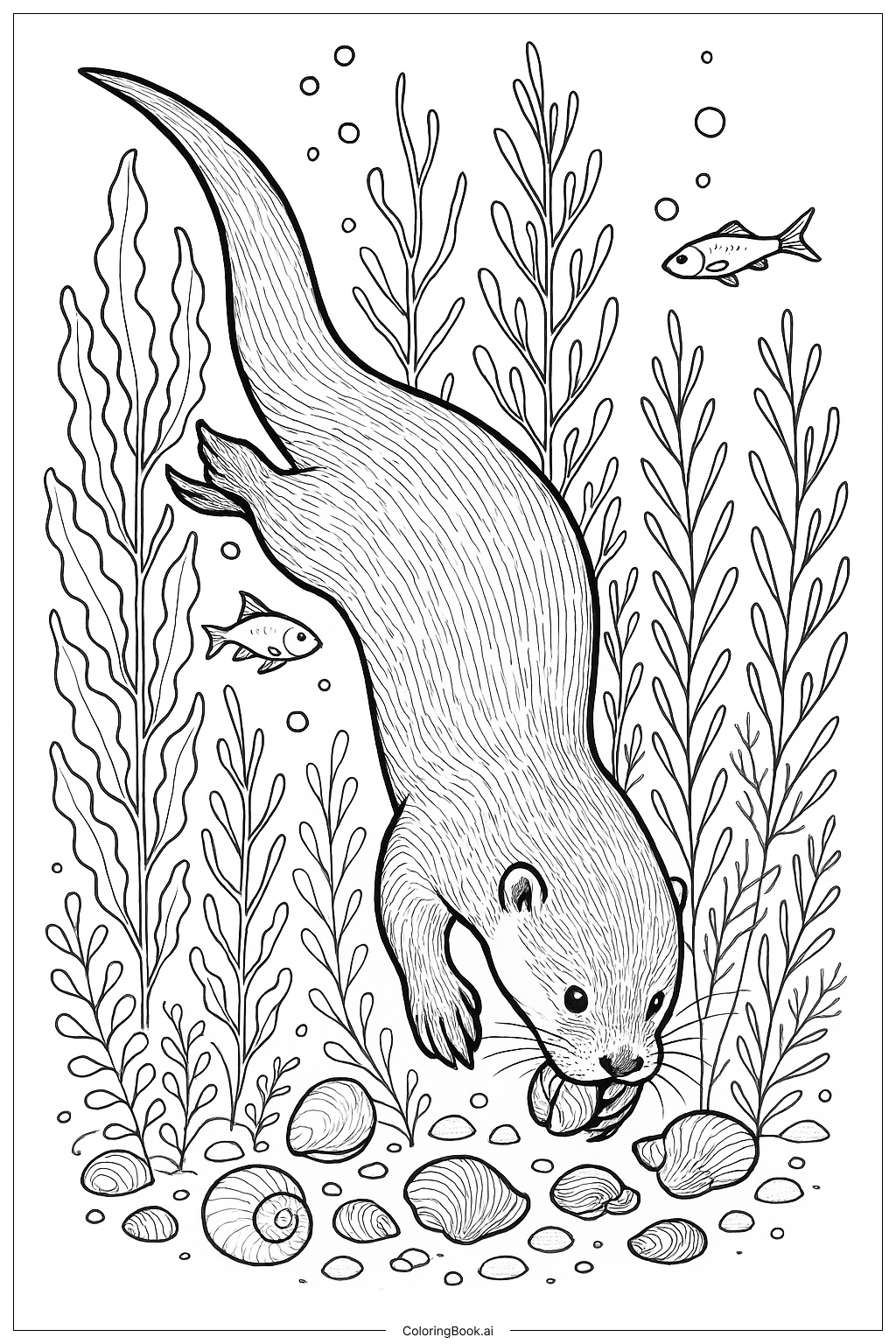
Coloring tips: How to color Otter Underwater Foraging Scene coloring page well?
Start with the otter's fur using warm shades of brown. Use a lighter tan or cream color for its belly and face markings. For the water, try soft layers of blue and green to show depth. Add lighter blue near the surface where sunlight filters through and darker tones deeper down. The aquatic plants can be colored in various shades of green, from bright lime to deep forest green. Use gray and brown tones for the rocks and pebbles on the riverbed. The shellfish or clam can be colored in soft pinks and purples. Add small yellow or orange fish to make the scene feel lively. Use white for the bubbles rising from the otter. Try blending colors gently to give the underwater scene a soft, glowing feel that kids and Adults will both enjoy.
Coloring challenges: Which parts are difficult to color and need attention for Otter Underwater Foraging Scene coloring page?
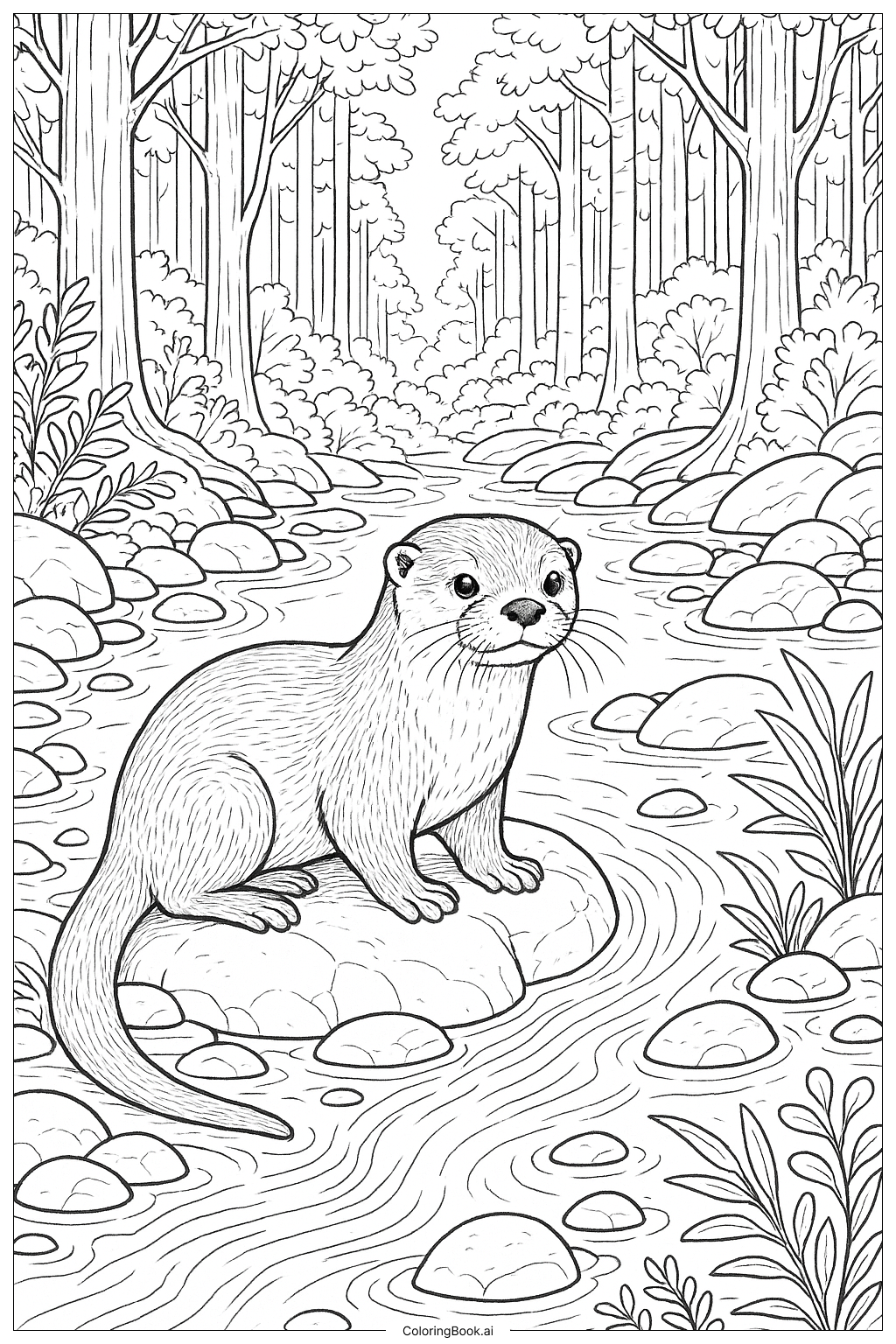
• Otter Fur Texture: The otter's fur has many fine lines and layers to show its thick, water-resistant coat. Coloring within these small areas without going outside the lines can be tricky, especially for younger colorists. Take your time and use a sharpened pencil or fine-tipped marker for the detailed fur sections.
• Water Depth and Shading: Creating the illusion of water that looks deep and flowing is one of the biggest challenges. The water must shift from lighter tones near the surface to darker blues and greens further down. Blending these gradients smoothly requires patience and practice, especially for beginners.
• Air Bubbles: The small, round bubbles rising from the otter are easy to accidentally color over. They should be left white or very lightly shaded to stand out against the darker water. Keeping them clean and clear while coloring the surrounding water takes careful attention.
• Background Plant Details: The aquatic plants and weeds in the background have thin, overlapping leaves and stems. Choosing colors that contrast well with the water but still look natural can be challenging. Using two or three shades of green helps separate each plant without making the background look too busy.
• Riverbed Rocks and Pebbles: The rocks and pebbles at the bottom of the scene come in different shapes and sizes. Giving each one a slightly different shade of gray, brown, or tan helps them look realistic, but this requires switching colors often and coloring carefully in small spaces.
Benefits of coloring books: Advantages of drawing Otter Underwater Foraging Scene coloring page
Coloring this Otter Underwater Foraging Scene offers many wonderful benefits for children and Adults alike. For kids, it helps build fine motor skills as they carefully color within the detailed lines of the otter's fur, bubbles, and plants. Focusing on the image also improves concentration and attention to detail, skills that carry over into school and everyday life. Choosing colors for the water, plants, and animals encourages creative thinking and decision-making. Children learn about color mixing and how to show depth and light through shading. The underwater setting also sparks curiosity about nature and aquatic animals, making it a fun, educational experience. For older colorists and Adults, this scene offers a calming, meditative activity that helps reduce stress and quiet a busy mind. Working through the detailed sections of the image brings a satisfying sense of focus and accomplishment. Completing the finished piece builds confidence and pride in one's own creativity. Overall, this coloring page is a joyful way to connect with nature, practice artistic skills, and enjoy a peaceful moment of creativity.