Coloring tips: How to color Otter Under Umbrella coloring page well?
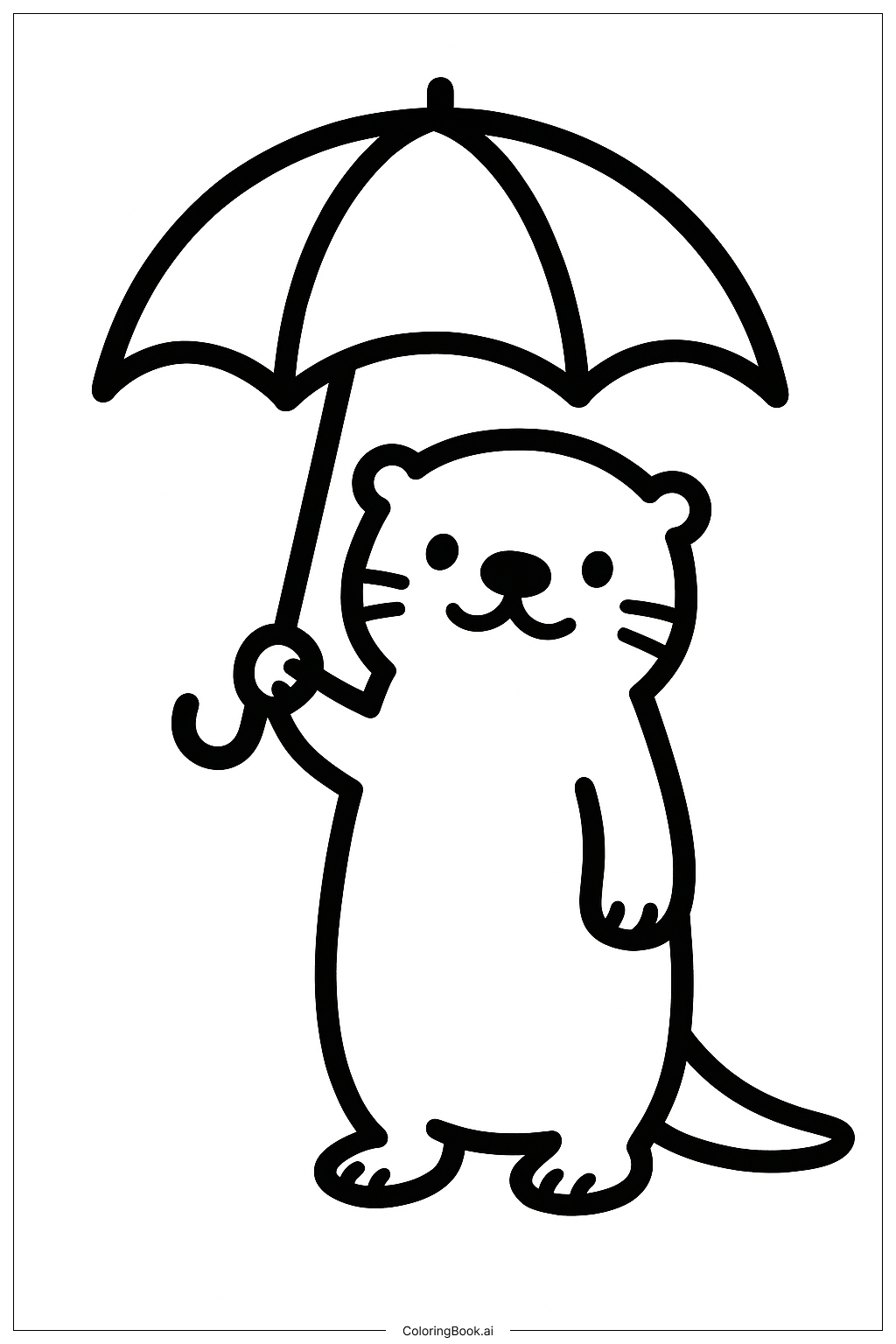
Start with the otter's body using warm brown or tan shades. Use a slightly darker brown for the back and a soft cream or beige for the belly and face. Add a pink or peach tone to the nose and inner ears for a lifelike touch. For the umbrella, try a bright and cheerful color like red, yellow, or sky blue. You can make each panel a different color to create a fun rainbow effect. Use a light gray or light blue for the raindrops falling around the scene. The puddles on the ground can be colored with soft blue and white highlights to show reflections. Keep the background simple with pale blue or lavender tones to suggest a rainy sky. Use darker shades along the edges of shapes to add depth and make the otter and umbrella pop off the page.
Coloring challenges: Which parts are difficult to color and need attention for Otter Under Umbrella coloring page?
• Otter Fur Texture: The otter's body has soft, layered fur that can be tricky to color realistically. To show depth, you need to layer light and dark shades of brown carefully. Using short, curved strokes with colored pencils can help mimic the look of real fur without making it look flat or muddy.\n\n• Umbrella Panel Sections: The umbrella is divided into several curved panel sections that meet at a central point. Keeping each panel neatly colored without bleeding into the next one requires a steady hand and good control of your coloring tool. This is especially tricky near the narrow tips where panels converge.\n\n• Raindrop Details: The many small raindrops scattered around the scene are tiny and close together. Coloring each one individually without smudging nearby areas takes patience and a fine-tipped tool. Leaving small white highlights inside each drop can make them look shiny and realistic.\n\n• Facial Expression: The otter's face has small, detailed features like tiny eyes, a little nose, and subtle cheek curves. Getting these features colored neatly without going outside the lines is a challenge, especially for younger colorists. A fine-tip marker or a sharpened colored pencil works best here.\n\n• Background Depth and Puddles: Creating a sense of rainy atmosphere in the background without overpowering the main subject can be difficult. Balancing light sky tones with slightly darker puddle reflections requires careful color choices so the otter remains the clear focal point of the scene.
Benefits of coloring books: Advantages of drawing Otter Under Umbrella coloring page
Coloring this otter under an umbrella page offers a wide range of benefits for kids and beginners alike. The cute, friendly subject makes it easy to feel excited and motivated to pick up those colors and get started. Working on the otter's soft fur helps children practice blending and shading techniques in a fun, low-pressure way. Choosing colors for the umbrella panels encourages creative thinking and personal expression, as there is no single right answer. The rainy-day setting gives colorists a chance to experiment with cool blues and grays, helping them learn how to use color to suggest mood and weather. Carefully filling in small details like the raindrops and facial features builds fine motor skills and hand-eye coordination, which are important for young learners. Completing the full scene also gives a sense of accomplishment and pride. Overall, this page is a wonderful mix of creativity, skill-building, and simple joy that makes coloring feel like an adventure.