Coloring tips: How to color Otter Under Palm Tree coloring page well?
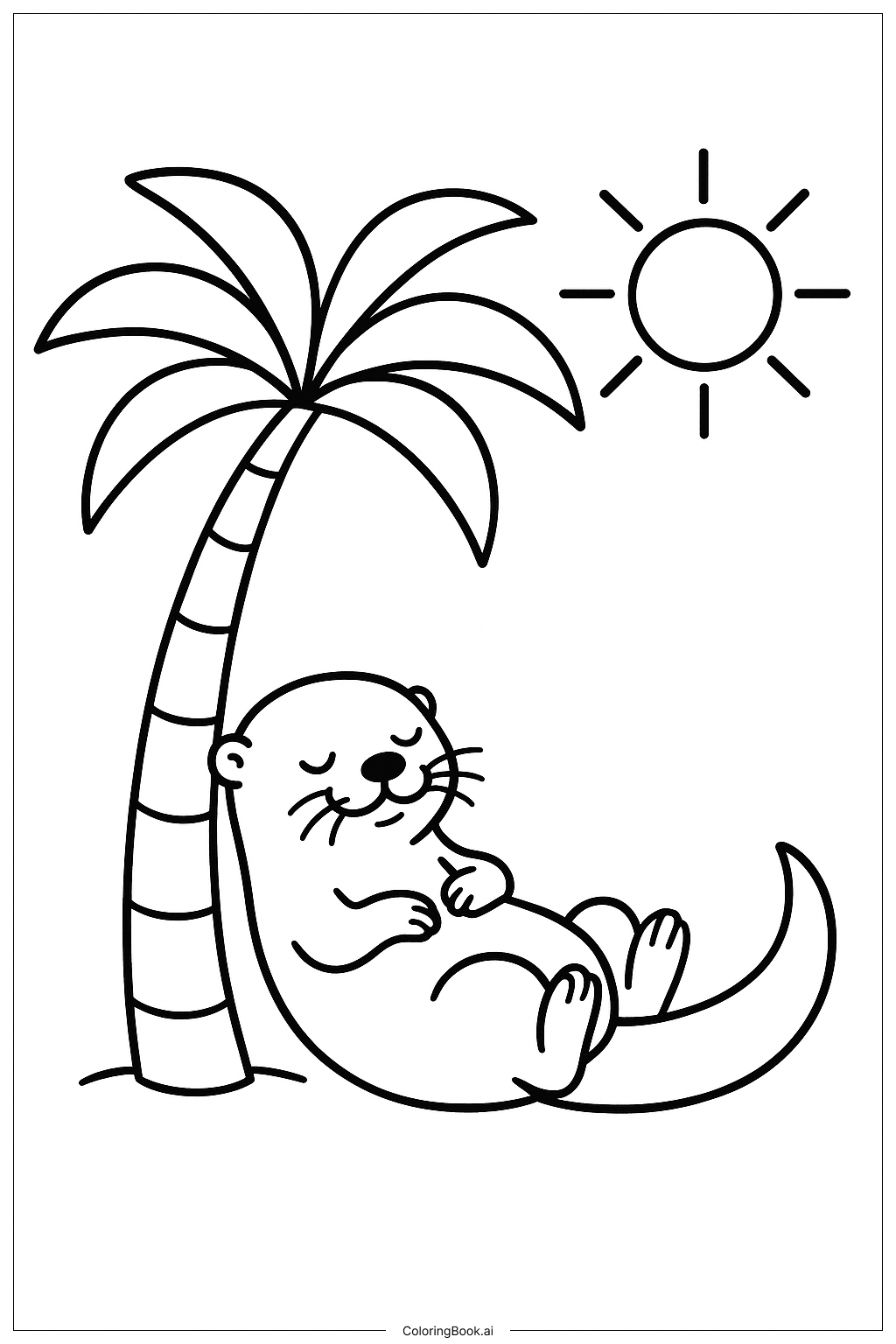
For coloring this picture, use brown or gray shades for the otter to make it look realistic. The palm tree trunk can be colored in light brown with darker lines for the segments. Use various shades of green for the palm leaves to show depth and vibrancy. The sun should be bright yellow or orange to represent warmth. The ground can be sandy beige or light yellow, and the sky could be colored light blue to add a sunny day feeling. Experiment with soft coloring for the otter’s fur and bold colors for the palm tree and sun to create nice contrast. Feel free to add light shading to show where the sun hits the otter's body and the palm leaves.
Coloring challenges: Which parts are difficult to color and need attention for Otter Under Palm Tree coloring page?
1. The otter’s curved body and tail need careful coloring to keep the smooth shape clear. Avoid coloring outside the lines to keep it neat.
2. The palm tree trunk segments are small and narrow, so it might be tricky to color each part evenly without mixing colors.
3. The palm leaves have long, thin sections which require attention to color inside the lines.
4. Coloring the sun rays evenly without smudging can be challenging for younger kids.
5. Balancing light and shadow to make the otter look three-dimensional could be difficult for beginners.
Benefits of coloring books: Advantages of drawing Otter Under Palm Tree coloring page
Coloring this picture helps improve fine motor skills, especially control in staying within the lines. It encourages creativity in choosing colors for the otter, tree, and sun. Children can learn about natural colors and how to mix shades like different greens for leaves or browns for the trunk. It also promotes concentration by focusing on small details such as the palm segments and sun rays. Finally, coloring a peaceful scene with a resting otter can be relaxing and enjoyable, boosting mood and patience.