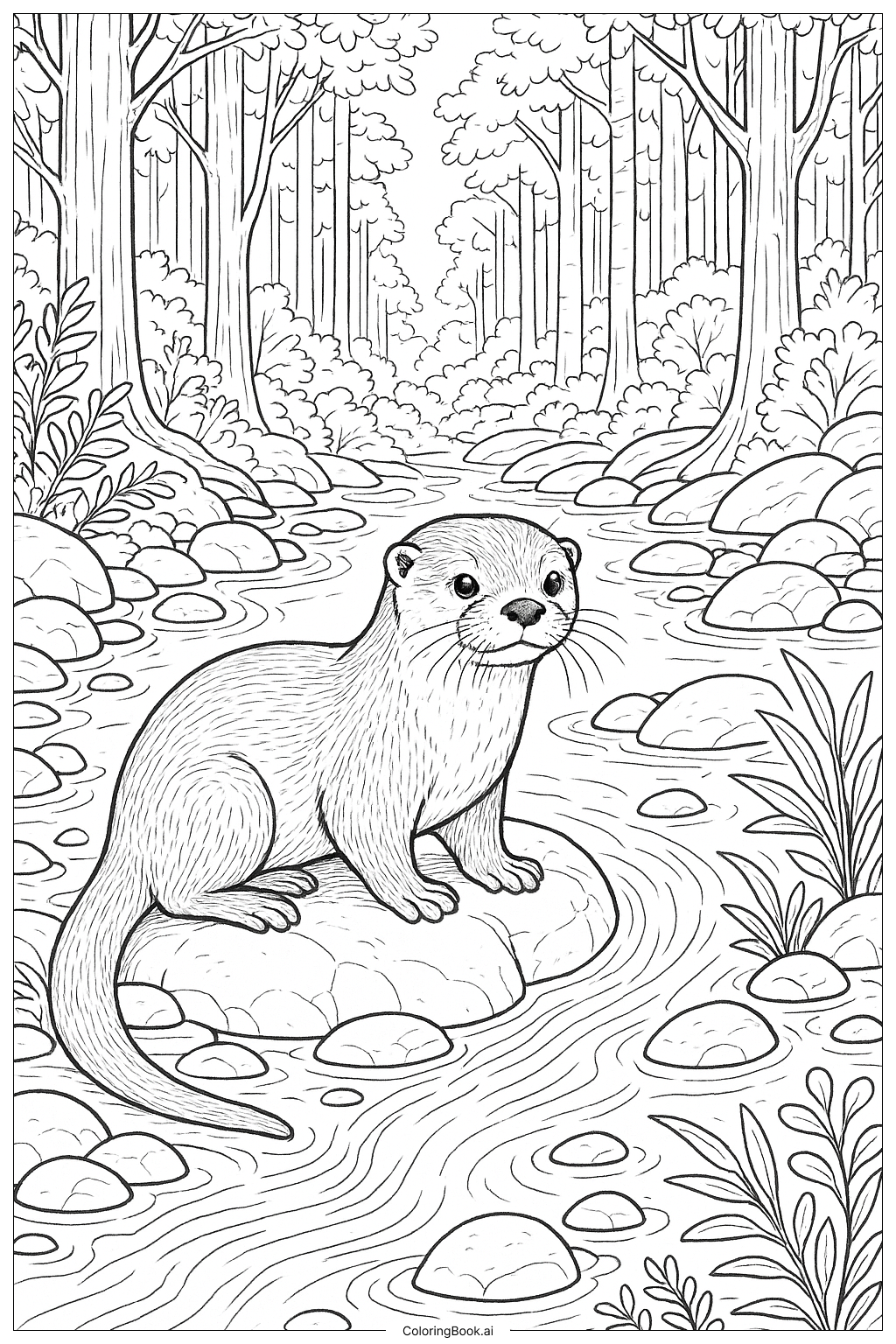
Coloring tips: How to color Otter Sitting On Rock coloring page well?
You can use warm brown or light tan colors for the otter’s fur to make it look soft and natural. Adding lighter shades around the face and belly can give the otter more depth. For the rock, try using shades of gray or muted browns to highlight its rough texture. To make the water around the rock feel lively, use blues and greens with some white accents for reflections or ripples. Feel free to get creative with the background—maybe add some green plants or a sunset sky in soft pinks and oranges. This coloring page is a great chance to practice blending colors to create a realistic outdoor scene.
Coloring challenges: Which parts are difficult to color and need attention for Otter Sitting On Rock coloring page?
• Otter Fur Texture: Capturing the soft, fluffy look of the otter’s fur can be tricky. It requires gentle layering of colors and subtle shading to show the rounded shapes and smooth transitions.
• Rock Surface Details: The rock has many cracks and uneven areas that need careful coloring to show depth and roughness without making the image look flat.
• Small Features: The otter’s paws, eyes, and facial details are small and delicate. They require precision to color neatly while preserving the character’s friendly expression.
• Water Ripples: Coloring the ripples and flowing water around the rock needs attention to blending blues, greens, and white highlights to create a sense of movement without overwhelming the main subject.
• Contrast Balance: Balancing contrast between the otter, rock, and background elements is important to keep the otter as the focus but still make the scene rich and interesting.
Benefits of coloring books: Advantages of drawing Otter Sitting On Rock coloring page
Coloring this image helps improve fine motor skills by working on small, detailed areas like the otter’s face and paws. It encourages attention to texture and shading, which builds artistic observation and creativity. The gentle scene offers a calming experience, promoting focus and relaxation. By choosing colors for nature elements like rocks and water, children learn about natural color schemes. Overall, coloring this image supports both artistic growth and an appreciation for wildlife and the outdoors.