Coloring tips: How to color Otter Riding Leaf coloring page well?
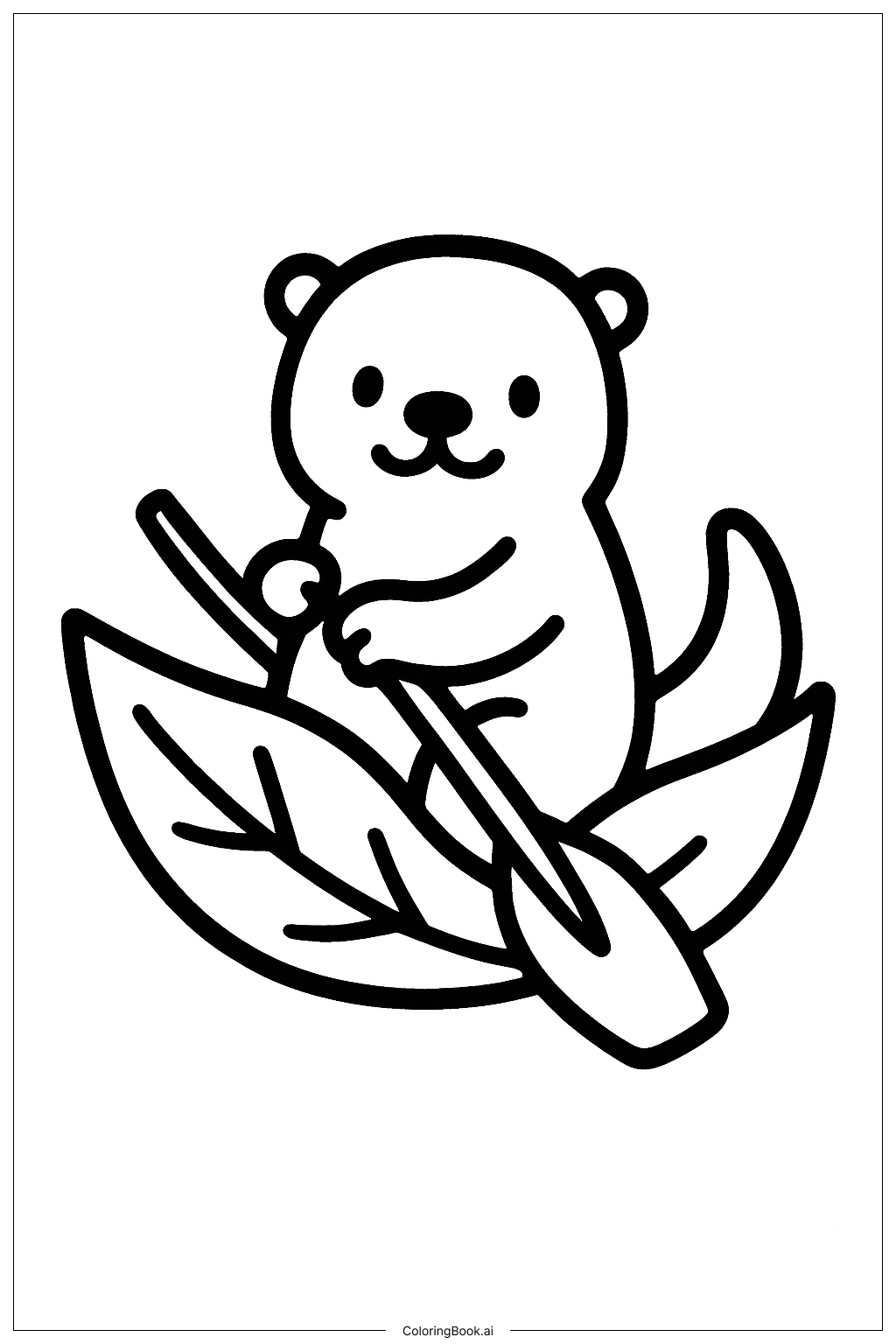
Use natural colors for the otter, like shades of brown or gray, to make it look realistic. You can color the leaf in green tones, maybe with some lighter green for the veins to show contrast. For the paddle, try using brown or wooden colors to give it a natural feel. Feel free to get creative and add blue around the bottom area to represent water. This can make the picture more lively. You can also add some yellow or orange highlights on the leaf to show sunlight. Remember to color the small details like the otter's eyes and nose with black or dark brown to keep them clear.
Coloring challenges: Which parts are difficult to color and need attention for Otter Riding Leaf coloring page?
1. The small details on the otter's face, like the eyes and nose, require careful coloring to avoid going outside the lines. 2. The leaf veins need attention to keep the lines clear while adding different shades of green for a natural look. 3. Coloring the paddle evenly might be tricky because of its thin shape and edges. 4. Keeping the otter's arms and the leaf lines distinct is important but can be difficult due to their close placement. 5. Adding shadows and light to show depth may be a bit challenging for younger colorers.
Benefits of coloring books: Advantages of drawing Otter Riding Leaf coloring page
Coloring this picture helps children improve their hand-eye coordination as they stay inside the lines. It encourages creativity by letting them choose colors for the otter and leaf. It also teaches children about nature, like learning what an otter looks like and how leaves have veins. Coloring small parts like the paddle and the otter's face can help improve patience and concentration. Overall, it’s a fun activity that combines art and learning.