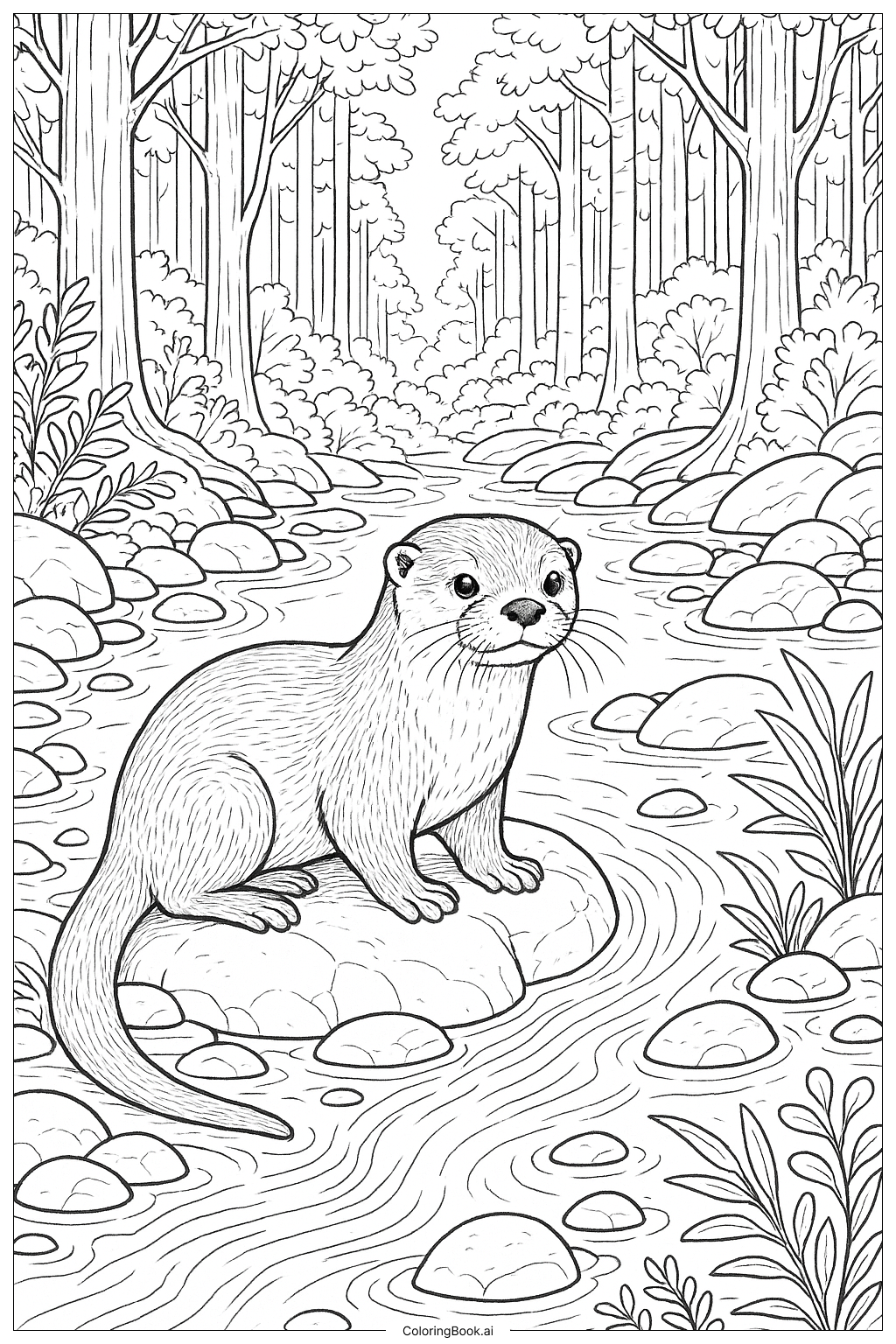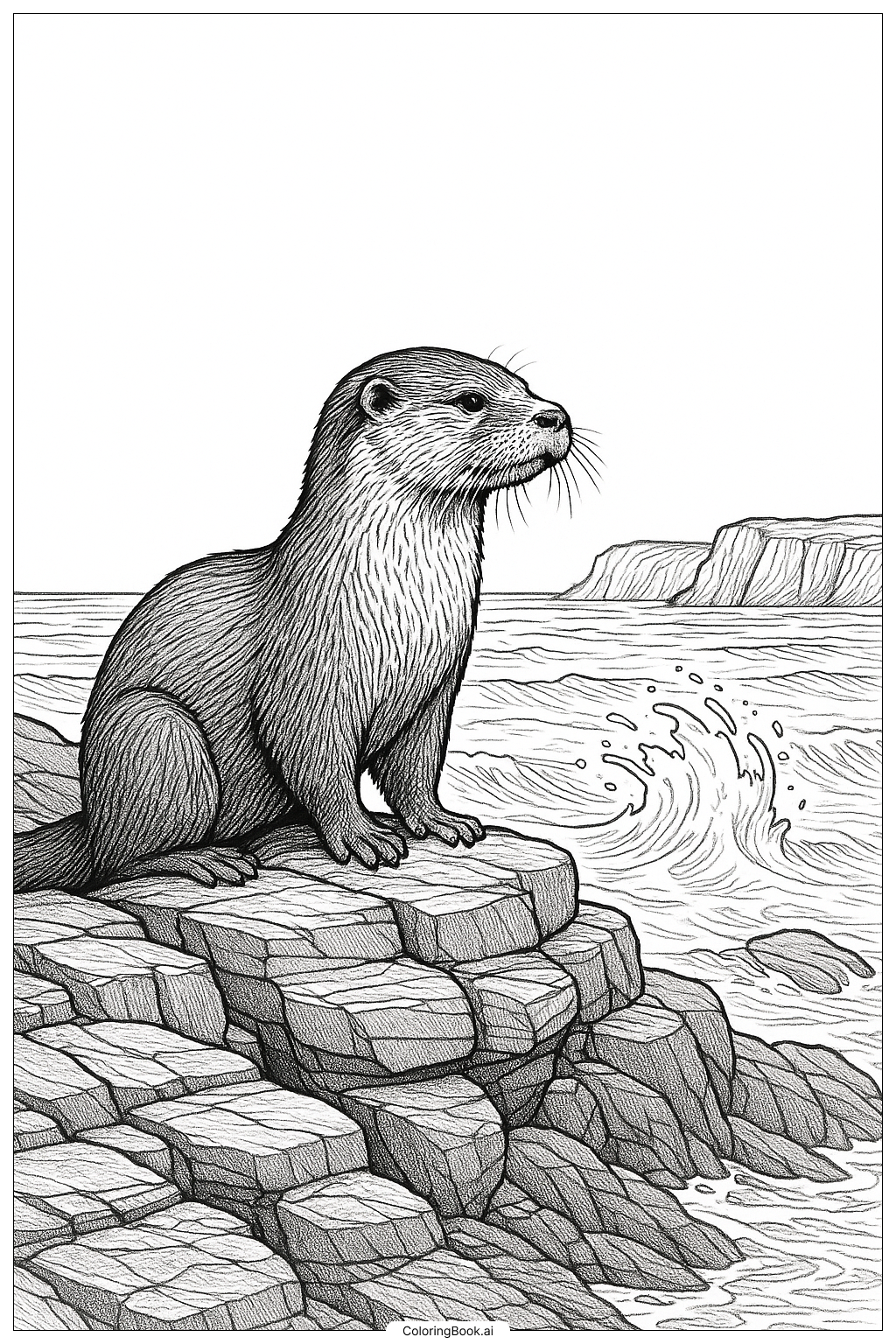
Coloring tips: How to color Otter On Rocky Shoreline coloring page well?
To color this Otter On Rocky Shoreline, start with warm browns and soft grays for the Otter's fur, blending these tones to create a soft, fluffy look. Use lighter browns or cream colors for the Otter’s belly and face details. For the rocky shoreline, choose shades of gray, dark brown, and slate blue to reflect natural stone textures. Adding some green or mossy touches can make the rocks feel more realistic. The water can be colored with blues and greens, using lighter shades near the shore to show shallow water. Don’t forget to add subtle shadows under the Otter and between the rocks for depth. Small details like seashells or starfish can be bright colors such as oranges, reds, and yellows to add a fun splash of color.
Coloring challenges: Which parts are difficult to color and need attention for Otter On Rocky Shoreline coloring page?
• Fur Texture: Coloring the Otter’s fur requires careful blending of different brown and gray shades to create a soft and natural texture. Avoid making the colors too flat or harsh.
• Rock Shapes: The rocks have many uneven and overlapping edges that need attention to detail. Coloring these with multiple tones helps show their shape, but it can be tricky to keep the rocks distinct from each other.
• Water Reflection: Capturing the subtle waves and reflections in the water demands smooth transitions between blues and greens along with white highlights, which can be challenging for beginners.
• Small Details: The Otter’s whiskers, eyes, and small sea creatures on the shore require precision and steady hand control to color without losing definition.
• Shadow and Light: Adding shadows under the Otter and between rocks is important for depth, but balancing these without overpowering the main subjects needs careful shading techniques.
Benefits of coloring books: Advantages of drawing Otter On Rocky Shoreline coloring page
Coloring this Otter On Rocky Shoreline helps develop fine motor skills as children learn to control coloring within detailed areas. It encourages focus and patience through layering colors and shading the rocks and fur. The image also inspires creativity by letting children experiment with natural colors and imaginative shading. Engaging with this nature-themed scene can increase awareness and appreciation of animals and their habitats. Overall, it promotes mindfulness by providing a calming, enjoyable activity that connects kids to the beauty of wildlife and seaside environments.