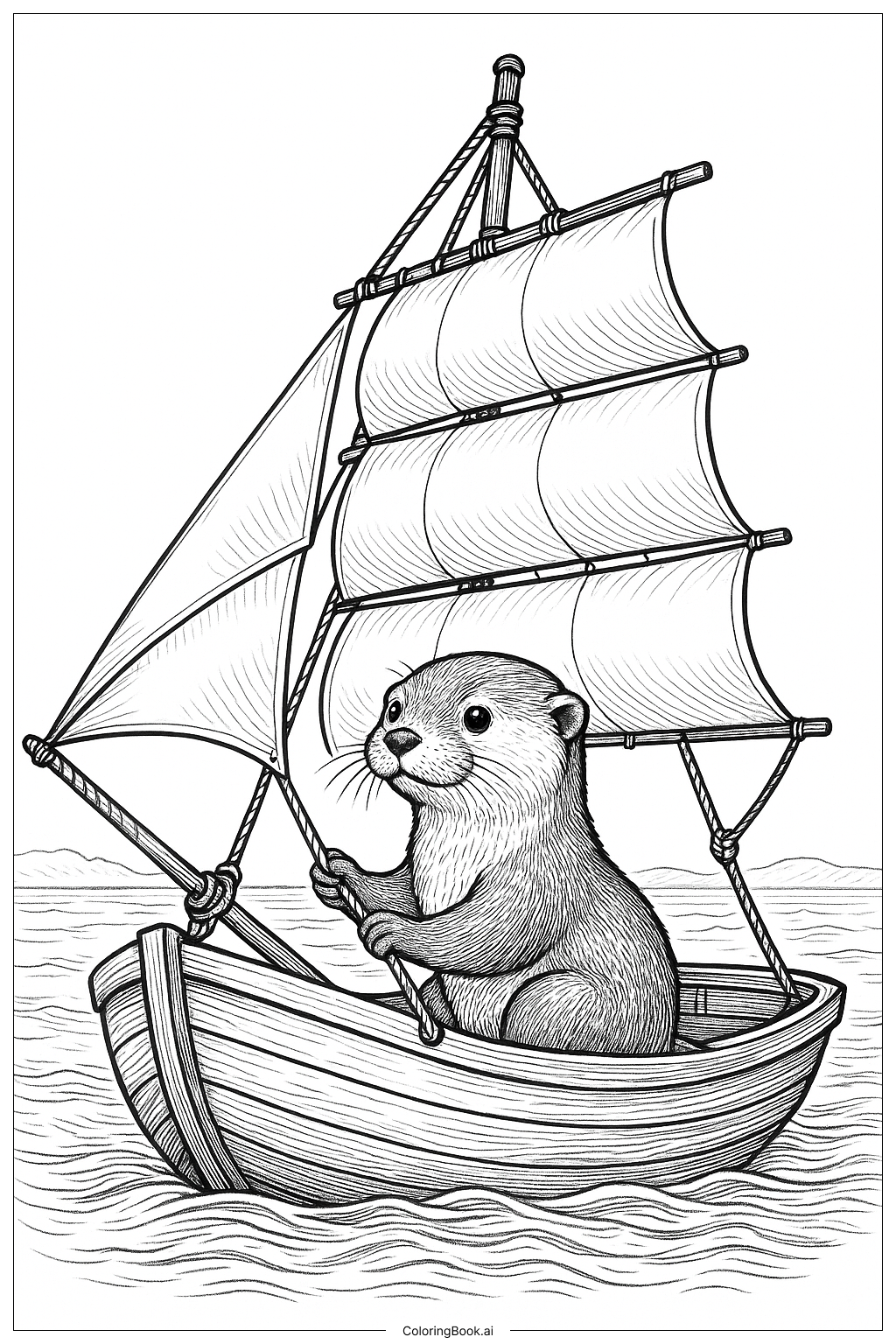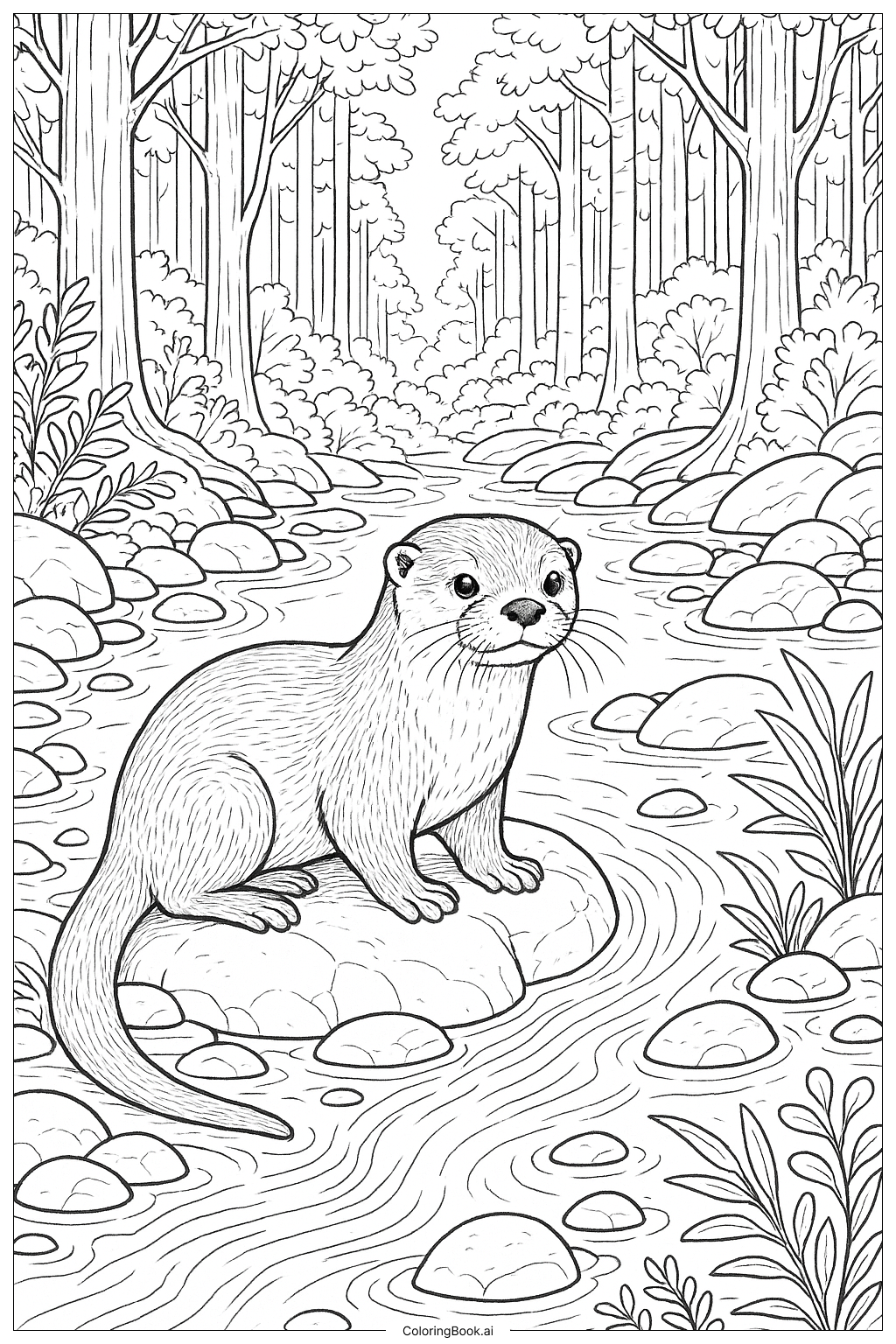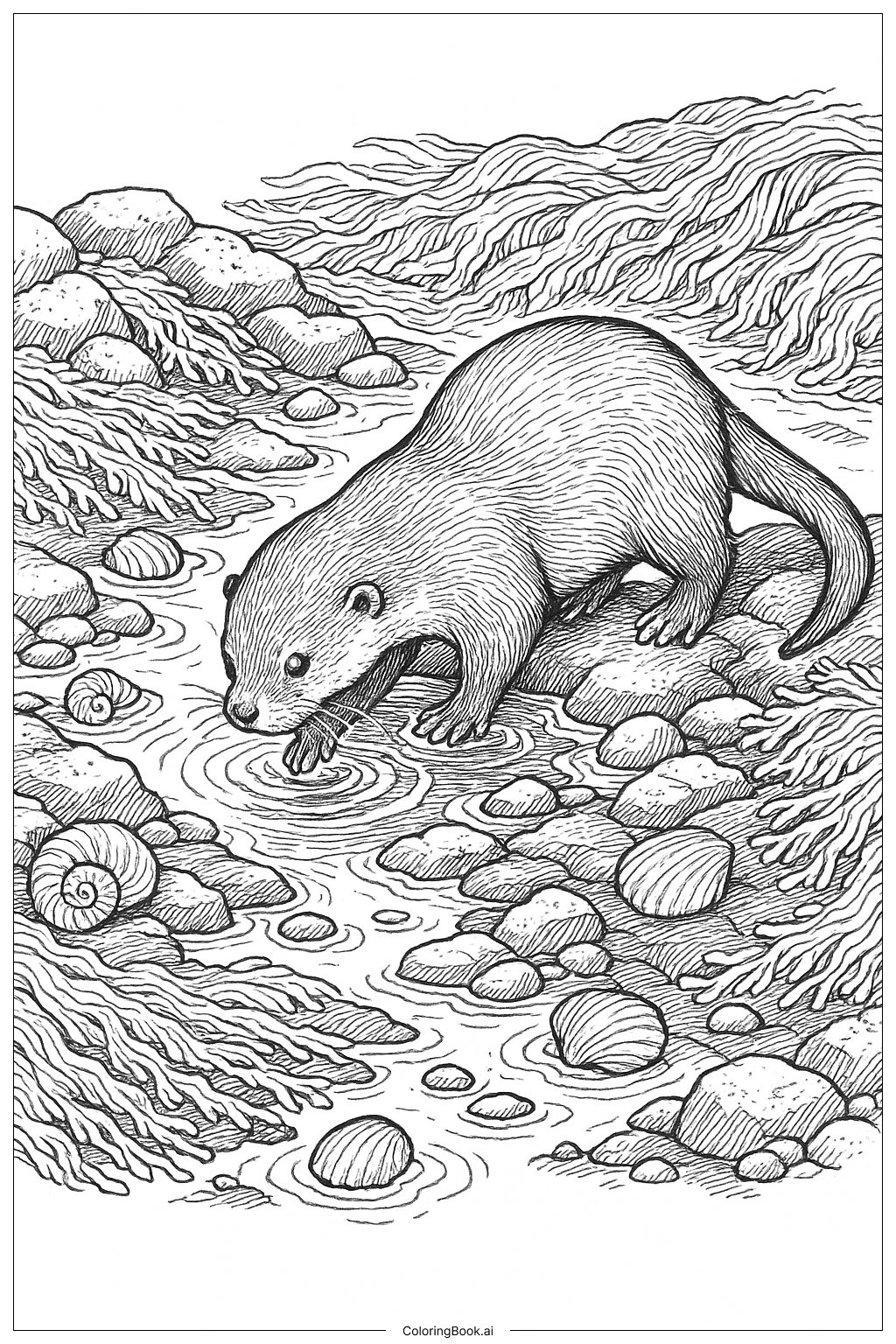
Coloring tips: How to color Otter Exploring Tide Pools coloring page well?
Use soft browns and grays for the otter to show its fur texture. For the rocks and shells, try different shades of gray, sandy beige, and light brown. Color the water with light blues and clear turquoise to make the tide pools look fresh and natural. Green and olive shades work well for seaweed to give a vibrant and lively feeling. You can add some white or light colors for water ripples to make them stand out. Try layering colors gently to show the textures of water and fur clearly.
Coloring challenges: Which parts are difficult to color and need attention for Otter Exploring Tide Pools coloring page?
1. The otter has many small lines showing fur texture, which need careful coloring to keep the details clear.
2. The tide pools have water ripples that are thin lines, requiring delicate shading to keep water effects visible.
3. Many small shells and rocks of different shapes need careful color choices to avoid looking flat.
4. Seaweed has long, flowing shapes that require smooth and even coloring to show movement.
5. Balancing color contrast between otter, water, rocks, and seaweed can be challenging to keep the picture lively but not too busy.
Benefits of coloring books: Advantages of drawing Otter Exploring Tide Pools coloring page
Coloring this picture helps children focus on details like the otter's fur and water ripples, which improves concentration and fine motor skills. It encourages learning about animals and nature by exploring a tide pool habitat. Coloring different textures like smooth rocks, flowing seaweed, and clear water enhances observational skills. It also offers a calming and creative activity that allows children to express themselves with color choices while connecting with nature themes.