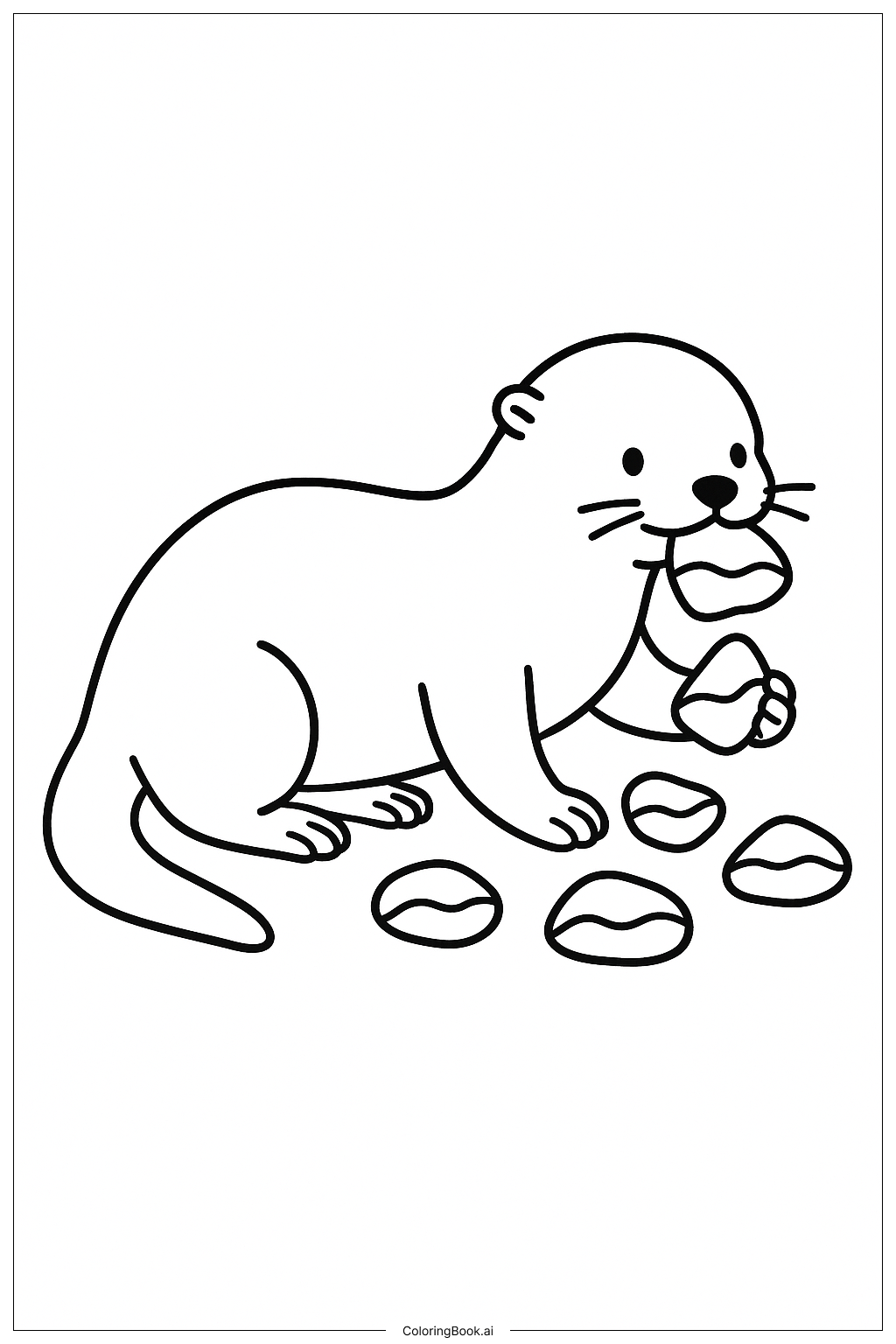
Coloring tips: How to color Otter Collecting Sea Glass coloring page well?
For coloring this scene, start by using warm browns and grays for the otter’s fur to give it a realistic look. You can add lighter shades to highlight the soft texture of the fur. The sea glass pieces can be colored in a variety of pastel shades like light green, blue, white, and soft pink to show their smooth, frosted glass appearance. Use sandy yellow and light tan tones for the beach sand. The shells can be colored with pale creams and soft browns. For the water, try light blue and white to create gentle waves. Remember to keep the colors soft and natural to bring out the peaceful seaside vibe.
Coloring challenges: Which parts are difficult to color and need attention for Otter Collecting Sea Glass coloring page?
• Fur Texture Complexity: The otter’s thick fur has many small lines and curves that require careful coloring to show its softness and volume. Using a consistent stroke and layering colors subtly can be tricky for young colorers.
• Small Details: The scattered sea glass pieces and shells are small and close together, which might make it hard to color inside the lines neatly.
• Color Gradients: The sea glass often has gentle color transitions and highlights to reflect its smooth surface. Achieving this effect requires blending shades softly, which can be a challenge for beginners.
• Water and Sand Contrast: Differentiating between the water’s gentle waves and the sandy shore requires subtle changes in color tone and texture. Coloring these areas distinctly while keeping harmony needs attention.
• Maintaining Overall Balance: The image is detailed but meant to look natural, so balancing bright and muted colors without overdoing it can require planning and patience.
Benefits of coloring books: Advantages of drawing Otter Collecting Sea Glass coloring page
Coloring this Otter Collecting Sea Glass image helps develop focus and fine motor skills because of its detailed fur and small sea glass pieces. It encourages creativity through color choices, especially when selecting different pastel shades for the glass and natural tones for the otter and beach. This activity also promotes patience and carefulness, as coloring the textures and small details requires time and attention. Additionally, it teaches children about nature by highlighting sea glass and the gentle beauty of coastal animals. Overall, it’s a calming and educational coloring experience for children and adults alike.