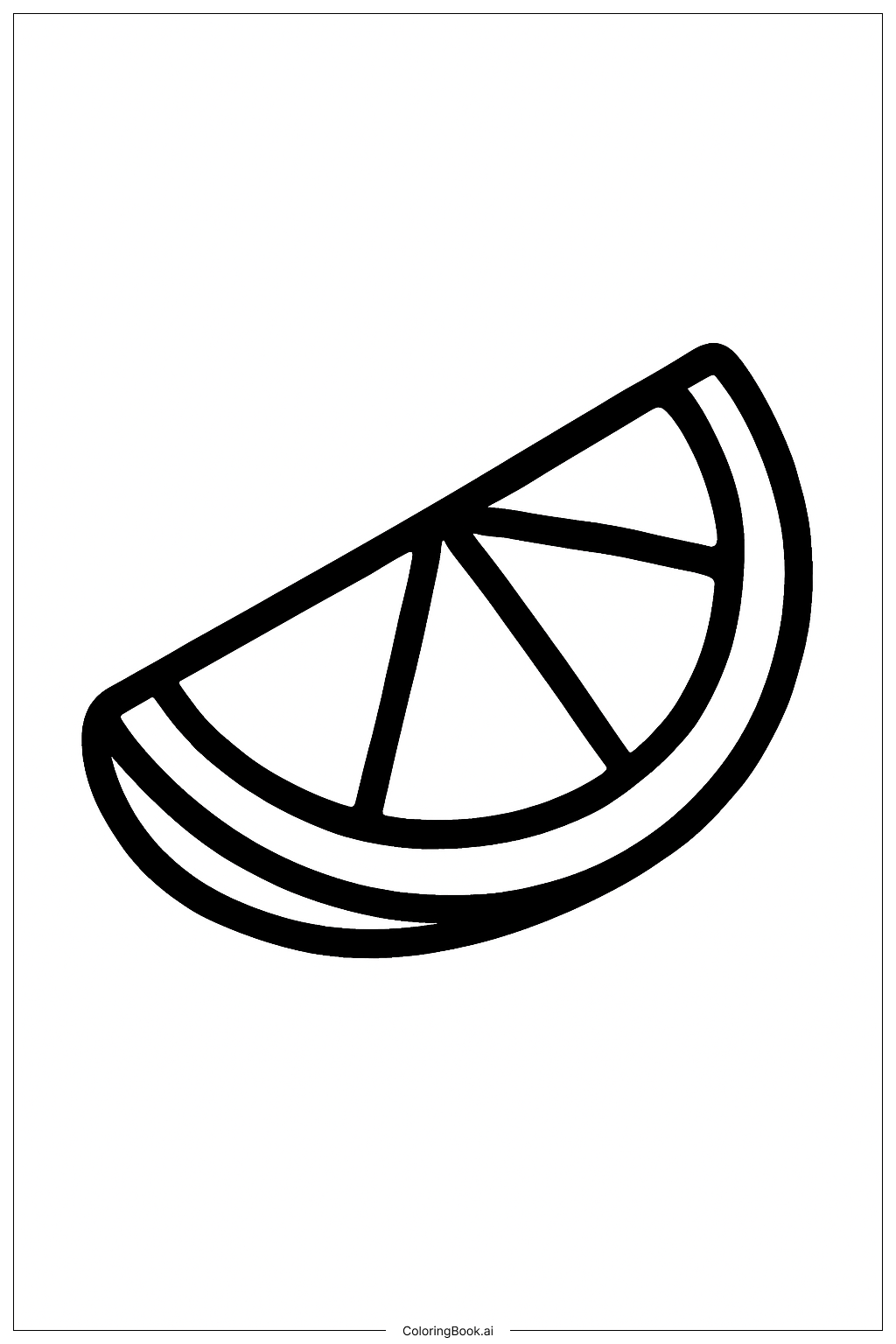
Coloring tips: How to color Orange Wedge coloring page well?
Start with the rind on the outer edge. Use a bright orange for the peel and a slightly darker orange or burnt orange along the very edge to give it depth. For the inner flesh, use a warm, vivid orange and color each segment individually. Try making some segments a slightly lighter shade and others a bit deeper to show the juicy texture. The thin layer of pith between the rind and the flesh looks great in creamy white or very pale yellow. Use a fine-tipped marker or a sharp colored pencil to carefully fill in the small segment lines without going over them. Adding a little yellow near the center point of the wedge can make it look bright and sun-ripened. Keep your strokes smooth and follow the direction of each segment for a natural, fresh look.
Coloring challenges: Which parts are difficult to color and need attention for Orange Wedge coloring page?
• Segment Lines: The thin lines separating each juice segment inside the wedge are very close together. Staying within these narrow boundaries without smudging or crossing over into the next segment takes a steady hand and a sharp, fine-tipped tool. Young colorists may find this part the most demanding.
• Rind Texture: The outer peel has a dimpled, rough texture suggested by small dots and curves. Capturing this detail convincingly requires patience. Simply coloring it flat orange will work, but adding light shading with a slightly darker tone around each dimple brings the rind to life.
• Pith Layer: The thin white border of pith sitting between the rind and the inner flesh is a small but important detail. Using a very light hand or leaving that area uncolored helps keep it looking realistic. Accidentally coloring over it blends the rind and flesh together and loses the natural look of the fruit.
• Color Transitions: A real orange wedge is not one flat color. The rind is a deeper, more saturated orange, the flesh is bright and warm, and the center tip is often the lightest point. Blending these tones smoothly, especially for younger colorists, can be tricky without the right set of shades.
• Overall Shape Consistency: The curved arc of the wedge means coloring strokes should follow the curve rather than going straight across. Keeping color even along curved edges without leaving streaks or uneven patches is a skill that takes practice.
Benefits of coloring books: Advantages of drawing Orange Wedge coloring page
Coloring this orange wedge is a fun and rewarding activity for kids of all ages. Working on the small segment lines inside the fruit helps children practice fine motor control and hand steadiness, skills that are useful in writing and drawing too. Choosing the right shades of orange, yellow, and white encourages color awareness and teaches kids how light and shadow make objects look three-dimensional and real. Focusing on staying within the lines of a detailed image like this builds patience and concentration in a calm, enjoyable way. Because the orange wedge is a familiar everyday object, coloring it also connects art to the real world and sparks curiosity about nature and food. Completing the page gives children a sense of pride and accomplishment. For older kids and teens, experimenting with blending and shading techniques on this simple subject is a great low-pressure way to develop artistic skills. Overall, this coloring page turns a quiet moment into a creative and educational experience.