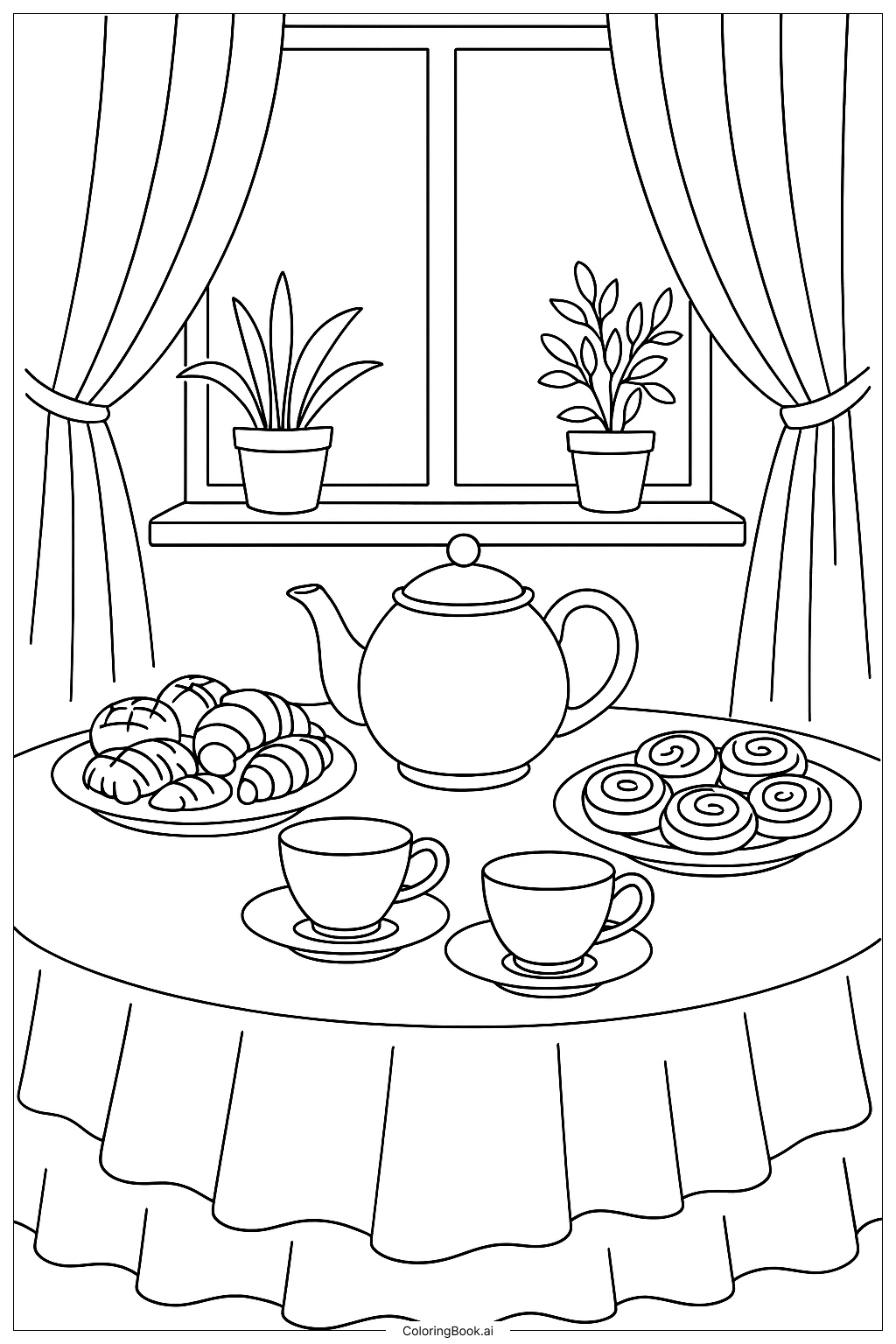
Coloring tips: How to color Orange Tea Party Table coloring page well?
Start by choosing a warm and cheerful color palette centered around orange tones to match the theme. Use bright orange for the teapot, teacups, and saucers to make them pop. Try a soft cream or pale yellow for the tablecloth, then add a fun pattern using orange or red. For the cake stand and treats, mix light pinks, yellows, and browns to make the food look yummy. Color the flower vase in a contrasting color like green or blue so it stands out. Use soft greens for any leaves and bright colors for the flower petals. For the table surface, a warm tan or light wood color works well. Do not be afraid to mix shades of orange, from light peach to deep burnt orange, to add depth and interest throughout the scene. Most importantly, have fun and make it your own!
Coloring challenges: Which parts are difficult to color and need attention for Orange Tea Party Table coloring page?
• Teapot and Teacup Curves: The teapot and teacups have rounded, curved shapes. Staying inside the lines while adding smooth, even color can be tricky, especially around the handles and spouts. Take your time and use a sharp colored pencil or fine-tipped marker for the edges before filling in the middle.\n\n• Tablecloth Patterns: The tablecloth has decorative patterns along the border. These small, detailed sections are close together and require a steady hand. Using a thin marker or the tip of a colored pencil helps you fill each small section without bleeding into neighboring areas.\n\n• Two-Tiered Cake Stand Details: The cake stand holds multiple small treats stacked on two levels. Each tiny pastry or treat has its own shape and detail. Coloring each one a slightly different color or shade will make the scene look realistic, but it requires patience and careful work in a small space.\n\n• Flower Vase and Petals: The flowers in the vase have individual petals and layered details. Choosing distinct colors for each petal layer and the leaves helps them stand out. Blending two shades of the same color on each petal can create a natural, lifelike look but takes practice.\n\n• Overall Color Balance: With so many items on the table, keeping the whole scene visually balanced is a challenge. If too many elements use the same bright color, the image can look flat. Try alternating warm and cool colors across different objects so every part of the table catches the eye.
Benefits of coloring books: Advantages of drawing Orange Tea Party Table coloring page
Coloring this Orange Tea Party Table scene offers a wonderful range of benefits for children and young artists. Working through the many details of the teapot, teacups, cake stand, and flowers helps build fine motor skills and strengthens hand and finger muscles in a fun, low-pressure way. Choosing colors for each item encourages creative thinking and gives children a chance to express their own sense of style and imagination. The process of focusing on one section at a time builds patience and concentration, skills that are helpful in school and everyday life. Completing the full scene gives a real sense of pride and accomplishment. The tea party theme also sparks storytelling and imaginative play, as children may dream up characters and adventures connected to the scene. Coloring is also a calming activity that helps reduce stress and anxiety, making it a great quiet-time hobby. For older children, experimenting with shading, color blending, and pattern-filling on the tablecloth and treats can introduce early artistic techniques in an approachable and enjoyable way. Overall, this image makes coloring both educational and delightful.