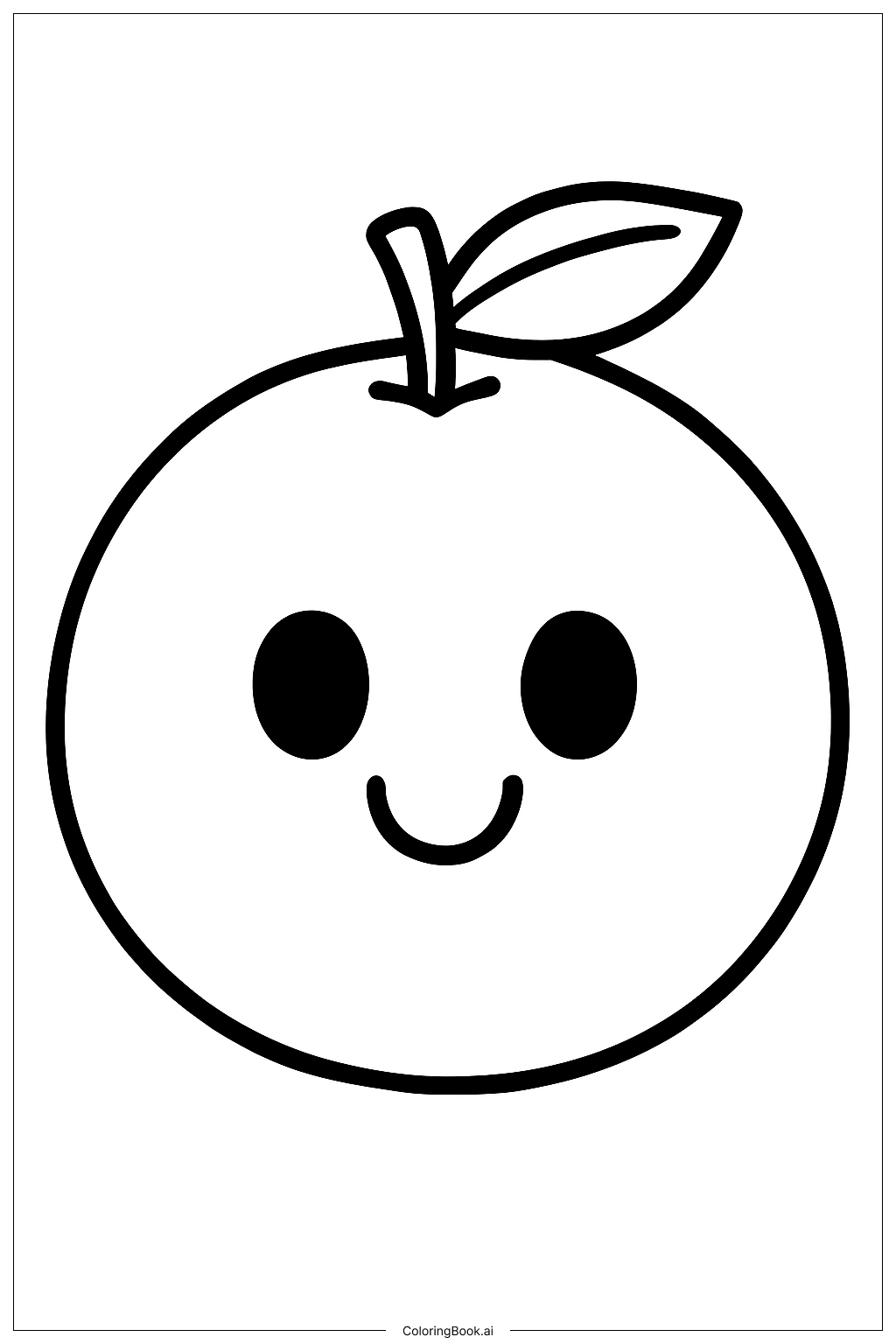
Coloring tips: How to color Orange Smiling Face coloring page well?
Start by coloring the main body of the orange with a bright orange shade. You can use a lighter orange near the top and a deeper orange toward the bottom to give it a rounded, three-dimensional look. Add small dots or light circular strokes across the peel to show its bumpy texture. Color the stem brown and the leaf green. Use a fresh, bright green for the leaf and add a slightly darker green along the edges to give it depth. For the face, color the eyes dark brown or black. Leave the whites of the eyes uncolored for a lively look. Color the smile with a warm pink or red. If you want the orange to look extra juicy and fun, try adding a soft yellow highlight near the top center of the fruit. Keep the lines clean and steady, and take your time with smaller areas like the stem and leaf.
Coloring challenges: Which parts are difficult to color and need attention for Orange Smiling Face coloring page?
• Capturing the Orange Skin Texture: The peel of an orange has a naturally bumpy, dimpled surface. Recreating this texture with color can be tricky. Try using small circular motions or tiny dots with your coloring tool to hint at the texture without overdoing it. Blending a light and a slightly darker orange together helps show the uneven surface in a natural way.
• Shading the Round Shape: Making a flat circle look like a round, three-dimensional fruit takes practice. The key is to apply lighter color in the center or near a light source and gradually darken the color toward the edges. This simple shading technique gives the orange a realistic, full look rather than a flat appearance.
• Coloring the Facial Features Cleanly: The smiling face includes small details like eyes and a curved mouth. These areas are compact and require a steady hand. Using a fine-tipped coloring tool works best here. Take your time and stay inside the lines to keep the face looking expressive and neat.
• Balancing the Leaf and Stem: The stem and leaf are small compared to the large orange body. It is easy to rush through these parts, but they add important detail. Use at least two shades of green for the leaf to give it a natural look, and color the stem carefully with brown, keeping it distinct from the orange peel around it.
• Keeping the Overall Color Harmony: Since the image is mostly one color — orange — it can look flat if you are not careful. Try using warm highlights and cool shadows, or add a soft background color like light yellow or sky blue, to make the whole image feel balanced and lively.
Benefits of coloring books: Advantages of drawing Orange Smiling Face coloring page
Coloring this smiling orange is a fun and rewarding activity for kids of all ages. The large, simple shape makes it perfect for younger children who are just learning to color inside the lines. It helps build hand control and fine motor skills in a relaxed, enjoyable way.
The friendly face on the orange sparks imagination and creativity. Kids can choose any colors they like and make the image their own. This kind of creative freedom builds confidence and encourages self-expression.
Working on the shading and texture details is a gentle introduction to basic art concepts like light, shadow, and depth. Older kids can challenge themselves to make the orange look round and realistic, which develops visual thinking and attention to detail.
Coloring is also a calming activity. It helps children slow down, focus, and find a quiet moment in a busy day. Finishing a page gives a sense of accomplishment that boosts mood and self-esteem.
The cheerful theme of a smiling fruit also connects to healthy eating and positive feelings, making this page a great conversation starter for parents and teachers. Overall, this simple and joyful coloring page offers real creative and developmental value for young colorists.