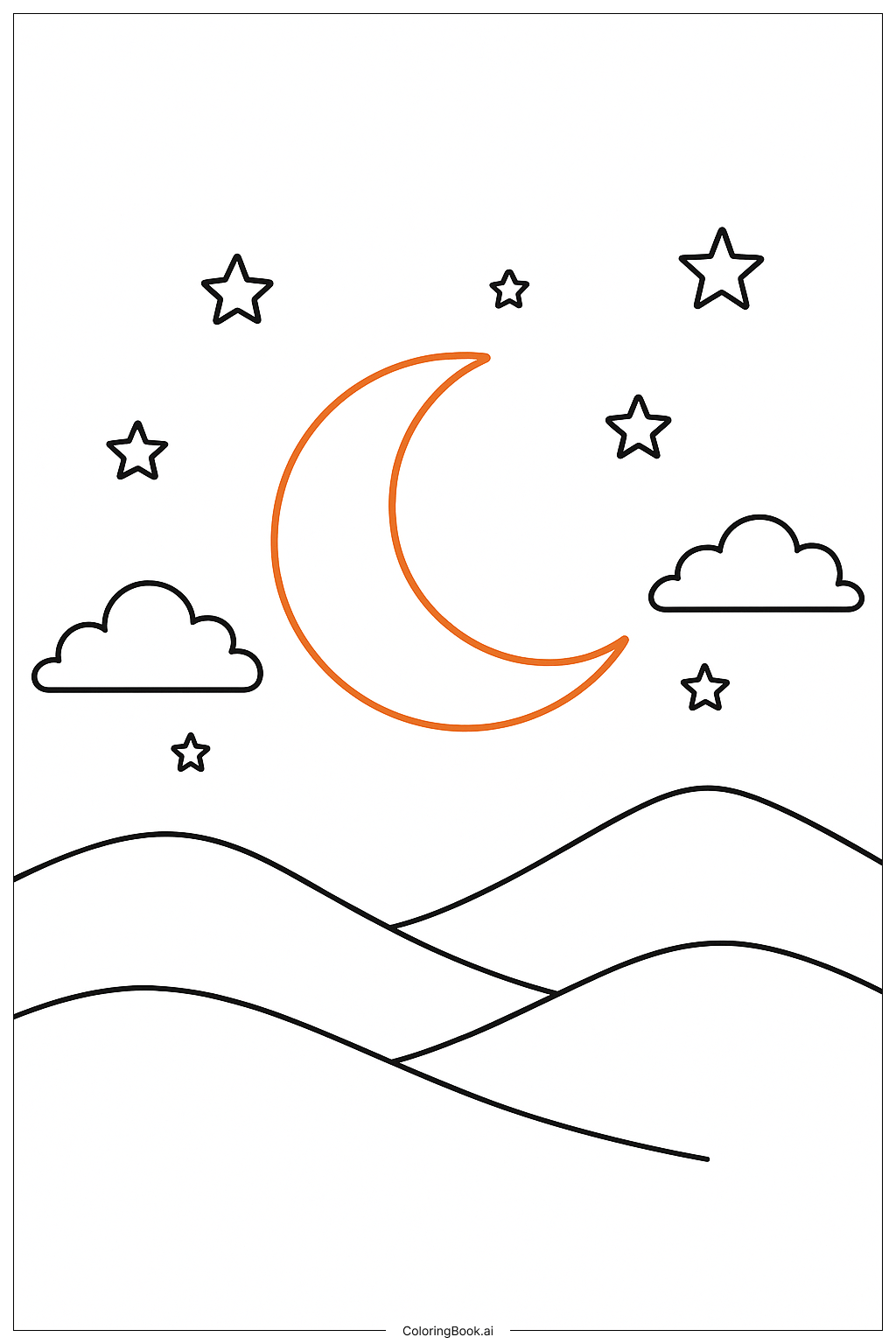
Coloring tips: How to color Orange Moon Over Hills coloring page well?
Start with the moon. Use a bright orange at the center and blend into a deeper amber or burnt orange near the edges. Add a soft yellow glow around the moon to show light radiating outward. For the sky, try dark navy blue or deep purple to contrast beautifully with the warm orange tones. Use lighter shades of blue or gray near the moon where the light touches the clouds. Color the clouds in soft lavender, pale gray, or light peach. For the hills, use dark green, olive, or deep brown to ground the scene. Layer darker shades at the base of each hill and lighter shades along the tops to add dimension. Use tiny dots of yellow or white for the stars. This color palette creates a warm, dreamlike night scene that feels both cozy and magical.
Coloring challenges: Which parts are difficult to color and need attention for Orange Moon Over Hills coloring page?
• Moon Gradient and Glow: The large orange moon is the focal point of the scene, and creating a smooth, realistic gradient from bright orange at the center to deeper amber at the outer edge can be tricky. Blending colored pencils or markers without harsh lines takes patience and practice. Adding a soft glow effect around the moon requires careful feathering of lighter yellow tones into the surrounding sky.
• Sky and Cloud Contrast: The sky needs to be dark enough to feel like night while still allowing the clouds to stand out. Balancing deep blues and purples against lighter cloud tones is a challenge, especially around the moon where reflected light naturally brightens the nearby clouds. Keeping these transitions smooth without muddying the colors requires care.
• Overlapping Hill Layers: The hills overlap one another in layers, and each layer needs a slightly different shade to show depth. Using the same color for all the hills will flatten the scene. Choosing a value range from dark in the foreground to slightly lighter in the background helps, but deciding exactly where each shade changes can be confusing for younger or less experienced colorists.
• Small Star Details: The tiny stars scattered across the sky are very small and easy to color outside the lines. Staying precise with a sharp pencil tip or fine marker is important. Rushing this step can cause stars to bleed into the surrounding sky color.
• Overall Color Harmony: Keeping the entire image feeling unified and atmospheric requires that all color choices work together. Warm oranges on the moon must be balanced against cool sky tones without clashing.
Benefits of coloring books: Advantages of drawing Orange Moon Over Hills coloring page
Coloring this peaceful night scene offers many wonderful benefits for children and beginners alike. The large, open shapes of the moon and hills make it easy and satisfying to fill in, building confidence in younger colorists. Working through the different layers of the scene helps develop a sense of composition and spatial awareness.
Choosing colors for a night sky encourages creative thinking and color exploration. Kids learn how warm and cool colors interact, and how contrast makes a scene feel alive. Blending oranges, purples, and blues builds early understanding of color theory in a fun, hands-on way.
The calming subject matter, a quiet moon over peaceful hills, naturally invites a slow and relaxed pace. This makes the activity a great way to reduce stress and encourage mindfulness. Focusing on staying within lines and making smooth, careful strokes improves fine motor skills and hand control.
For older children, the challenge of creating gradients and depth across the layered hills adds a rewarding level of complexity. Completing the image gives a real sense of accomplishment. Displaying the finished artwork builds pride and encourages further creative exploration. Overall, this coloring page is a gentle, enriching activity that supports both artistic growth and emotional well-being.