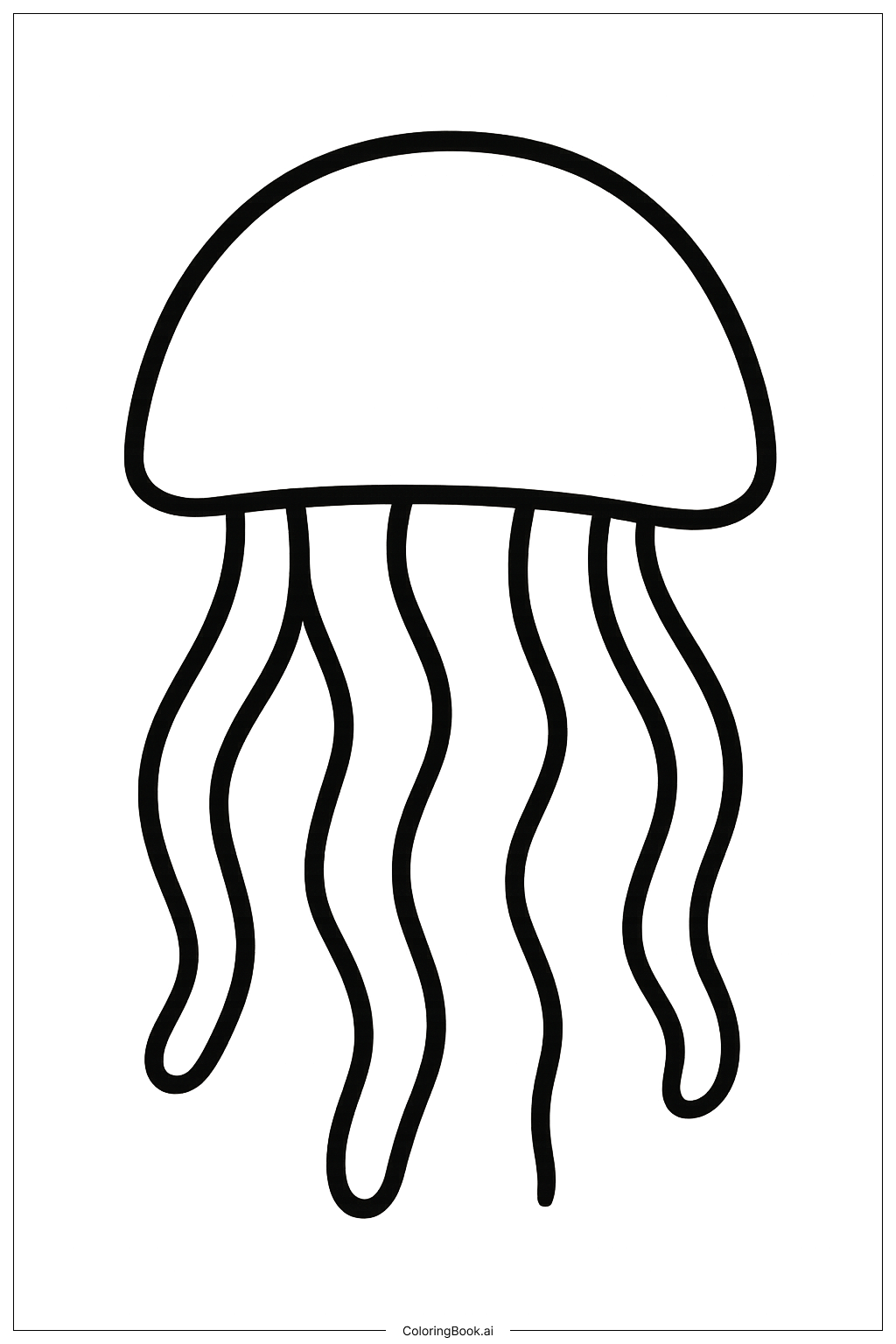
Coloring tips: How to color A Single Jellyfish in the Ocean coloring page well?
Try using different shades of blues, purples, and pinks to color the jellyfish’s body and tentacles. You could add a gradient effect by coloring the top part of the bell with a darker color and the bottom part lighter. For the tentacles, use wavy strokes that follow their shape to make them look soft and flowing. Don’t forget to color the background with light blue or green shades to show the ocean water. You can also add sparkles or bubbles around the jellyfish for extra fun.
Coloring challenges: Which parts are difficult to color and need attention for A Single Jellyfish in the Ocean coloring page?
1. Coloring the wavy tentacles evenly can be tricky because their shapes curve in different directions. 2. Creating smooth color transitions, especially if you want to use gradient effects on the jellyfish body, takes patience and control. 3. Staying inside the thick lines is important but might be challenging for younger children. 4. Choosing colors that blend well but still stand out can be confusing for some. 5. Adding details like shading or highlights may be difficult but will make the jellyfish look more realistic.
Benefits of coloring books: Advantages of drawing A Single Jellyfish in the Ocean coloring page
Coloring this jellyfish helps children improve their fine motor skills by carefully filling in curved shapes. It encourages creativity by letting them pick colors and design gradients. This activity also teaches patience and focus, as children learn to stay inside the lines and blend colors smoothly. Moreover, coloring ocean animals like jellyfish raises awareness and curiosity about marine life. It can be a relaxing and fun exercise to express imagination and enjoy making art.