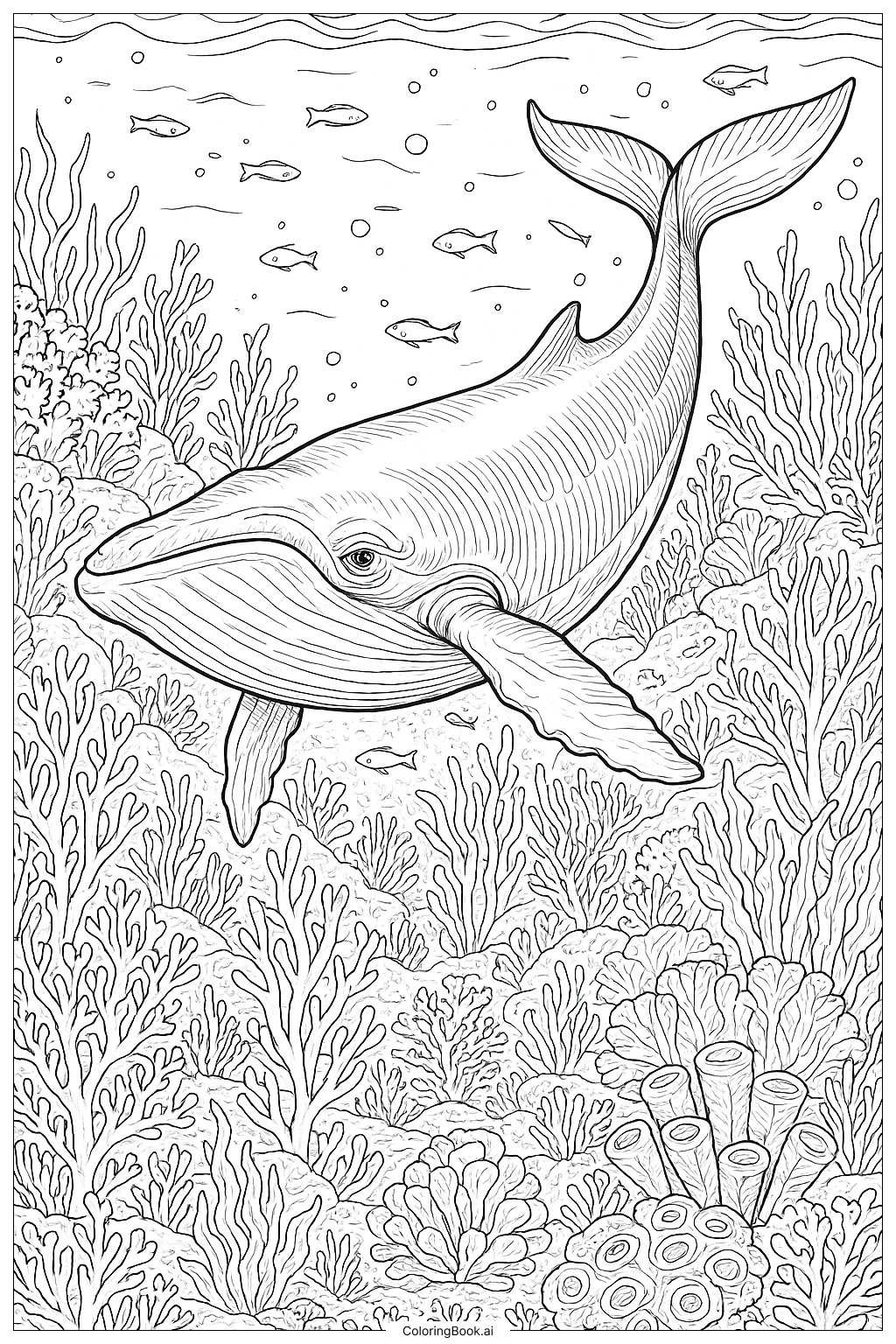
Coloring tips: How to color A Realistic Portrait of an Ocean Whale coloring page well?
Use different shades of blue for the ocean water to show depth. Color the whale in shades of gray or blue to make it look real. You can use lighter colors on the whale's belly and darker on its back. For the small fish, try using bright colors like orange, yellow, or red to make them stand out. The coral reefs can be colored in warm tones like pink, purple, orange, and coral red. Use green and brown for the seaweed to add variety. Use gentle strokes to color the bubbles and waves to keep them soft. Try blending colors to create a smooth look for the whale's body.
Coloring challenges: Which parts are difficult to color and need attention for A Realistic Portrait of an Ocean Whale coloring page?
1. The whale's body has many small lines showing its texture. Coloring these lines carefully can be hard.
2. The coral reefs have many thin branches that need careful coloring to avoid coloring outside the lines.
3. The small fish are scattered around the picture and are very small, needing detailed work.
4. Coloring the bubbles and water waves softly without harsh lines can be tricky.
5. Blending different shades to create a smooth ocean effect and the whale’s realistic look requires patience and care.
Benefits of coloring books: Advantages of drawing A Realistic Portrait of an Ocean Whale coloring page
Coloring this picture helps children improve focus and attention to detail. It encourages learning about ocean animals and underwater environments. It supports fine motor skills as they carefully color small fish and coral branches. The variety of shapes and sizes in the picture helps develop creativity and color recognition. Coloring the gentle whale and peaceful ocean scene can also be relaxing and calming for kids.