Coloring tips: How to color Mouse with Scarf coloring page well?
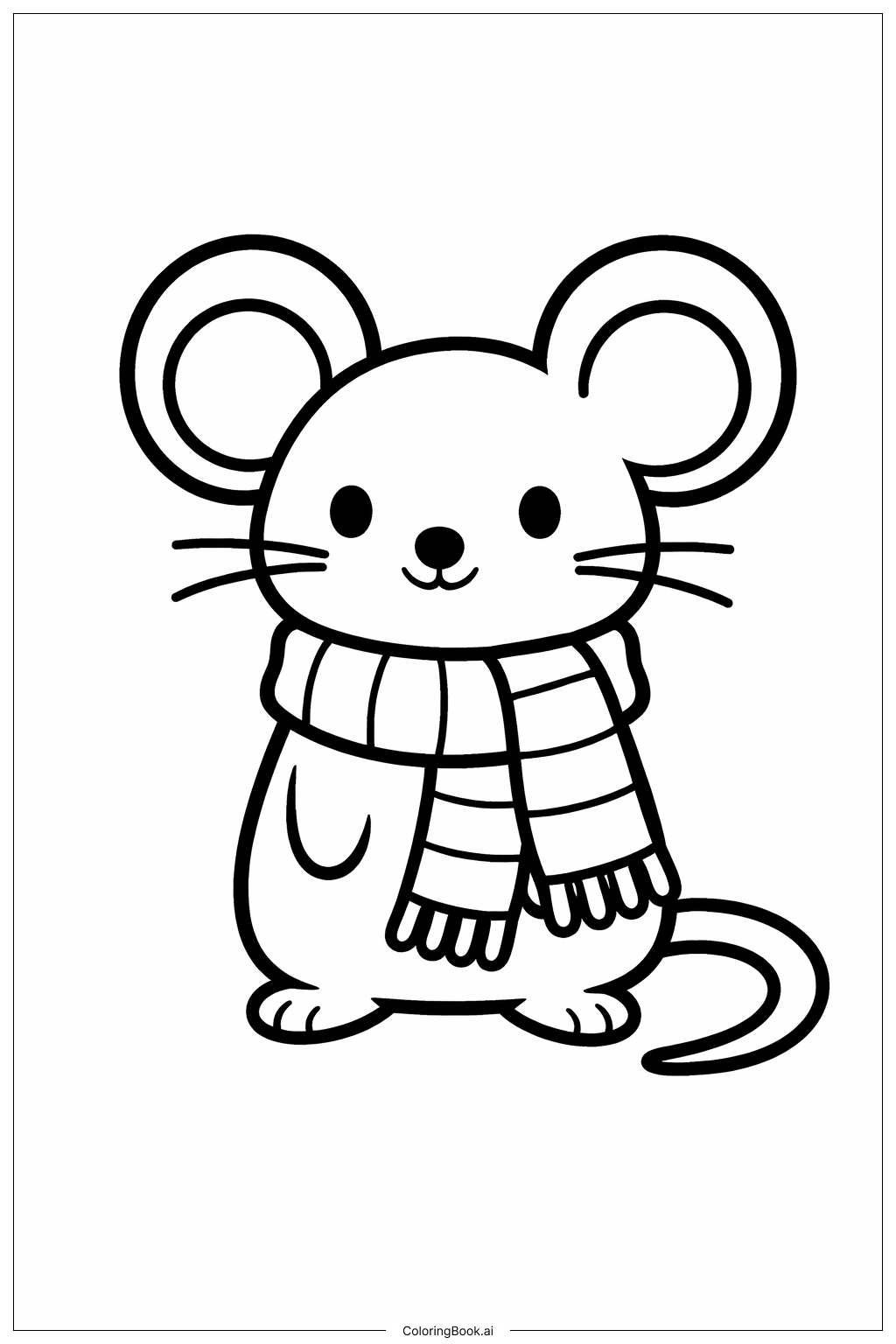
For coloring this mouse, start by choosing soft browns or grays for the mouse's body to create a realistic look. You can pick a bright or warm color like red, blue, or green for the scarf to make it stand out. Use a different color for each stripe on the scarf to add variety and fun. Color the eyes and nose black to keep them distinct. Don’t forget to use lighter shades for the inner ears and some subtle highlights to make the mouse look more lively.
Coloring challenges: Which parts are difficult to color and need attention for Mouse with Scarf coloring page?
1. Coloring the stripes on the scarf evenly might be tricky for young artists because they need to stay inside the narrow lines. 2. The mouse's small feet and tail require careful coloring to avoid going outside the lines. 3. The whiskers are thin and close to the face, so coloring around them without filling them in can be difficult. 4. Choosing colors that contrast well but still look natural for the mouse and scarf might be hard for beginners. 5. Keeping the colors smooth and consistent, especially on curved areas like ears and cheeks, can be challenging.
Benefits of coloring books: Advantages of drawing Mouse with Scarf coloring page
Coloring this mouse helps children develop fine motor skills and hand-eye coordination as they carefully color inside small spaces like the stripes on the scarf and the mouse's feet. It encourages creativity when choosing colors for the scarf and mouse. The simple shapes make it less overwhelming, allowing kids to focus on neatness. It also helps improve concentration and patience as they spend time completing the picture. Overall, it's a fun way to practice coloring skills and enjoy art.