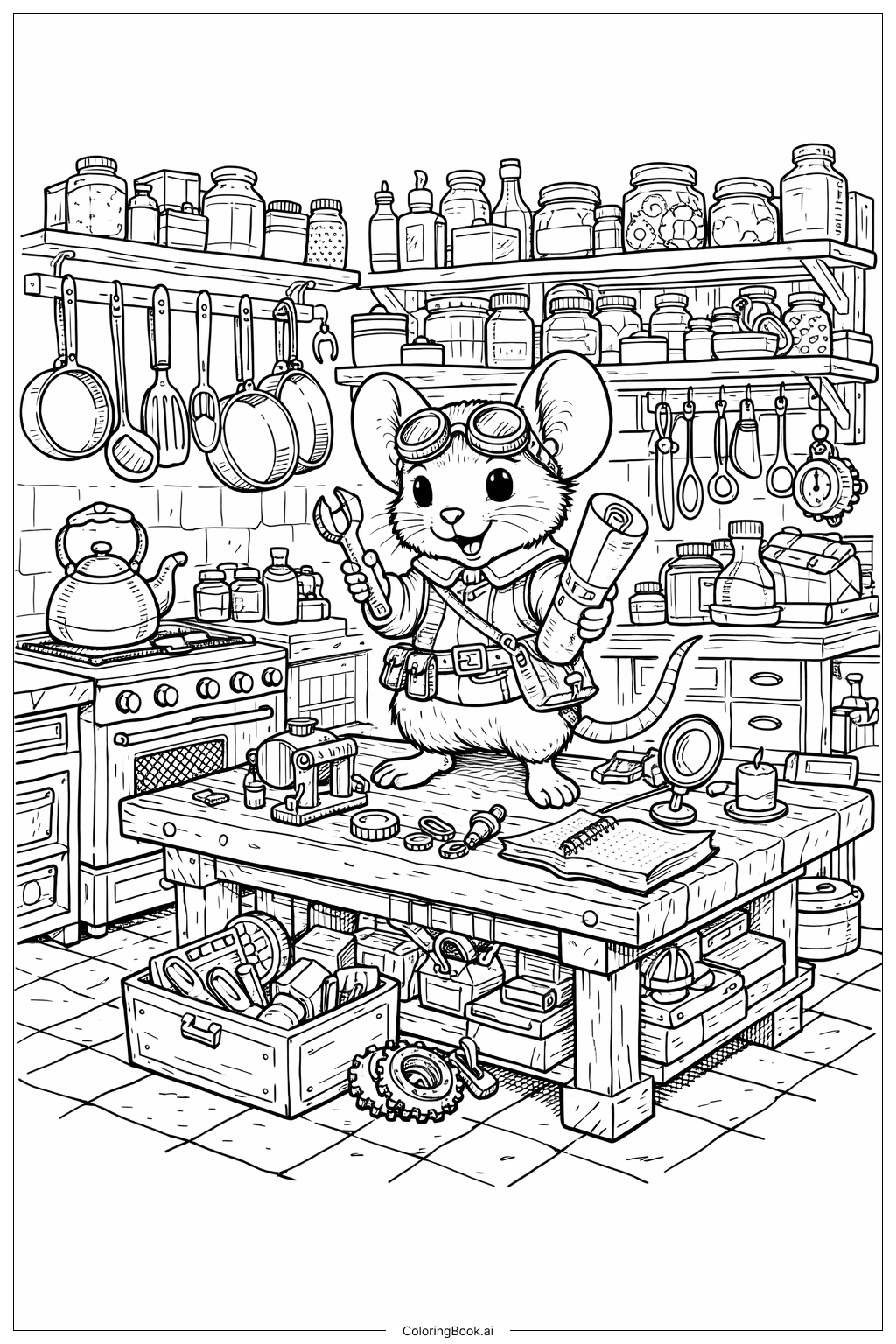
Coloring tips: How to color Mouse Kitchen Workshop coloring page well?
Use soft and warm colors for the mouse's fur, like light browns or grays. The kitchen shelves and tools can be colored with natural wood tones and metal grays to make them look realistic. Bright colors like red, yellow, or blue can be used for the bottles and jars to make them stand out. Try to color the small details carefully, such as the mouse's goggles and the tools on the table, to bring the picture to life. Use darker shades for shadows to add depth.
Coloring challenges: Which parts are difficult to color and need attention for Mouse Kitchen Workshop coloring page?
1. Many small objects on the shelves and table require careful attention to avoid coloring outside the lines. 2. The details on the mouse, such as the goggles, fur, and clothing, need delicate coloring to show texture and depth. 3. The hanging utensils and kitchen tools need consistent coloring to make them look realistic. 4. There are many overlapping objects, so it can be tricky to color each one separately. 5. Adding shadows and highlights takes practice to create a 3D effect on the flat image.
Benefits of coloring books: Advantages of drawing Mouse Kitchen Workshop coloring page
Coloring this picture helps improve focus and attention to detail because of its many small parts. It also encourages creativity in choosing colors for different objects in the workshop. Coloring the mouse and its surroundings can develop fine motor skills and hand-eye coordination. The scene inspires imagination about what the mouse might be building or fixing. Finally, finishing the picture can give a sense of accomplishment and boost confidence.