Coloring tips: How to color Mouse in Pocket coloring page well?
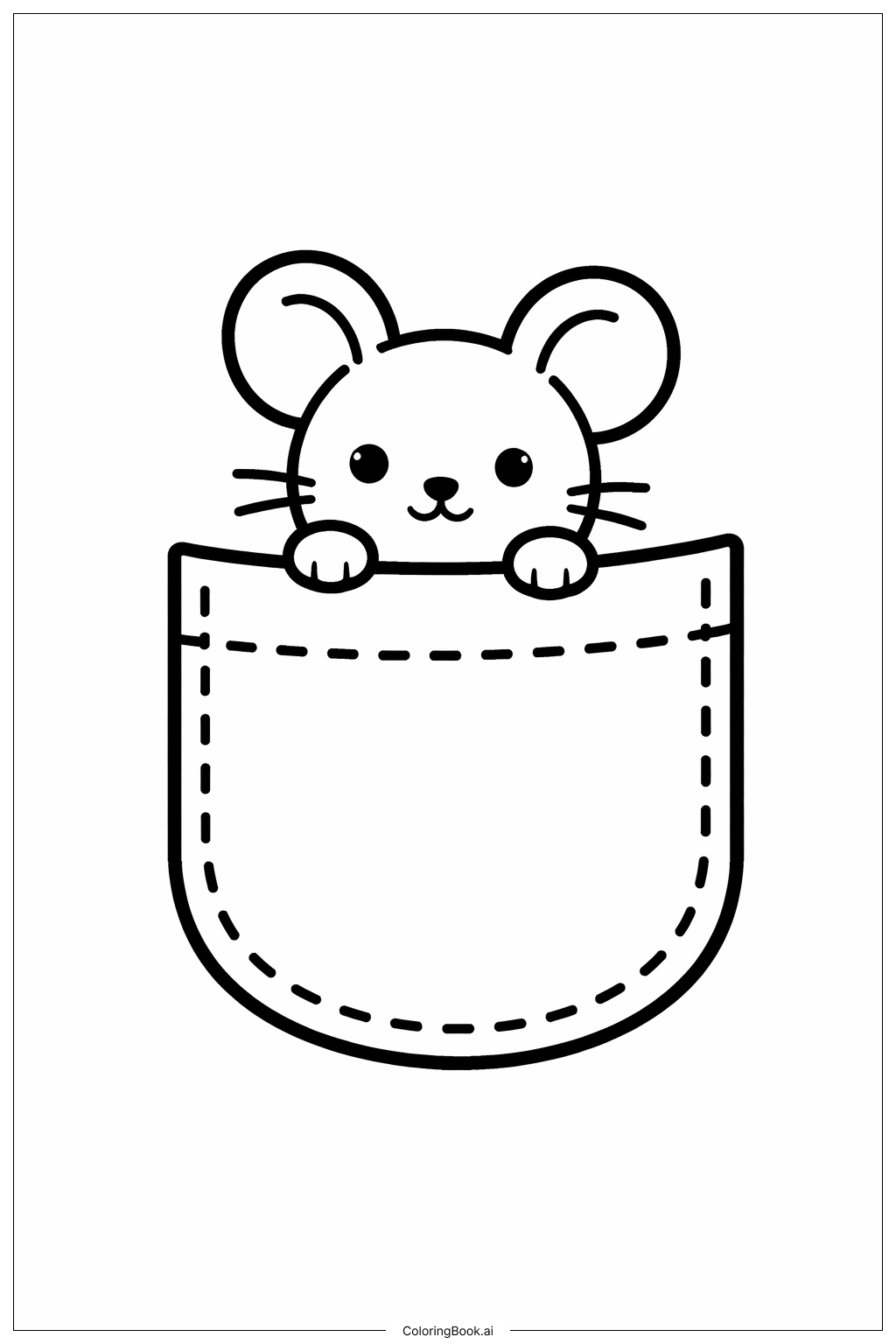
Color the mouse in soft, warm colors like gray, light brown, or beige to make it look cozy. Use pink or peach tones for the ears and the nose. The eyes can stay black or dark brown for contrast. For the pocket, pick bright or patterned colors like blue, red, or yellow to make it stand out. You can add some shading on the pocket edges and mouse paws to create depth. Try mixing a few light and dark tones for a nice effect. Don’t forget to color the background with lighter pastel shades for a gentle look.
Coloring challenges: Which parts are difficult to color and need attention for Mouse in Pocket coloring page?
1. Coloring the mouse’s round ears evenly can be tricky because they are detailed and small, needing careful attention to stay inside the lines.
2. The stitching lines on the pocket require precision to avoid coloring outside these small dashed lines.
3. Ensuring the mouse’s paws and the top of the pocket have clear separation needs careful coloring to keep the shapes distinct.
4. Balancing color shades between the mouse and pocket for a natural look might be challenging for younger children.
5. Adding shading and highlights to make the image look lively can be difficult but rewarding.
Benefits of coloring books: Advantages of drawing Mouse in Pocket coloring page
Coloring this mouse in a pocket picture helps children practice fine motor skills by staying within lines, especially around the small mouse paws and pocket stitching. It encourages color recognition and mixing by choosing different shades for the mouse and pocket. The simple design keeps kids focused, promoting concentration and patience. This fun activity boosts creativity as children imagine how a mouse looks and experiment with colors for the pocket fabric and background. It also teaches attention to detail with small areas like the ears and stitching.