Coloring tips: How to color Mouse in Garden Path coloring page well?
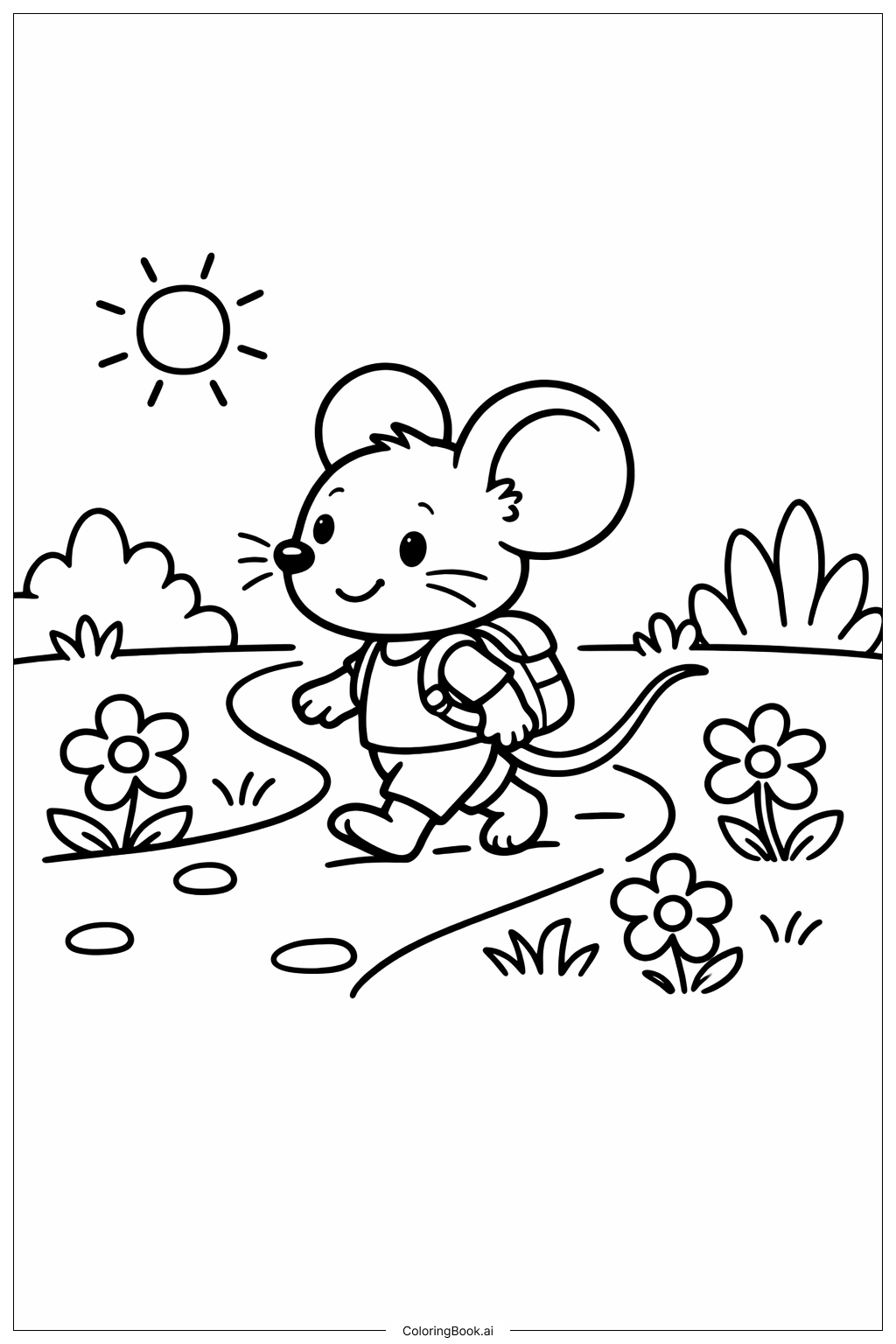
Start with the mouse's body. Use a warm light gray or soft tan for its fur. Add a slightly darker shade on the ears, paws, and tail to give it depth. Use pink for the inner ears and the tiny nose. Color the eyes dark brown or black, with a small white dot for a sparkle effect. For the garden path, try sandy brown or beige for the stepping stones. Use different shades of green for the grass and leaves to keep things lively. Flowers can be any color you like — red, yellow, purple, or pink all look great. Mushrooms look wonderful in red with white spots or soft orange. Keep the background lighter so the mouse stands out as the star of the scene. Feel free to mix and match colors to make the garden feel magical and full of life.
Coloring challenges: Which parts are difficult to color and need attention for Mouse in Garden Path coloring page?
• Mouse Fur Texture: The mouse's small, rounded body has soft curves that can be tricky to shade. Blending two or three similar tones — like light gray and warm beige — helps create a fluffy, realistic fur effect. Take your time working in small circular strokes to stay within the fine outline details.
• Tiny Facial Features: The mouse's face includes very small details like whiskers, a tiny nose, and expressive eyes. These features sit close together, making it easy to accidentally color over lines. Using a sharp, fine-tipped colored pencil or a thin marker works best here. Work slowly and consider leaving the eye highlight uncolored for a lively look.
• The Winding Garden Path: The stepping stones along the path have irregular shapes and sit at different angles. Coloring each stone with a slightly different shade of brown, gray, or beige adds a natural, worn look. Be careful to keep the spaces between stones clearly defined so the path stays readable.
• Overlapping Plants and Flowers: The sides of the path are filled with layered leaves, petals, and stems that overlap each other. Giving each plant element a distinct but harmonious color — different greens for leaves, varied hues for flowers — prevents the scene from looking flat or muddy. Plan your color palette before you begin.
• Mushrooms and Small Details: Small decorative elements like mushrooms and grass blades require a steady hand. Use bright, contrasting colors for the mushroom caps to help them pop from the green background. Avoid pressing too hard with pencils near these tiny shapes to stay within the outlines cleanly.
Benefits of coloring books: Advantages of drawing Mouse in Garden Path coloring page
Coloring this Mouse in Garden Path image offers a wonderful range of benefits for children and families. The friendly mouse character instantly sparks imagination and storytelling, encouraging kids to invent their own little adventures as they color. This kind of creative play supports emotional expression and builds confidence in young artists. The garden setting introduces a variety of shapes — flowers, leaves, stones, and mushrooms — which helps children practice recognizing and coloring different forms. Working through those details trains fine motor skills and hand-eye coordination, both of which are important for early development. The scene also invites color exploration. Choosing shades for the fur, petals, and path teaches kids about color relationships and how different tones work together. For older children, layering colors to create depth adds a more advanced artistic challenge. The calming, repetitive motion of coloring is known to reduce stress and improve focus, making it a great quiet-time activity. Whether done solo or together with a parent or sibling, this page creates a relaxed, screen-free experience that is both fun and genuinely enriching.