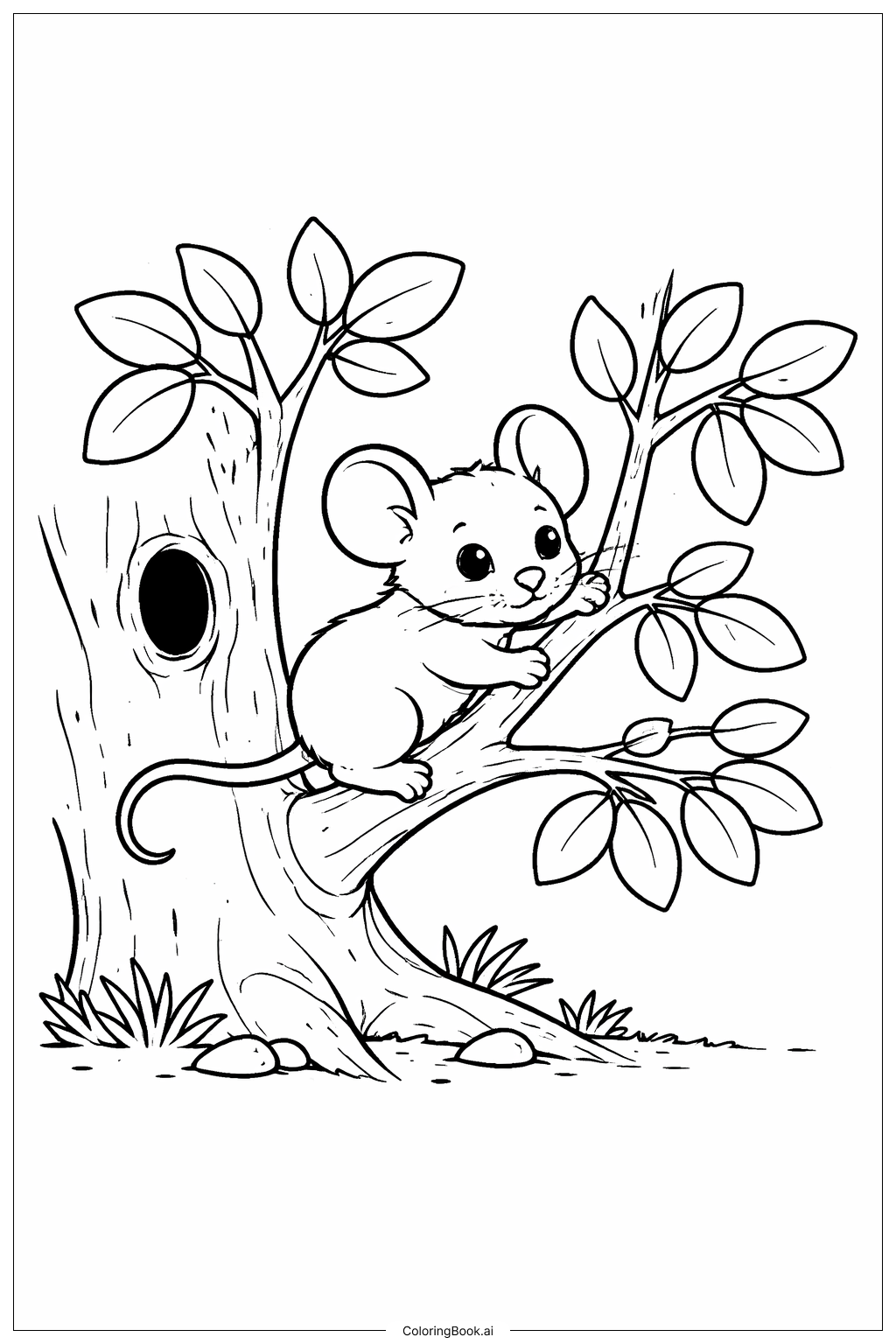
Coloring tips: How to color Mouse Exploring Tree coloring page well?
Use light brown or gray for the mouse's body to make it look soft and cute. The eyes can be colored black with a little white spot for shine. The tree trunk and branches can be various shades of brown to show texture. Use different shades of green for the leaves to make the tree look lively. The grass can be colored in a brighter green, and the rocks in gray or light brown. You can add a light blue background to make the scene daytime and cheerful.
Coloring challenges: Which parts are difficult to color and need attention for Mouse Exploring Tree coloring page?
1. Coloring the small and detailed parts like the mouse's paws and ears can be tricky because they need precision to keep the shapes clear.
2. The leaves are close together and overlapping, so it might be hard to choose different shades of green that still look natural.
3. The tree trunk has many lines and texture details, which require careful coloring to avoid making it look messy or too dark.
4. Keeping the mouse looking soft and fluffy while coloring can be challenging because it needs gentle shading rather than solid colors.
5. Balancing the colors between the tree, mouse, and background to make the mouse stand out without clashing is important and sometimes hard to achieve.
Benefits of coloring books: Advantages of drawing Mouse Exploring Tree coloring page
Coloring this picture helps improve fine motor skills as it requires careful hand control for the small details. It also encourages creativity by allowing children to choose different shades for the mouse and tree. The image promotes focus and patience because of the many parts to color carefully. Coloring the nature scene can be relaxing and teaches children about animals and trees, connecting them with the environment. Overall, it is a fun and educational activity that boosts confidence as they complete a beautiful picture.