Coloring tips: How to color Kawasaki Motorcycle Racing coloring page well?
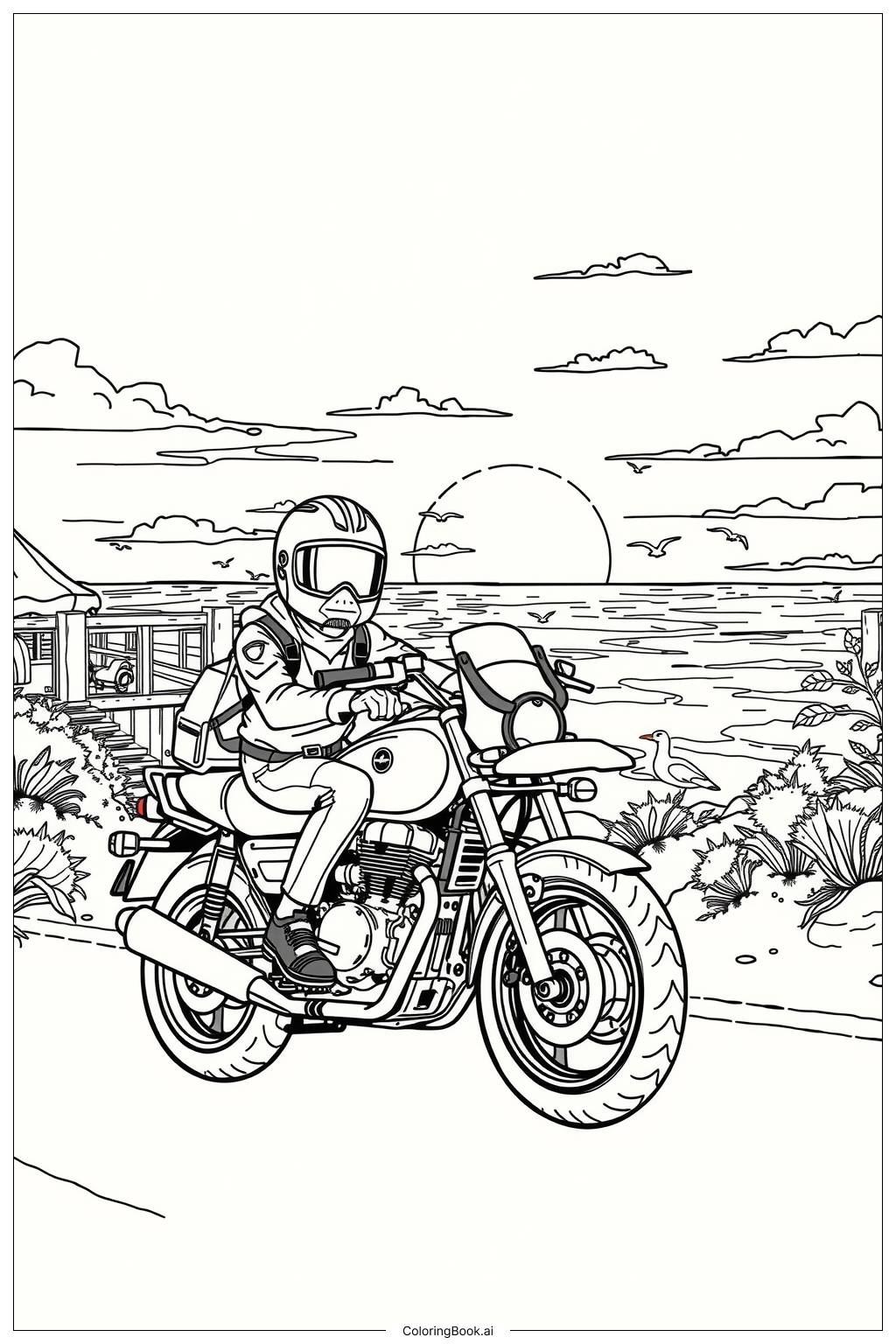
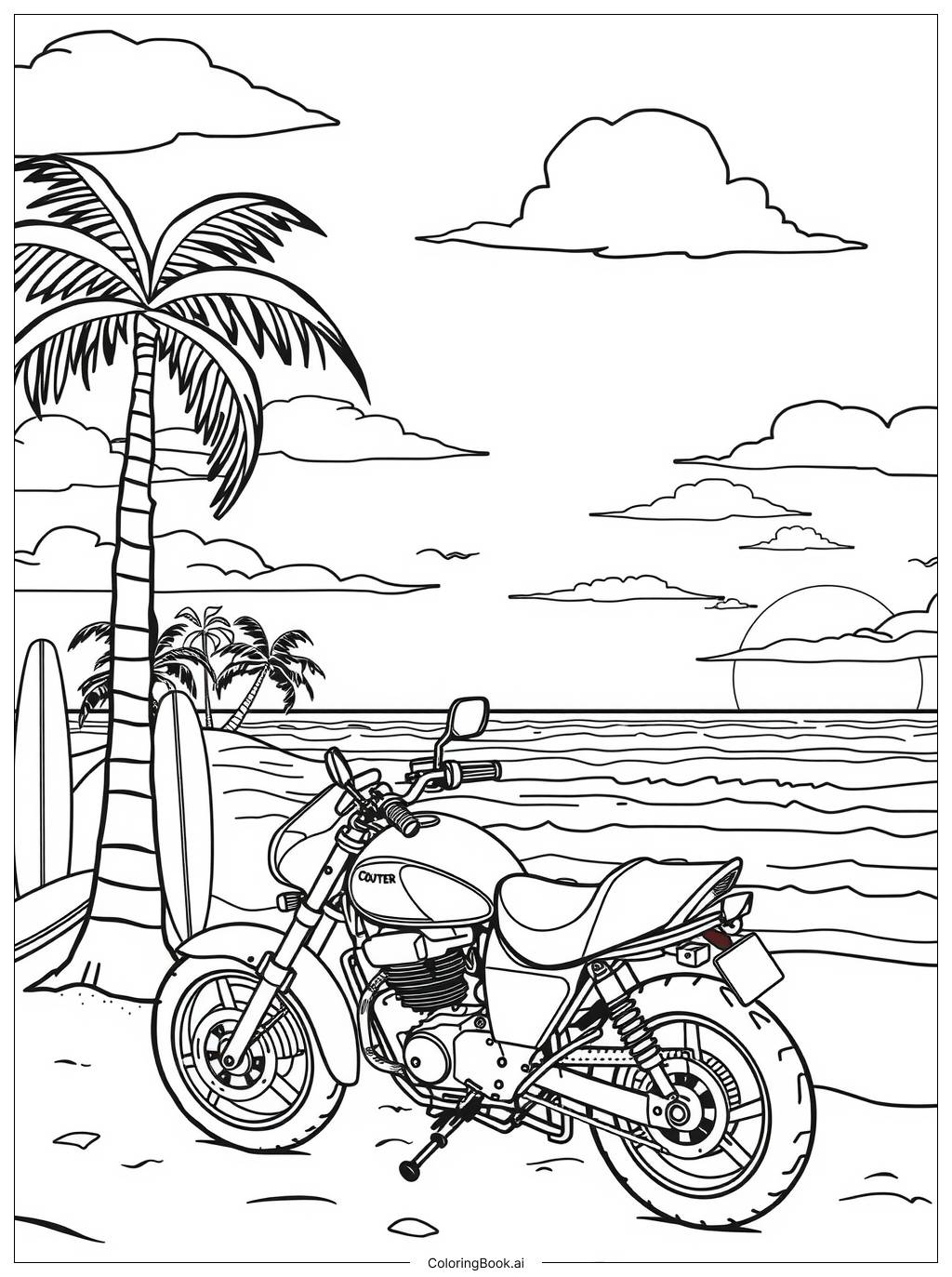
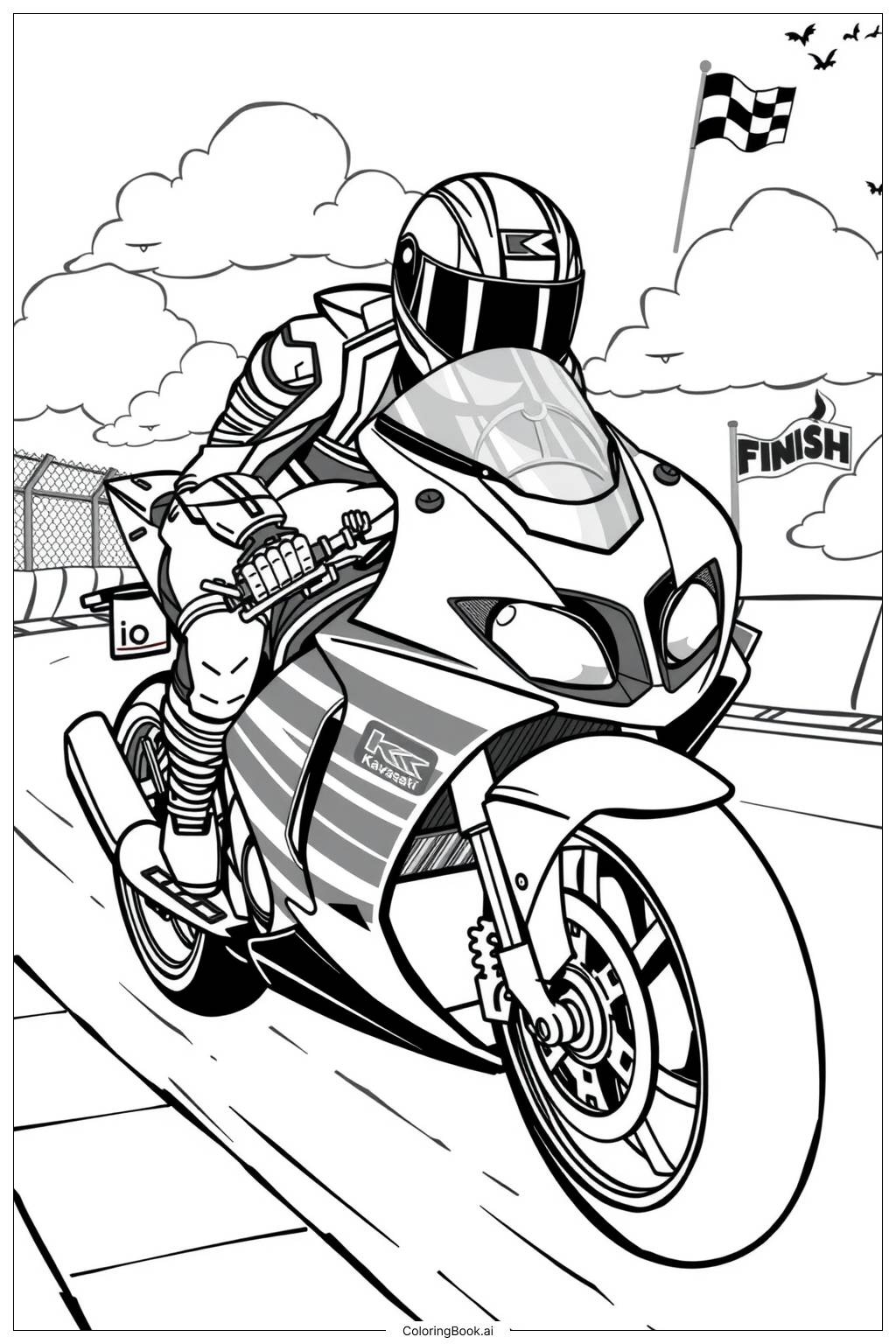
To color this Kawasaki Motorcycle Racing image, use bright green as the main color, as it is Kawasaki’s signature color. You can add touches of black for the tires, seat, and mechanical parts to give a realistic look. Use silver or gray for the exhaust pipe, forks, and metal parts to create a shiny effect. Try varying different shades of green to add depth and highlights on the fairing and body. You can also color the spokes in a light gray or white to help them stand out. The background can be left white or lightly shaded in blue or gray to keep the focus on the racing motorcycle. Feel free to use bold and sharp colors to bring out the energy of this fast racing bike.
Coloring challenges: Which parts are difficult to color and need attention for Kawasaki Motorcycle Racing coloring page?
• Fine Details: The motorcycle has many small parts like spokes, brake discs, and exhaust pipes that require careful coloring to avoid going outside the lines and to maintain clarity.
• Consistent Shading: To make the Kawasaki Motorcycle Racing look more realistic, consistent shading is needed to show the bike’s curves and metal surfaces. This can be a challenge for younger children.
• Color Accuracy: Capturing Kawasaki’s signature green color with the right shade can be tricky, especially when blending or layering colors to show highlights and shadows.
• Mechanical Complexity: Some mechanical parts such as the suspension or engine components have intricate outlines that might be confusing to color without mixing colors or overfilling.
• Large and Small Areas: The image has a mix of large spaces like the fairing and tiny details like the spokes, requiring different coloring techniques and patience.
Benefits of coloring books: Advantages of drawing Kawasaki Motorcycle Racing coloring page
Coloring this Kawasaki Motorcycle Racing image helps improve focus and patience as children and adults work on the detailed parts of the motorcycle. It also encourages creativity by experimenting with different shades of green and metallic colors. This activity develops fine motor skills through precise coloring of small components like spokes and brake discs. Additionally, it teaches color recognition and blending as users try to create realistic effects with light and shadow. Finally, it introduces an appreciation for motorcycle design and engineering by highlighting the complexity and speed of a racing bike in a fun and engaging way.