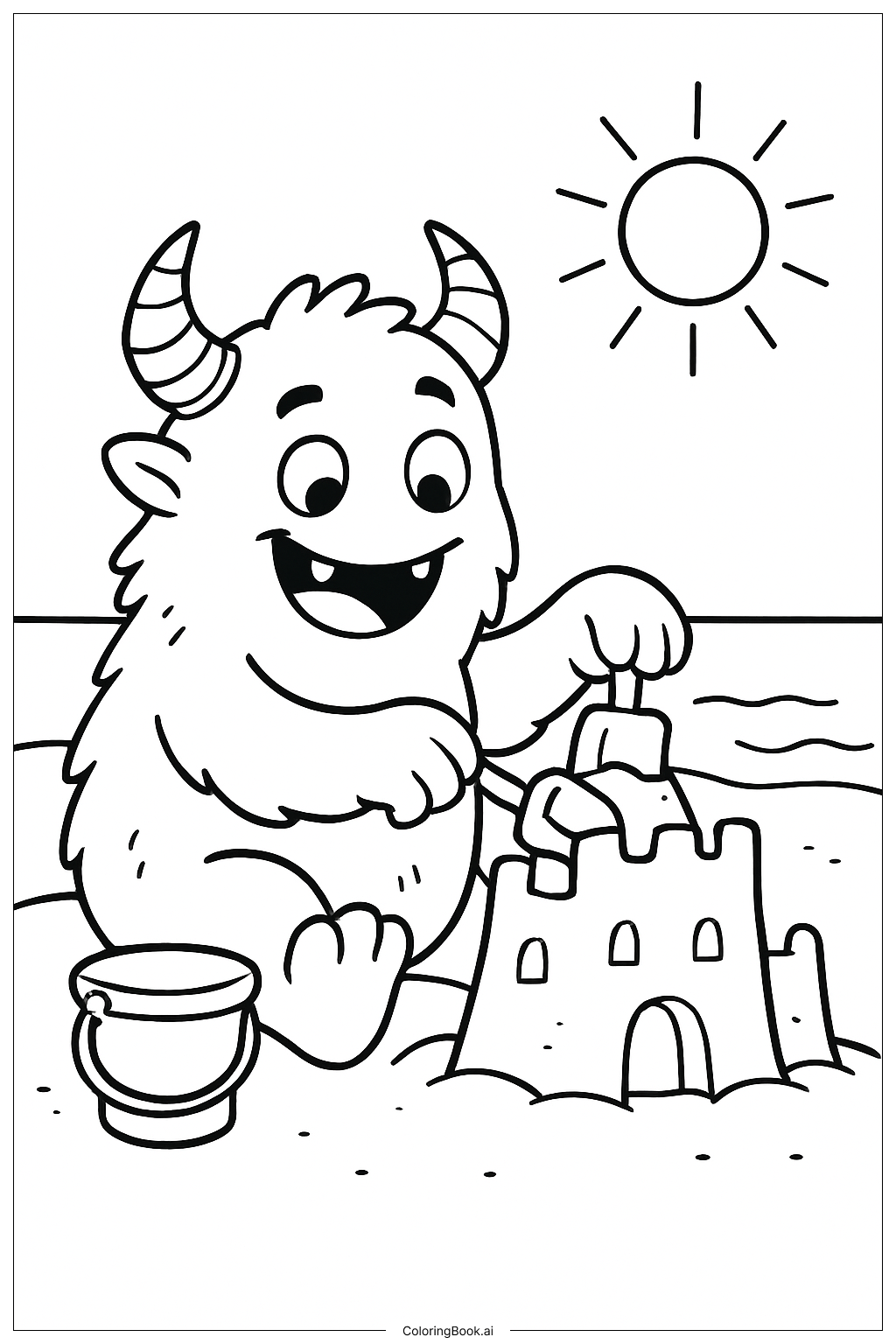
Coloring tips: How to color Monster Making Sandcastle coloring page well?
Try using bright and cheerful colors to bring this scene to life. For the Monster, choose creative colors like greens, blues, or purples to make it fun and unique. The sandcastle can be colored with warm tones such as beige, light brown, or pale yellow to look realistic. Use soft blues and whites for the ocean waves and sky to add contrast. Don’t forget to add colorful details to the seashells and pebbles—try pinks, oranges, and purples to make them stand out. Experiment with shading on the Monster’s body to show texture. Children can use crayons, markers, or colored pencils to mix and match colors that make the scene bright and playful.
Coloring challenges: Which parts are difficult to color and need attention for Monster Making Sandcastle coloring page?
• Fine Details on the Monster: The Monster’s fingers, horns, and facial features require careful coloring inside small spaces to maintain neatness.
• Sandcastle Texture: The sandcastle has many little bumps and curves, which can be tricky to color evenly without going outside the lines.
• Mixing Colors: Achieving realistic shading on the sand and sea, mixing light and dark shades smoothly, might be challenging for younger children.
• Small Objects: The seashells and pebbles are tiny and require attention to detail to color without smudging neighboring areas.
• Contrast Balance: Coloring the Monster with bright colors next to the softer sand and sky demands balancing strong and light hues to keep the scene harmonious.
Benefits of coloring books: Advantages of drawing Monster Making Sandcastle coloring page
Coloring this image encourages creativity and imagination by letting children choose bright and unusual colors for the Monster. It helps develop fine motor skills and hand-eye coordination through careful coloring of small details like the sandcastle and seashells. The activity improves patience and concentration as children focus on different parts of the scene with precision. Additionally, blending colors on the sand and ocean introduces basic art concepts like shading and contrast. Finally, coloring a joyful beach scene promotes a positive mood and a love for nature and playtime outdoors.