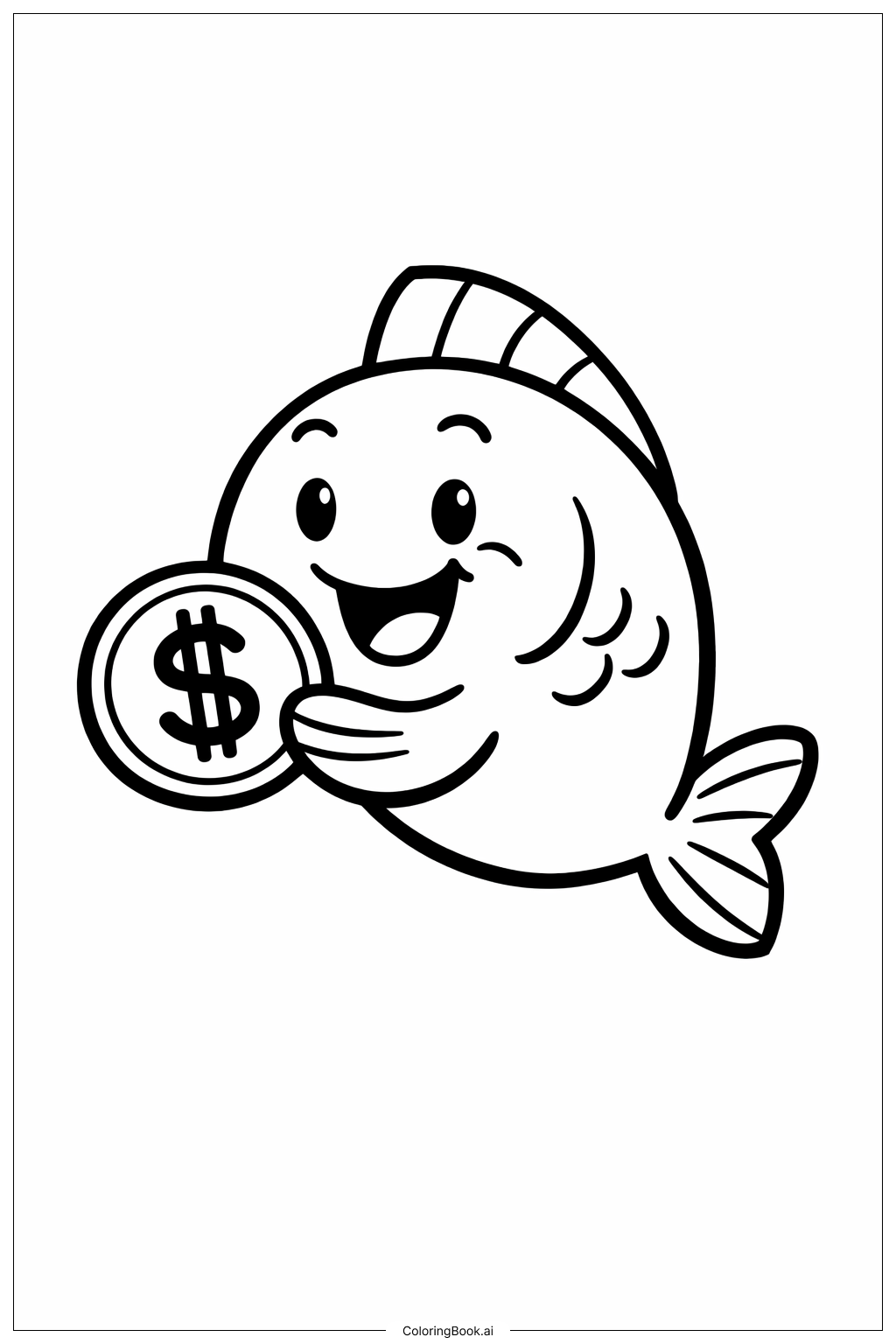
Coloring tips: How to color Money Fish With Coin coloring page well?
Start with the fish's body by choosing a bright, eye-catching color like golden yellow, orange, or shimmery teal to give it a lively underwater feel. Use a slightly darker shade of the same color to fill in the scales, adding depth and texture to the body. For the fins and tail, try a lighter or complementary color such as pale yellow or soft coral to make them stand out. Color the large coin in gold or bright yellow, and use a warm brown or orange along its edges to suggest a metallic, three-dimensional look. Add a deeper shade in the center around the symbol to create contrast. The eyes can be colored with bright white for the whites and a deep brown or black for the pupils, with a tiny white dot to add a sparkle. Use soft blue or aqua for the background bubbles and any water hints to complete the underwater atmosphere. Feel free to experiment with fun, bold colors to make your fish truly unique.
Coloring challenges: Which parts are difficult to color and need attention for Money Fish With Coin coloring page?
• Scale Patterns: The fish's body is covered in many small, overlapping scales. Staying within each individual scale while keeping a consistent color pattern can be tricky, especially for younger colorists. Using fine-tipped colored pencils or markers will help you fill each scale neatly without going over the lines.
• Coin Details and Shading: The large coin features fine ridged edges and a detailed symbol in the center. Coloring these small areas evenly requires a steady hand and a sharp pencil tip. Getting the metallic gold look just right takes patience — try layering light and dark gold tones to build up a realistic shine.
• Fin and Tail Edges: The fins and tail have delicate, flowing lines with thin pointed tips. These narrow areas are easy to color outside of, especially with thicker markers or crayons. Take your time and color slowly from the center outward toward the tips for better control.
• Facial Features: The fish has a cartoon face with large expressive eyes and a smile. The eyes in particular require careful coloring to keep the whites, pupils, and any sparkle highlights separate and clean. Using a fine-tipped tool for the pupil and a white gel pen for the highlight can make a big difference.
• Background Bubbles: The small bubbles scattered around the image are tiny and round. Filling them with a light, even color without smudging the surrounding lines can be a challenge. Consider leaving some bubbles white or using a very light blue pencil for a soft, airy effect.
Benefits of coloring books: Advantages of drawing Money Fish With Coin coloring page
Coloring this Money Fish With Coin page offers a wonderful range of benefits for children and young learners. Working through the detailed scales and coin patterns helps strengthen fine motor skills and improves hand-eye coordination, both of which are important for writing and everyday tasks. Choosing colors for the fish, coin, and bubbles encourages creative thinking and gives kids the freedom to express their own artistic style. There are no wrong color choices here — every version is unique and personal. The focused, quiet nature of coloring also helps children practice concentration and patience, especially when tackling smaller details like the facial features or the coin's ridged edges. Completing the page from start to finish gives a satisfying sense of accomplishment, building confidence and a positive attitude toward creative work. The fun theme combining a friendly fish with a shiny coin can also spark curiosity about money, ocean life, and imaginative worlds, making it a great starting point for storytelling or learning conversations. Overall, this coloring page turns a simple creative activity into a valuable experience that supports both artistic growth and mental well-being.