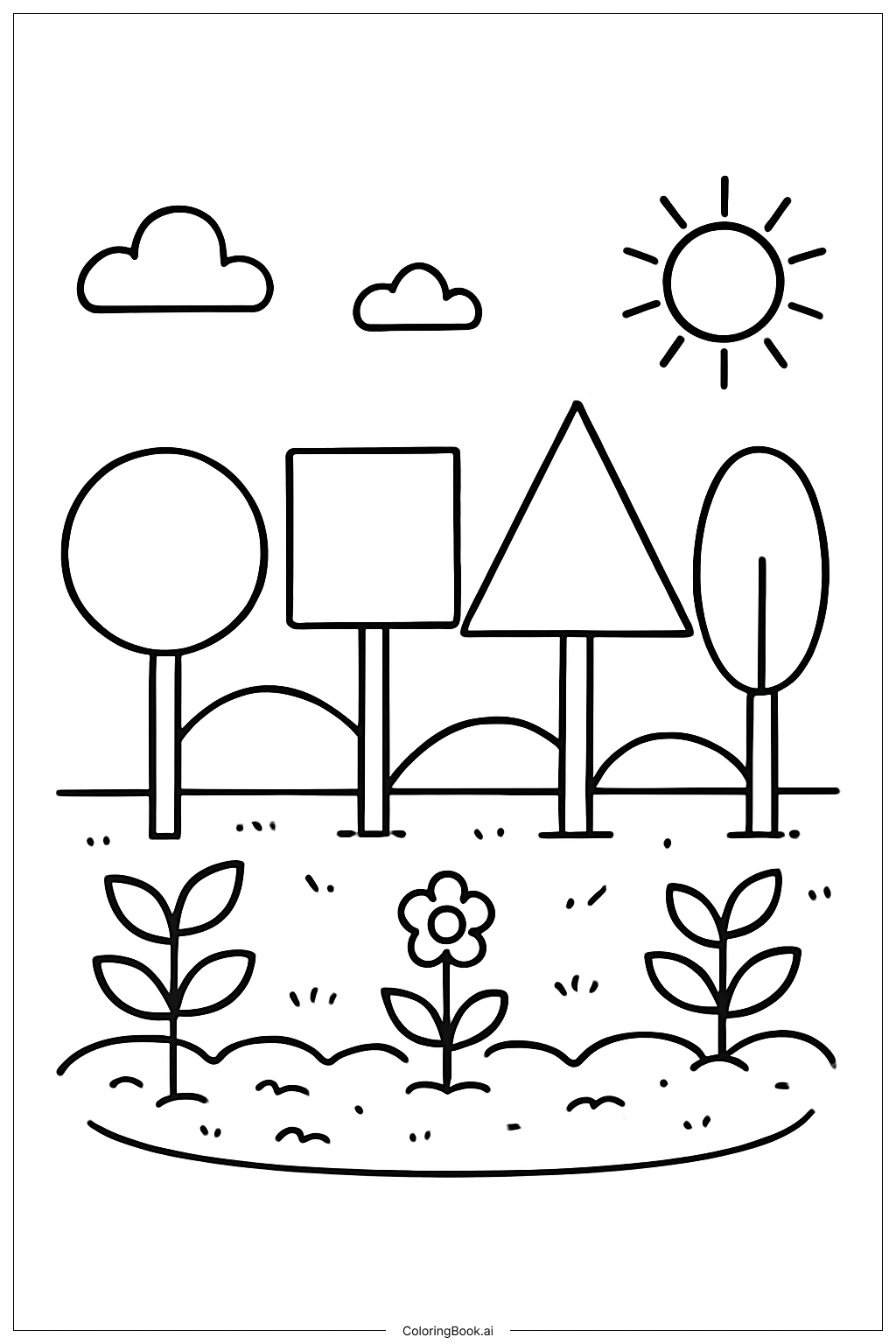
Coloring tips: How to color Math Shape Garden coloring page well?
When coloring the Math Shape Garden, consider using bright and cheerful colors to bring each shape to life. Color the big flowers in bold primary colors like red, blue, and yellow to make them stand out. Use softer shades like pastels for smaller shapes or leaves to create nice contrast. You can alternate colors on repeated shapes to create a pattern effect, such as coloring one triangle purple and the next one green. For the background sky, try light blues and whites to keep the focus on the garden shapes. Feel free to add shading or color gradients to give depth to the shapes if you want to challenge yourself. This page is excellent for practicing neat coloring within clear outlines.
Coloring challenges: Which parts are difficult to color and need attention for Math Shape Garden coloring page?
• Different Shape Boundaries: The garden contains many different geometric shapes close together, requiring careful coloring inside the distinct edges without mixing colors. • Small Details: The leaves, tendrils, and small petals are delicate and may be tricky to color neatly, especially for younger children. Fine motor control is needed to stay within the lines on these parts. • Pattern Consistency: Since some shapes repeat in a pattern (like petals or hexagons), maintaining consistent colors or designs can be a challenge to produce a harmonious look. • Shape Identification: Some shapes overlap or are nestled inside others, which means colorers need to identify each shape separately and decide which colors suit them best. • Even Coverage: Keeping the colors smooth and even without streaks when filling large shapes like circles or squares requires practice and patience.
Benefits of coloring books: Advantages of drawing Math Shape Garden coloring page
Coloring this Math Shape Garden helps improve hand-eye coordination and fine motor skills as children carefully navigate the different shapes and details. It encourages recognition of geometric figures and patterns, reinforcing important Math concepts in a fun way. The project also boosts creativity by inviting kids to choose colors and experiment with combining shades. Staying within the lines promotes concentration and patience, while the repetitive shapes help develop consistency and neatness in coloring. Overall, it provides a relaxing yet educational activity that combines art and learning seamlessly.