Coloring tips: How to color Math Garden Flowers coloring page well?
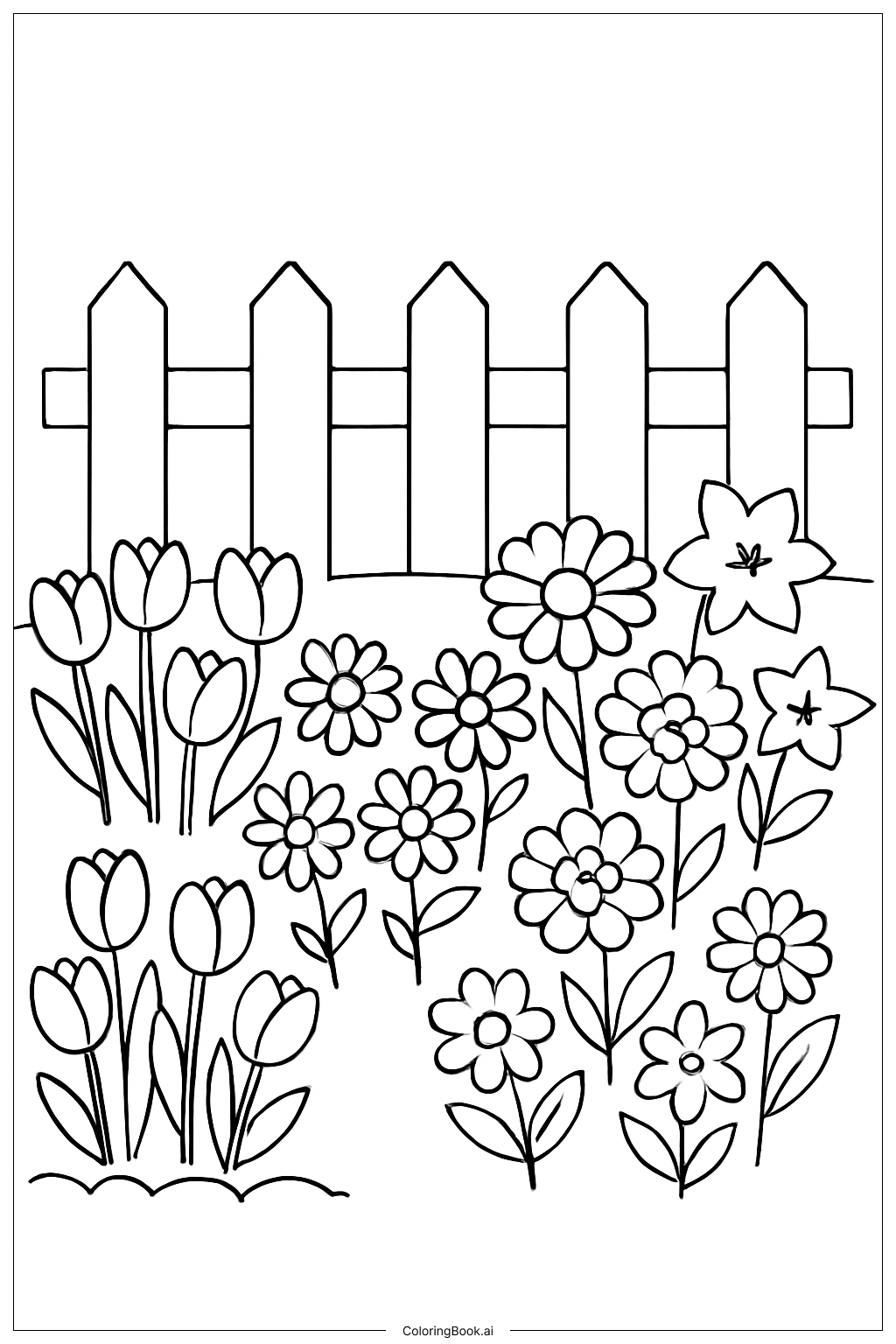
When coloring this garden scene, children can use bright and vibrant colors. For the tulips, consider shades of red, yellow, and purple to create a lively effect. The daisies can be colored white with yellow centers. The leaves can be various shades of green, showing the richness of the garden. The fence can be painted white or a pastel color for a softer look. Children can also experiment with different colors for the flowers and plants to personalize the garden according to their imaginations.
Coloring challenges: Which parts are difficult to color and need attention for Math Garden Flowers coloring page?
1. Color Blending: Children might find it challenging to blend colors effectively, especially for the flower petals. They can practice using lighter shades and gradually adding darker colors. 2. Keeping Within Lines: Some children may struggle to stay within the lines while coloring intricate details of the flowers and leaves. Encouraging them to use a smaller brush or color pencil can help. 3. Choosing Color Combinations: Selecting harmonious color schemes can be tough. Kids can learn about complementary colors and contrast through their choices. 4. Detailing: The intricate patterns inside the flowers may cause difficulty. They can practice coloring in small sections, allowing their focus to remain steady. 5. Patience: Completing the entire garden can require time and attention. Kids can learn to take their time and enjoy the process rather than rushing through.
Benefits of coloring books: Advantages of drawing Math Garden Flowers coloring page
Coloring this garden scene provides several benefits for children. It enhances their creativity by allowing them to choose colors and experiment with different combinations. This activity also improves their fine motor skills as they practice holding crayons or colored pencils. Additionally, coloring can be a calming and relaxing activity, helping to reduce stress and anxiety. It provides a sense of achievement when they complete the picture, boosting their confidence. Lastly, it encourages an appreciation of nature and fosters a love for gardening and plants.