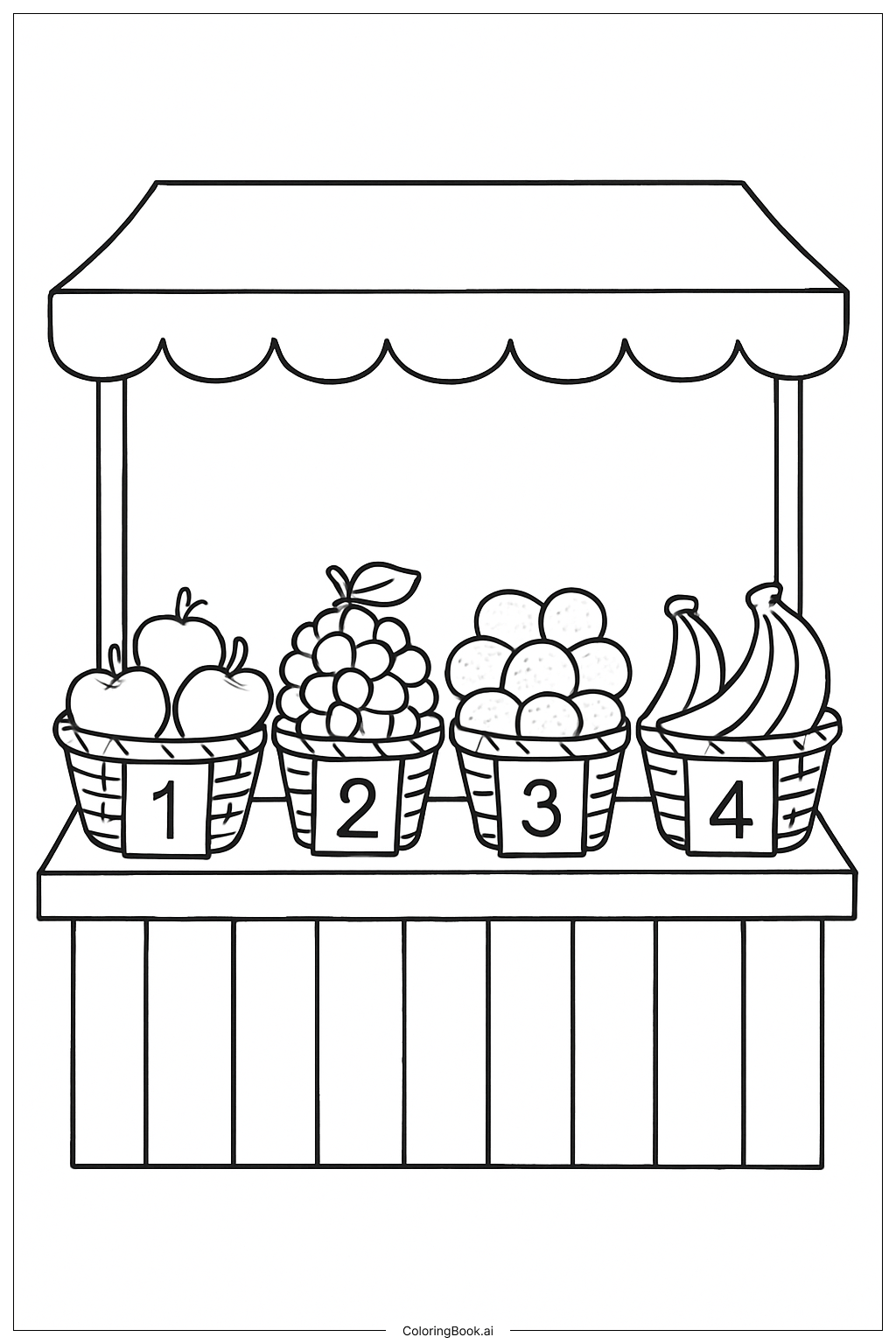
Coloring tips: How to color Math Fruit Market coloring page well?
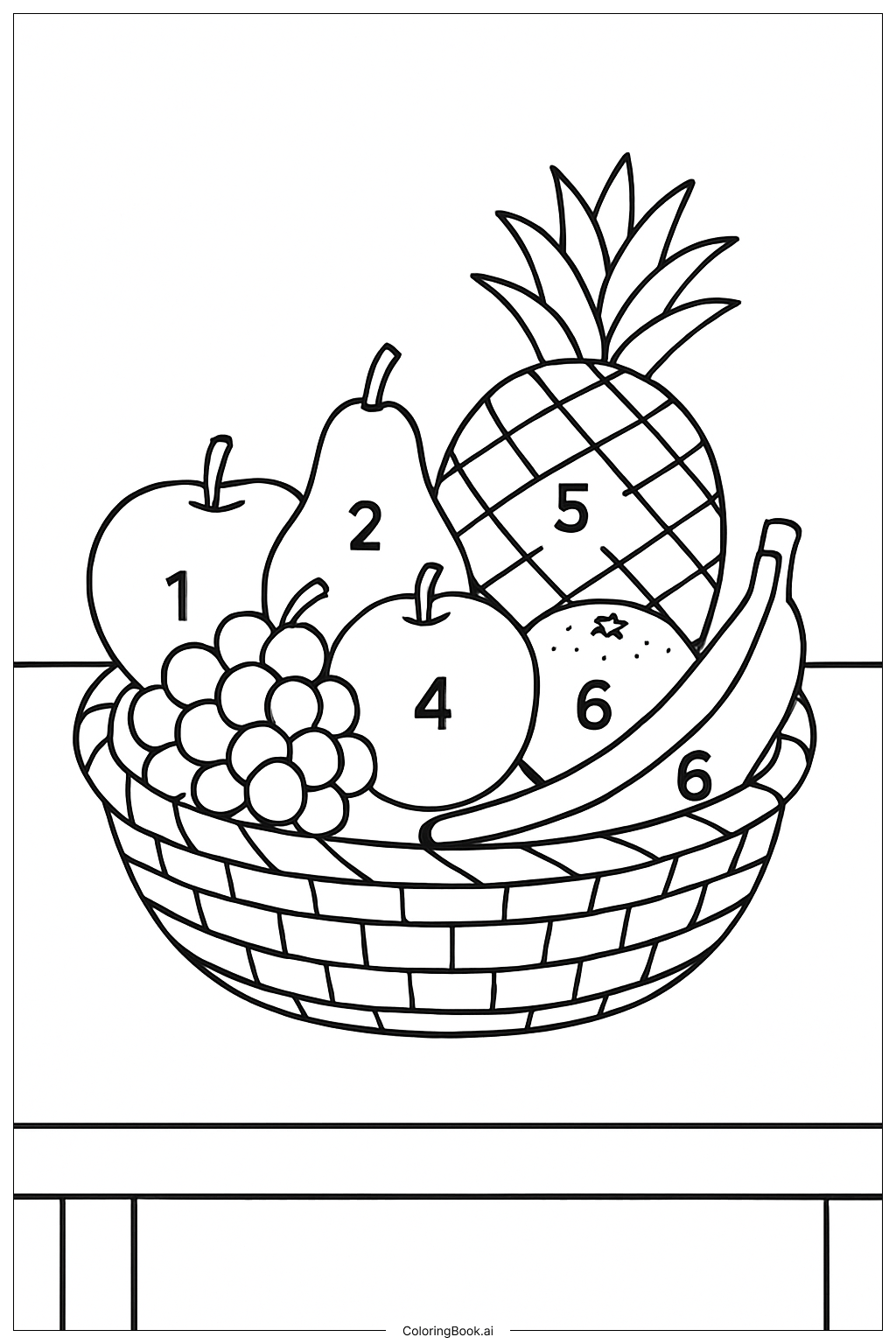
Start with the fruits since they are the stars of this page. Use bright, realistic colors — red and green for apples, yellow for bananas, orange for oranges, and deep purple for grapes. For the watermelon, try a bold green outside with pink inside. Color the wooden stalls and crates in warm browns and tans to give them a natural, earthy look. Use cheerful, contrasting colors for the price tags and number signs so the math elements really pop. Dress the vendor in a fun apron with a bright solid color. For the children's clothing, mix and match colors to keep things lively. The bunting flags look great in a repeating rainbow pattern. Keep the background light — pale blue or soft yellow works well — so the foreground details stand out. Take your time with the small details like the basket weave and fruit textures for a polished, satisfying result.
Coloring challenges: Which parts are difficult to color and need attention for Math Fruit Market coloring page?
• Tiny Number Tags and Signs: The price tags and math problem signs scattered throughout the scene are small and closely spaced. Staying inside the lines while coloring these little labels can be tricky, especially for younger colorists. A fine-tipped marker or a sharpened colored pencil works best for these tight spots.
• Fruit Variety and Shading: Each type of fruit has its own color and texture. Getting the gradients right — like the blush on an apple or the speckled skin of a banana — takes patience. Try layering colors gently rather than pressing hard to build up a natural-looking result.
• Crowded Stall Details: The market stalls are packed with overlapping fruits, crates, and baskets. It can be hard to tell where one object ends and another begins. Work slowly through each section, letting one area dry before moving to the next to avoid colors bleeding together.
• Character Clothing and Faces: The vendor and the children have small facial features and detailed clothing. Coloring faces neatly requires a light hand and careful control. Skin tones work best when blended softly, and facial details like eyes and mouths should be done last.
• Decorative Background Elements: The bunting flags, background signs, and wooden textures all compete for attention. Choosing colors that complement rather than clash with the bright fruits in the foreground takes a bit of planning. Sketch out a quick color scheme before you begin to keep the whole scene balanced and visually pleasing.
Benefits of coloring books: Advantages of drawing Math Fruit Market coloring page
Coloring this Math Fruit Market page offers a wonderful mix of creative and educational benefits. For children, it makes math feel fun and connected to real life. Seeing numbers and simple equations paired with colorful fruits helps reinforce early numeracy skills in a relaxed, pressure-free way.
The act of choosing colors for different fruits, signs, and characters builds decision-making skills and encourages creative thinking. Kids practice color recognition and learn how to plan a scene so everything works together visually.
Fine motor skills get a real workout here. Coloring the small number tags, fruit textures, and character details requires steady hands and careful control, which supports handwriting development and hand-eye coordination.
For older children and adults, the busy market scene offers a satisfying focus task. Concentrating on filling in the many small details can be a calming, almost meditative experience that helps reduce stress and quiet a busy mind.
Working through the whole image from background to foreground also teaches patience and the value of breaking a big task into smaller steps — a skill that carries well beyond the coloring page. Overall, this page is both a learning tool and a joyful creative outlet for all ages.