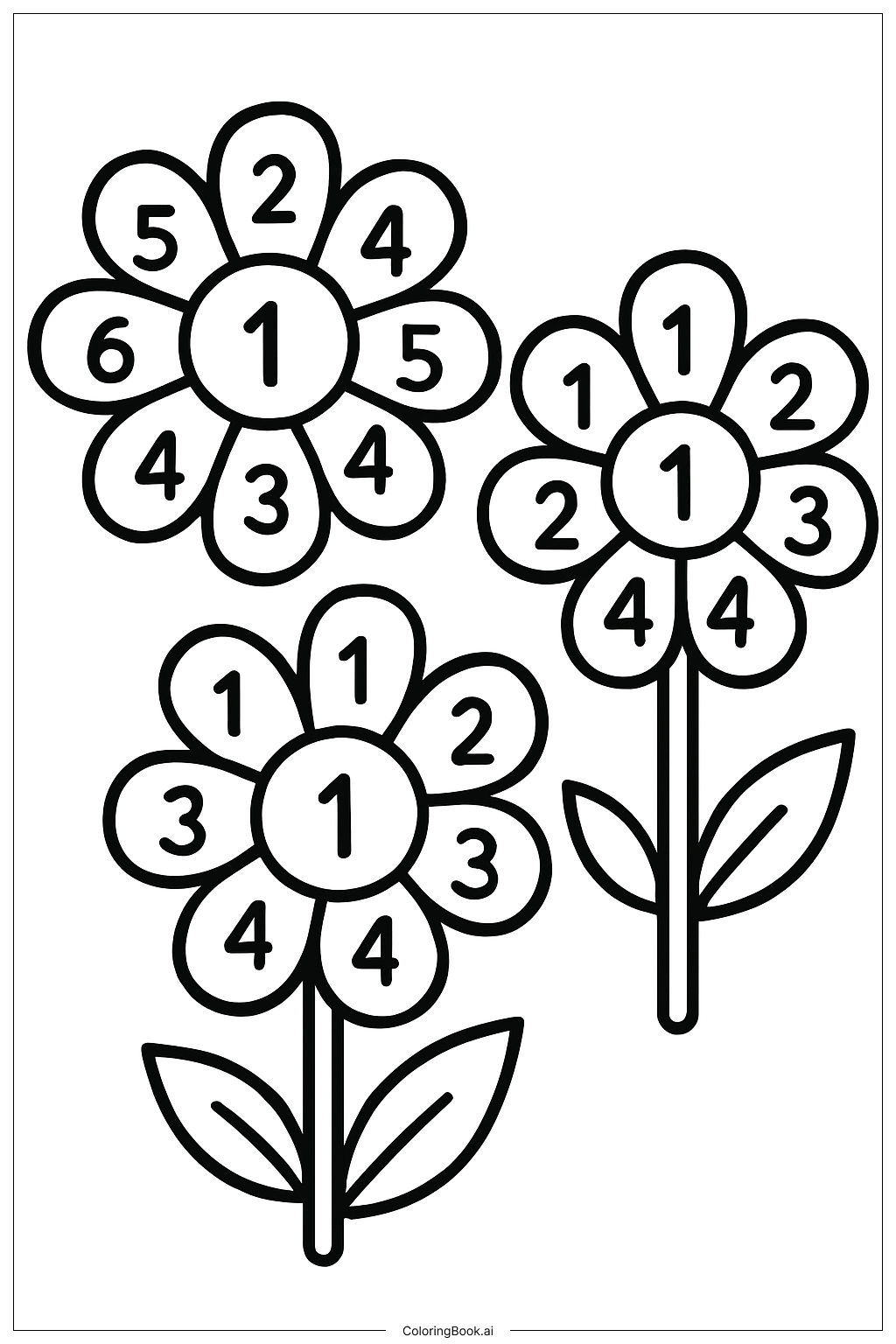
Coloring tips: How to color Math Flower Counting coloring page well?
For filling in this coloring page, consider using bright and vibrant colors. You can use pinks, yellows, and blues for the petals. Make the centers of the flowers a sunny yellow. The leaves can be a rich green, and the stems can be a lighter shade of green. Feel free to mix and match colors, creating unique styles for each flower. Encourage kids to use different shades to add depth and interest to the coloring. You could also use glitter pens for added sparkle!
Coloring challenges: Which parts are difficult to color and need attention for Math Flower Counting coloring page?
1. Small Areas: Some petals have small spaces that can be tricky to color, especially for younger children. They may need help to stay within the lines without making a mess.
2. Color Choices: Deciding on color combinations can be challenging. Children might take time to figure out which colors look good together, which could lead to indecision.
3. Repeating Patterns: The numbers on the petals require focus. It's important to color each petal differently or according to a pattern, which can be harder for younger kids to manage.
4. Detail Work: Kids may want to add their own designs. However, intricate patterns can be difficult, leading to frustration.
5. Mixing Shades: Combining colors to create depth might be challenging for beginners, as it requires understanding how different shades work together.
Benefits of coloring books: Advantages of drawing Math Flower Counting coloring page
Coloring this page offers many benefits for children. First, it boosts creativity, allowing them to explore colors and combinations. Second, it enhances fine motor skills as they control their coloring instruments. Third, it helps with number recognition and counting, reinforcing math skills in a fun way. Fourth, coloring is a great stress reliever; it promotes relaxation and focus. Finally, completing the page gives a sense of accomplishment, boosting confidence in their artistic abilities.