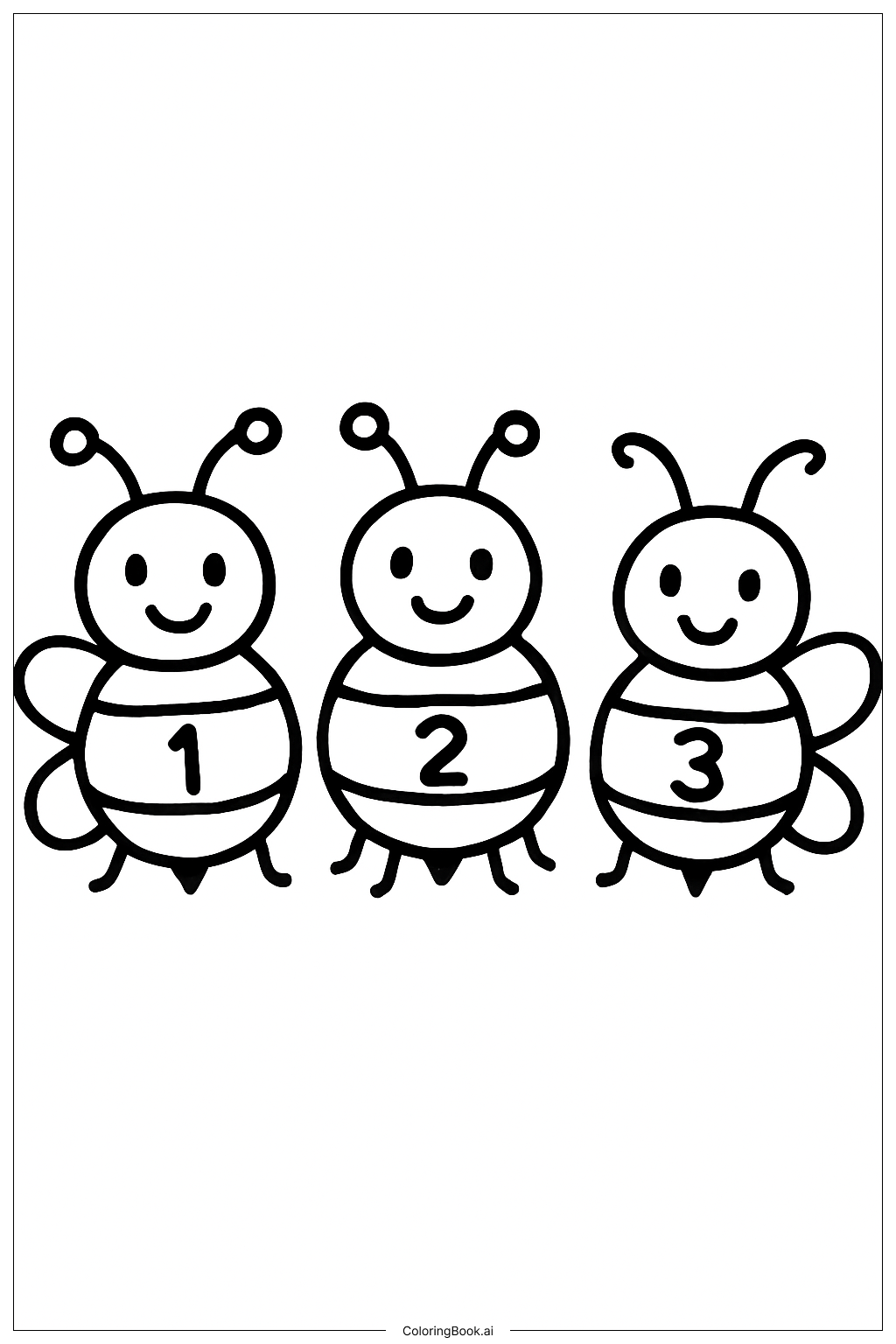
Coloring tips: How to color Math Busy Bees coloring page well?
Consider using bright yellows and blacks for the bees to bring them to life. You can also add some fun colors for the numbers, like red for 1, blue for 2, and green for 3. For the background, think about soft sky blues or vibrant greens that represent grass. Using different shades of yellow can create depth in the bee's stripes. Encourage kids to add flowers or other insects around them, using the whole color palette to make the scene lively.
Coloring challenges: Which parts are difficult to color and need attention for Math Busy Bees coloring page?
1. Coloring the Stripes: The bees have alternating black and yellow stripes, which can be tricky. It's important to stay within the lines while switching colors. 2. Small Details: The bees' wings and facial features are small. Coloring these areas requires a steady hand to avoid going outside the lines. 3. Using Different Shades: Children may want to blend colors for a more artistic look. Knowing how to mix colors, like light and dark yellows, can be a challenge. 4. Adding Background Elements: If children decide to add flowers or other elements, they may face choices about color combinations and patterns. 5. Layering Techniques: Some might want to use techniques like shading for the bees, which can be difficult without practice.
Benefits of coloring books: Advantages of drawing Math Busy Bees coloring page
Coloring this page offers several benefits for children. It enhances fine motor skills by requiring precise movements with crayons or markers. Creativity is sparked as kids choose colors and design their bees. Learning numbers can be fun; the bees have numbers 1, 2, and 3, making counting engaging. It also encourages focus and patience, as children work on details. Lastly, coloring can be a relaxing activity, helping children develop better emotional regulation.