Coloring tips: How to color Mandala of Underwater Coral Reefs coloring page well?
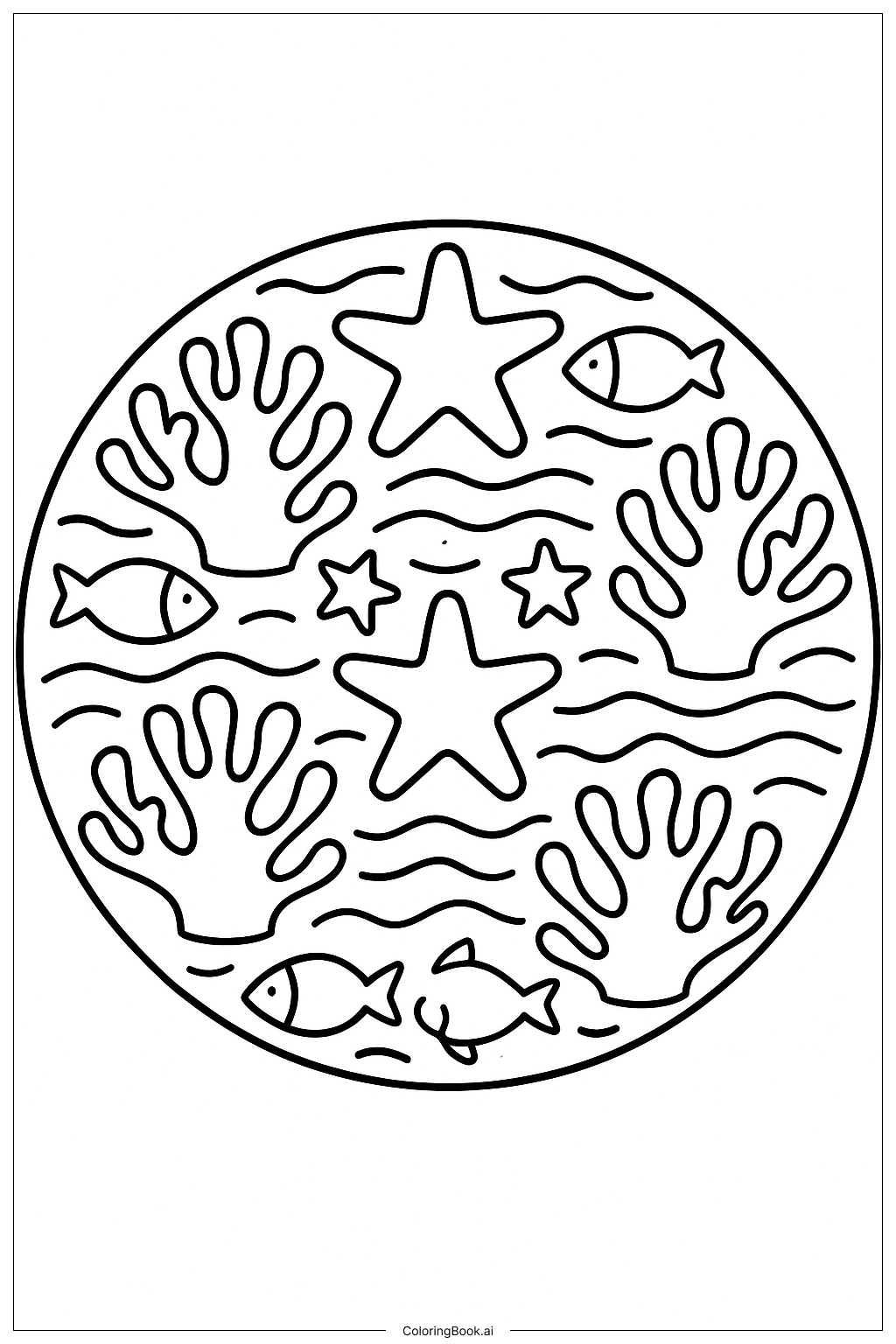
To bring this Mandala of Underwater Coral Reefs to life, try using bright and vibrant colors for the corals such as reds, pinks, oranges, and purples. The fish and sea creatures can be colored in contrasting cool tones like blues, teals, and greens to make them stand out. Soft pastel shades work well for the underwater plants and bubbles to create a gentle background effect. Using different shades of one color can help show depth and texture, especially on the corals. You might want to color each ring of the Mandala in a different palette to highlight the layers and keep it fun and engaging.
Coloring challenges: Which parts are difficult to color and need attention for Mandala of Underwater Coral Reefs coloring page?
• Intricate Details: The Mandala contains many tiny details in coral textures and small underwater creatures, which require careful coloring and steady hands for neatness. • Symmetry Maintenance: Keeping colors balanced across symmetrical sections can be challenging but is important to preserve the Mandala’s harmony. • Color Layering: Applying multiple shades to show depth within the corals and plants can be tricky for younger children who are less familiar with blending or layering colors. • Fine Lines: Some areas have very thin outlines that need delicate coloring to avoid bleeding outside the boundaries. • Pattern Complexity: The repeating shapes and overlapping elements might make it difficult to choose different colors without repeating the same hues too closely, requiring thoughtful color planning.
Benefits of coloring books: Advantages of drawing Mandala of Underwater Coral Reefs coloring page
Coloring this Mandala of Underwater Coral Reefs helps improve focus and concentration as it demands attention to detail and careful hand-eye coordination. It encourages creativity through color selection and combining different shades to express the beauty of ocean life. The symmetrical pattern supports understanding of balance and pattern recognition. For children, it can be relaxing and calming, fostering mindfulness while engaging their imagination about the underwater world. Additionally, it provides a fun way to learn about marine environments and the diversity of coral reefs.