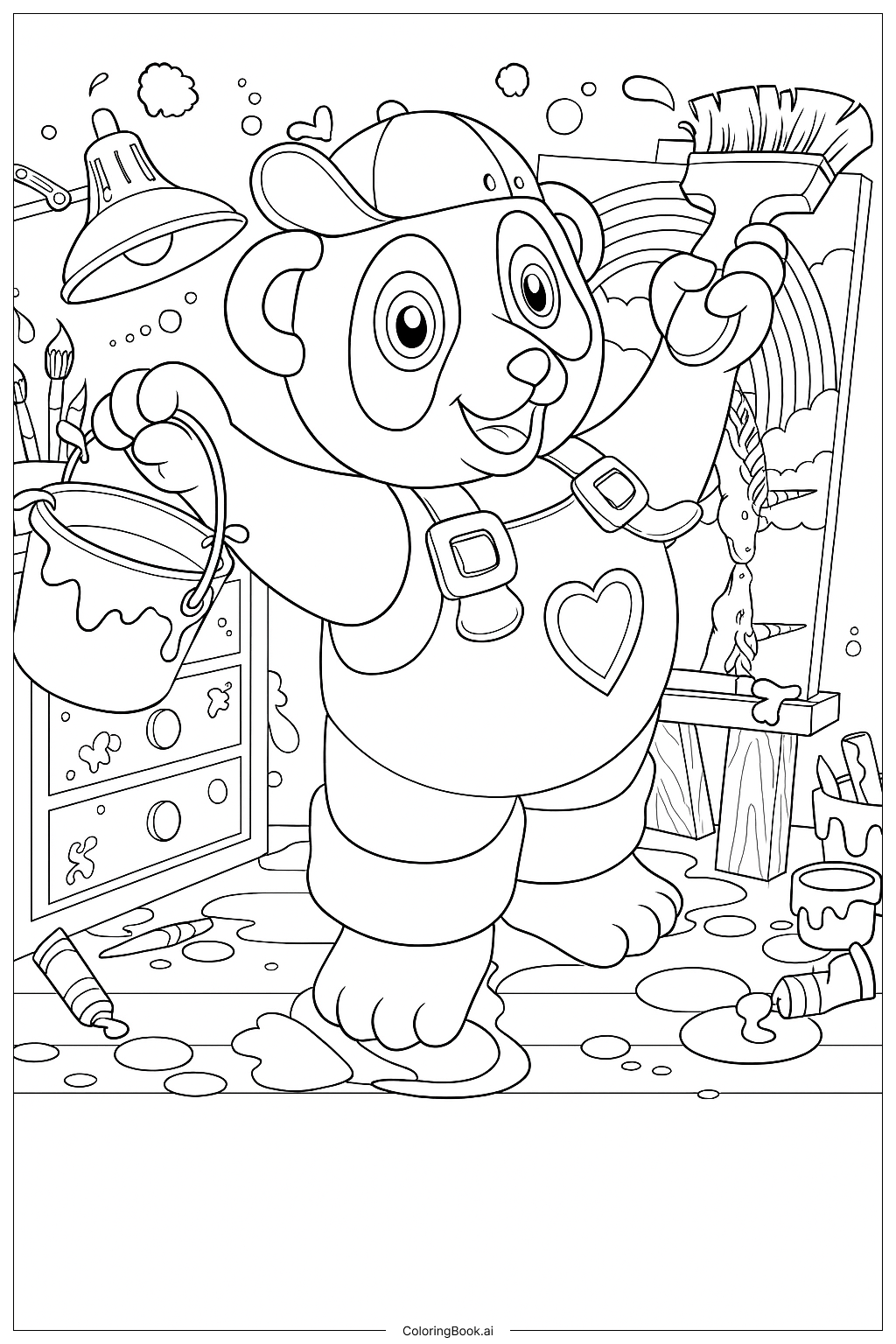
Coloring tips: How to color Panda Painter coloring page well?
For coloring this image, start by choosing soft black and white shades for the panda’s fur. You can add light pink or peach for its cheeks and ears to make it look friendly. Use bright colors like red, yellow, and orange for the flowers to make them pop. For the butterflies, try combinations of blue, purple, and green to create a magical effect. The paint splashes on the panda can be colorful blobs like red, blue, and yellow to show creativity. The sky is a great place for light blue and soft white to keep a bright feeling. Use vibrant colors for the paint tubes and palette to highlight the fun of painting.
Coloring challenges: Which parts are difficult to color and need attention for Panda Painter coloring page?
• Fine details on the panda’s fur: Coloring the panda’s fur requires careful attention to keep the black and white areas clear and neat, especially around the face and limbs.
• Small objects and paint splashes: The paintbrush, palette, and tiny paint tubes have many small parts that can be tricky to color inside without crossing lines.
• Flowers and butterflies: These have intricate shapes and overlapping parts, which may be challenging for younger children to fill with correct colors while keeping neat edges.
• Background elements: The sky and clouds need smooth gradient coloring to avoid sharp borders, which requires some blending skill.
• Maintaining balance: Ensuring that the colors of the panda, flowers, and paint supplies do not overpower each other needs good color sense and planning.
Benefits of coloring books: Advantages of drawing Panda Painter coloring page
Coloring this image helps develop fine motor skills by encouraging careful hand movements while filling small areas like the panda’s face and paintbrush. It also boosts creativity through choosing colors for the panda’s surroundings and paint splashes, fostering imagination. The mix of simple and detailed parts offers children a suitable challenge for improving focus and patience. Coloring the harmonious scene of nature and art encourages an appreciation for creativity and encourages relaxation. The varied elements promote learning about different textures and color combinations while having fun.