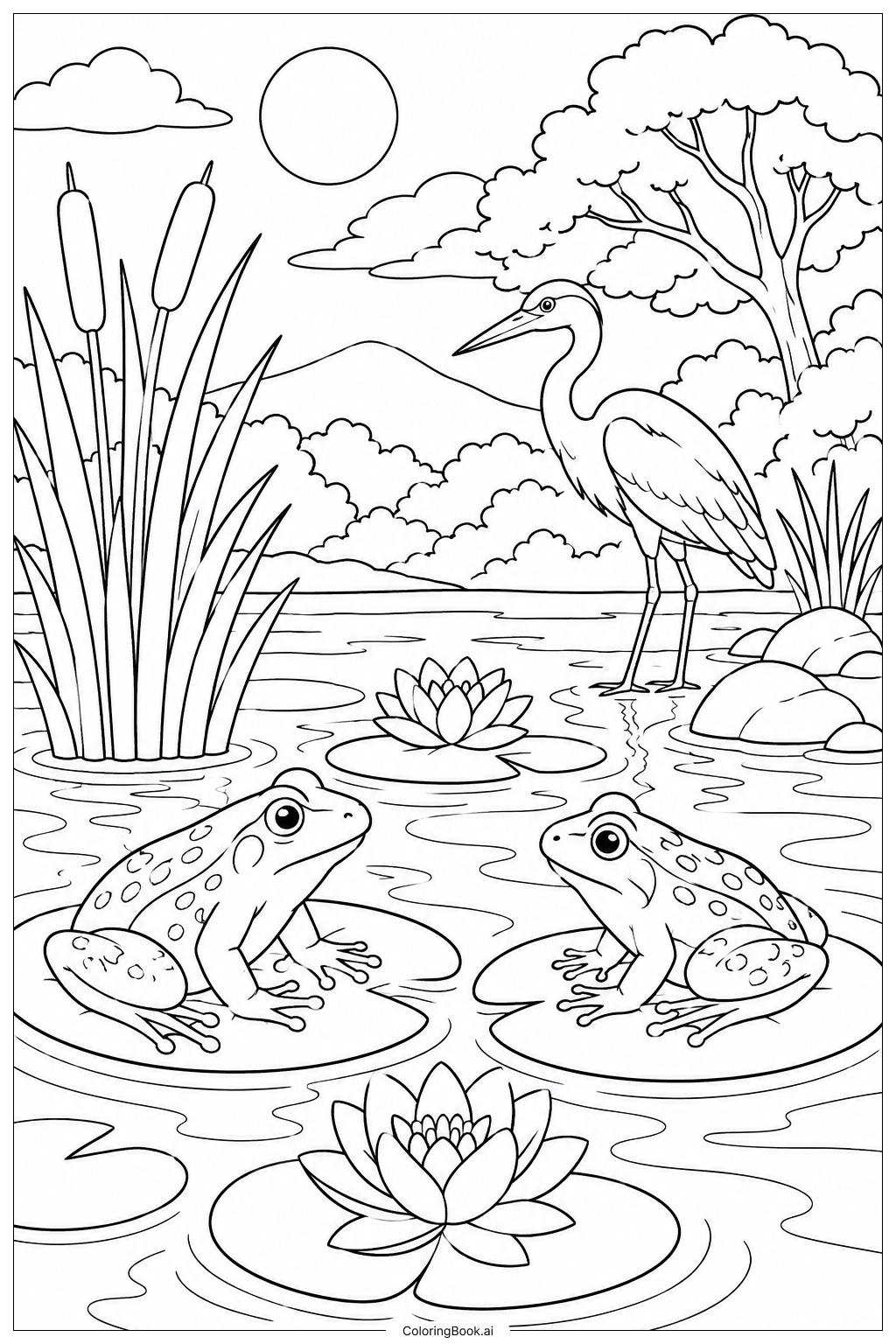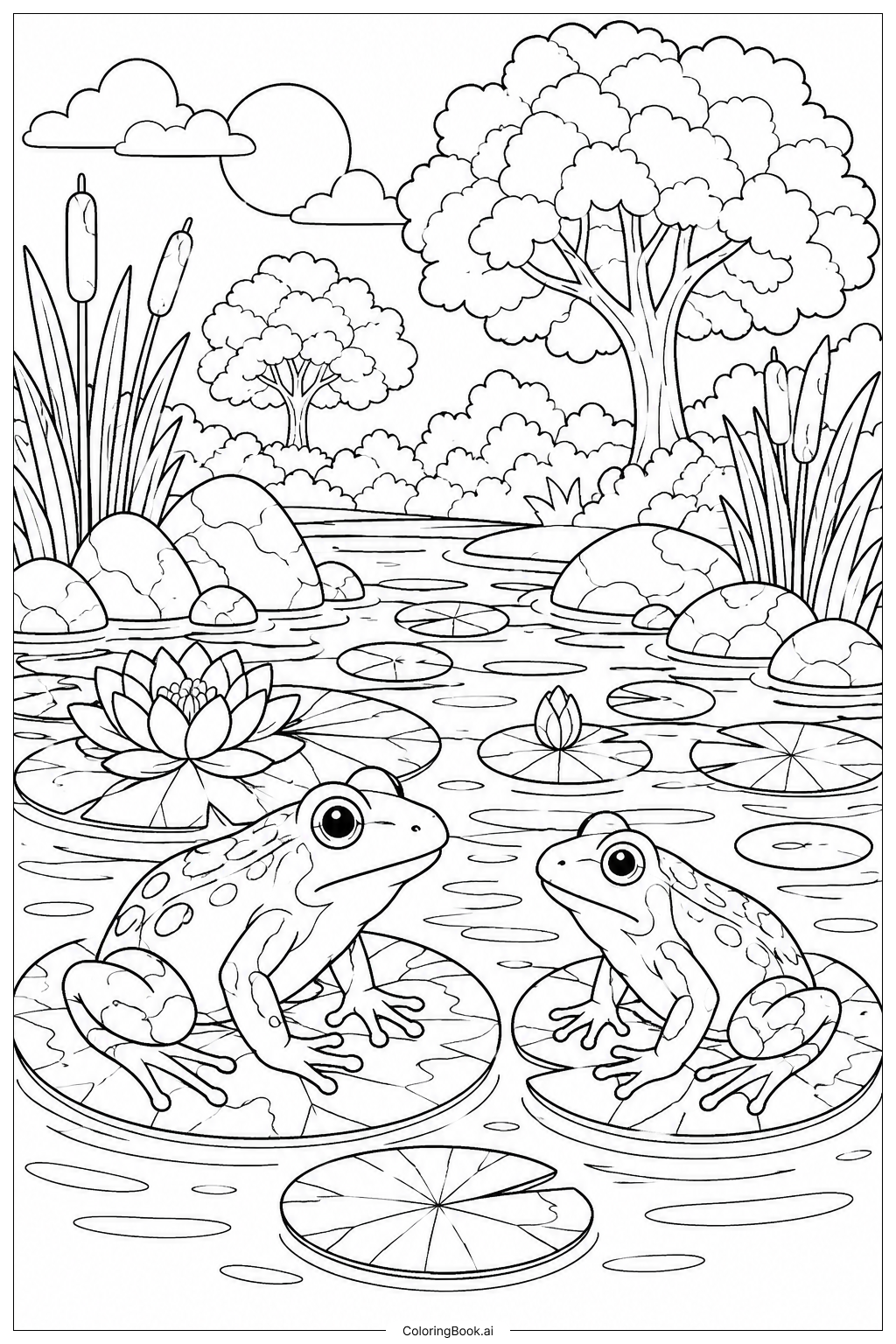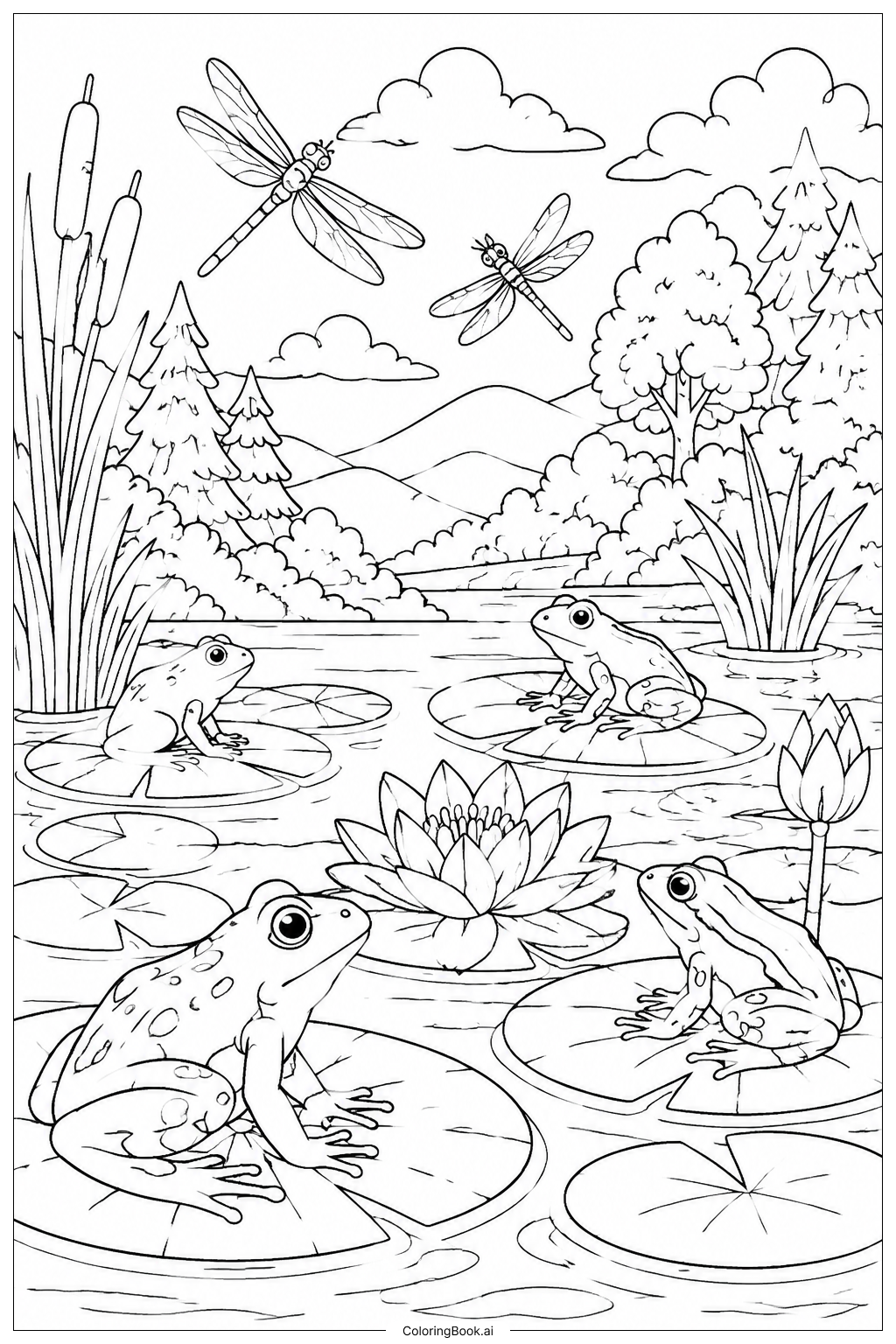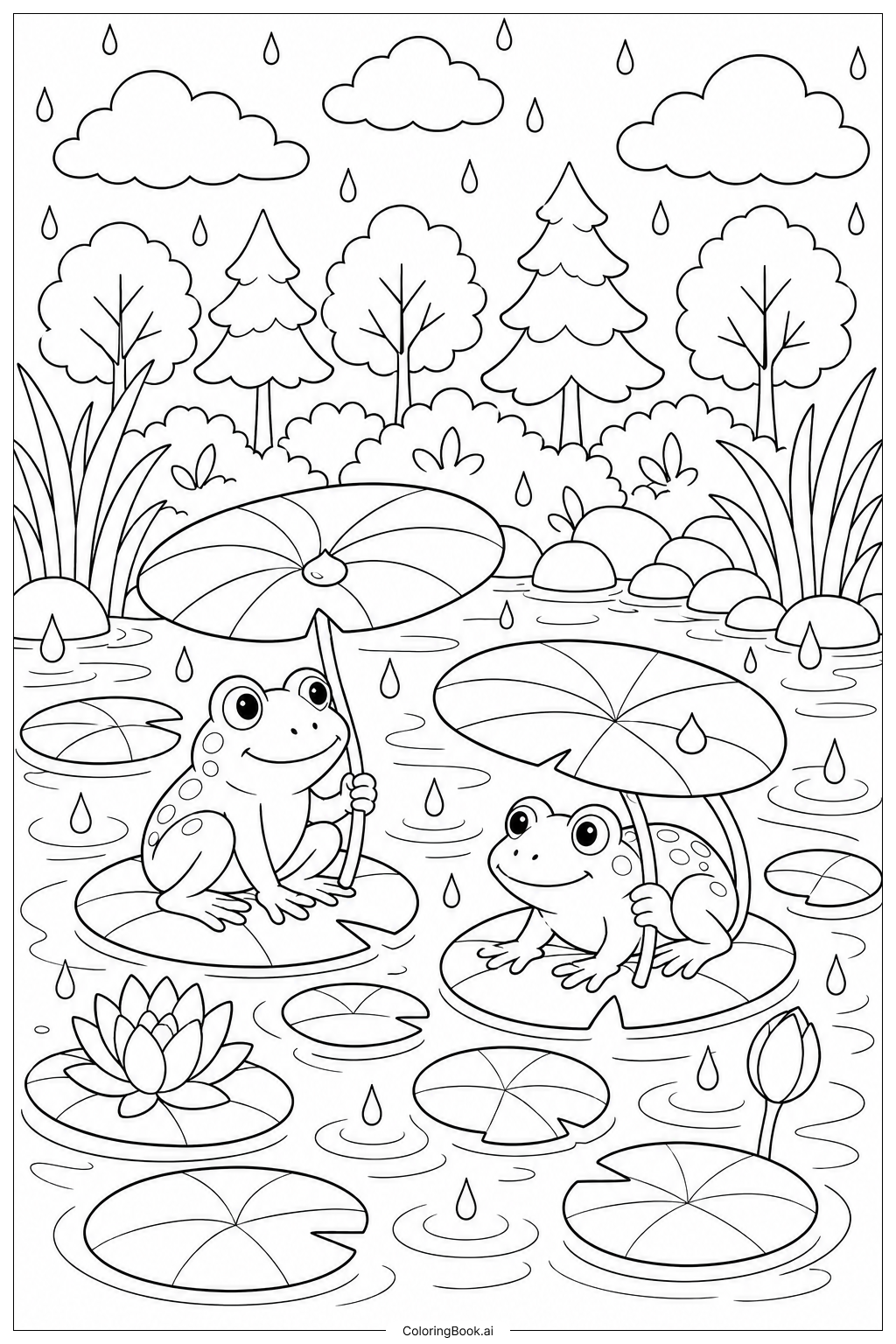
Coloring tips: How to color Lily Pad Duck Family Scene coloring page well?
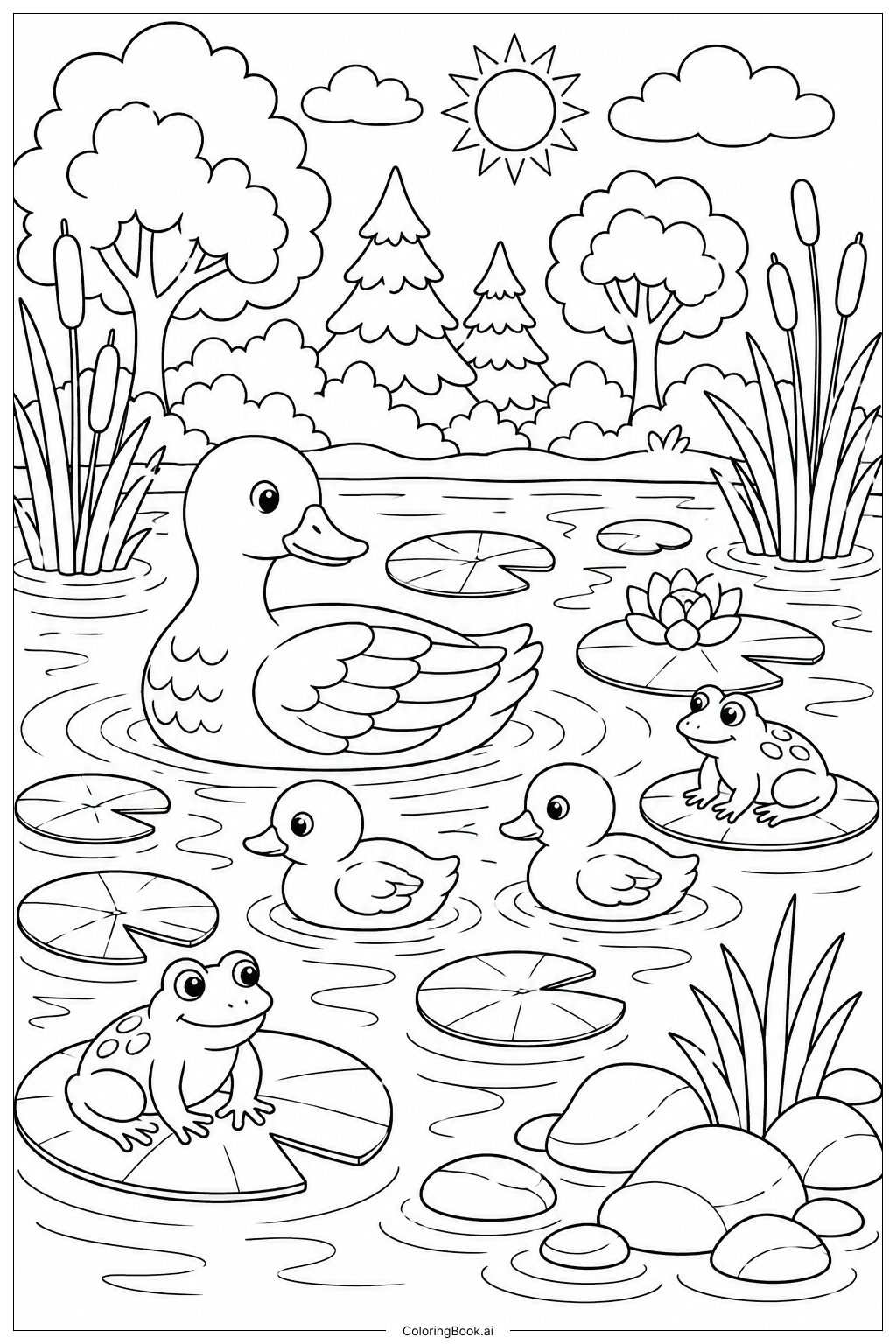
For this image, you can use fresh, bright greens for the lily pads to make them stand out. Use soft yellow or brown tones for the mother and father ducks to highlight their feathers. The ducklings can be a light yellow or pale brown to show their youth. Try light blue shades for the pond water to contrast nicely with the greenery. You might add soft pinks and whites for the lotus flowers to give a gentle touch of color. Using light and dark shades of the same color will help create depth, such as darker green shadows under the lily pads and lighter green on top. Keep the insect and dragonfly colors subtle but lively with hints of blue or green. This variety will make the whole image look vibrant and cheerful.
Coloring challenges: Which parts are difficult to color and need attention for Lily Pad Duck Family Scene coloring page?
• Fine Details: The small ducklings and the delicate dragonflies have many tiny parts like wings and feathers that can be tricky to color neatly. Staying inside the lines requires careful attention here.
• Layered Elements: The lily pads overlap on the pond, and so do the ducks and grasses. Understanding which parts go on top and which are underneath can be confusing and takes practice.
• Water Reflections: The reflections of the lily pads and ducks in the water involve delicate shading. Achieving a smooth transition between water colors and reflections challenges blending skills.
• Color Choices: Balancing natural realistic colors with creative or playful tones is challenging. Picking colors that both contrast and harmonize requires thought.
• Texture Representation: Showing the smooth surface of lily pads, soft feathers, and rippling water using only colors and shading can be difficult, needing gradual changes in tone.
Benefits of coloring books: Advantages of drawing Lily Pad Duck Family Scene coloring page
Coloring this Lily Pad Duck Family Scene helps develop fine motor skills by requiring careful control to color small details like ducklings and insects. It encourages creativity through color choice and layering techniques. The task promotes focus and patience as the image contains overlapping elements and subtle reflections. It also helps nurture an appreciation for nature by depicting animals and plant life in harmony. For children ages 4 to 16, tackling this scene supports concentration and boosts confidence when they see the scene come alive in color. Additionally, it provides a relaxing, calming activity that combines fun with skill building.