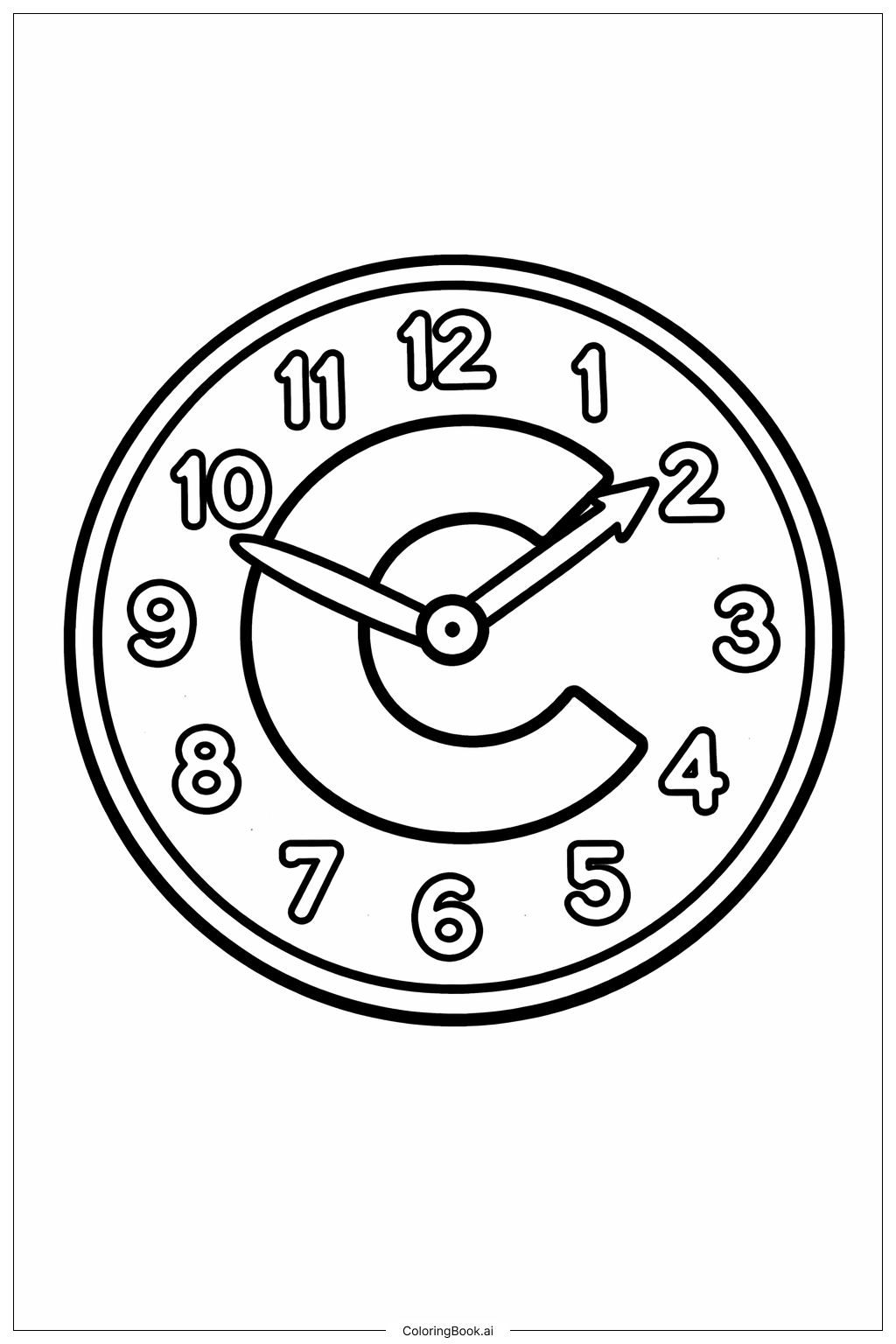
Coloring tips: How to color Letter C Clock coloring page well?
You can color the letter C in bright and cheerful colors like red, orange, or yellow to make it stand out. Use contrasting colors for the clock numbers, such as blue or green, so they are easy to see. Color the hour, minute, and second hands different colors to help tell them apart—for example, black for the hour hand, red for the minute hand, and blue for the second hand. Feel free to add patterns like stripes or polka dots inside the C to make it more fun. The shadow lines on the letter C can be shaded with a darker color of your choice to give the clock a 3D effect.
Coloring challenges: Which parts are difficult to color and need attention for Letter C Clock coloring page?
• Letter C Curves: The smooth rounded shape of the letter C requires careful coloring to stay inside the lines, especially near the inner curve. Maintaining steady hand control helps keep the edges neat.
• Clock Numbers: The numbers around the clock are spaced closely, so coloring them very carefully is important to avoid coloring outside the lines or merging the numbers with the clock face.
• Clock Hands: The three clock hands overlap and point in different directions, so choosing different colors and precisely coloring them without mixing can be challenging for younger children.
• 3D Shadowing: The shadow and layered lines on the letter C require subtle shading or coloring with slightly darker tones. This might be hard for beginners who are learning how to show depth in coloring.
• Small Details: The neat spaces between the layers of the letter C and the clean edges demand patience to color inside without rushing, which teaches focus and brush control.
Benefits of coloring books: Advantages of drawing Letter C Clock coloring page
Coloring the Letter C Clock helps children develop fine motor skills and hand-eye coordination as they carefully color curves and small numbers. It enhances their ability to recognize shapes and letters while associating the letter C with a common object, the clock. This activity encourages patience and concentration, especially when coloring the details like the clock hands and shading. It also introduces concepts of time in a fun way, making learning interactive. Using different colors for the clock elements supports creativity and color recognition. Overall, coloring this image combines educational value with artistic expression, helping children grow in multiple ways.