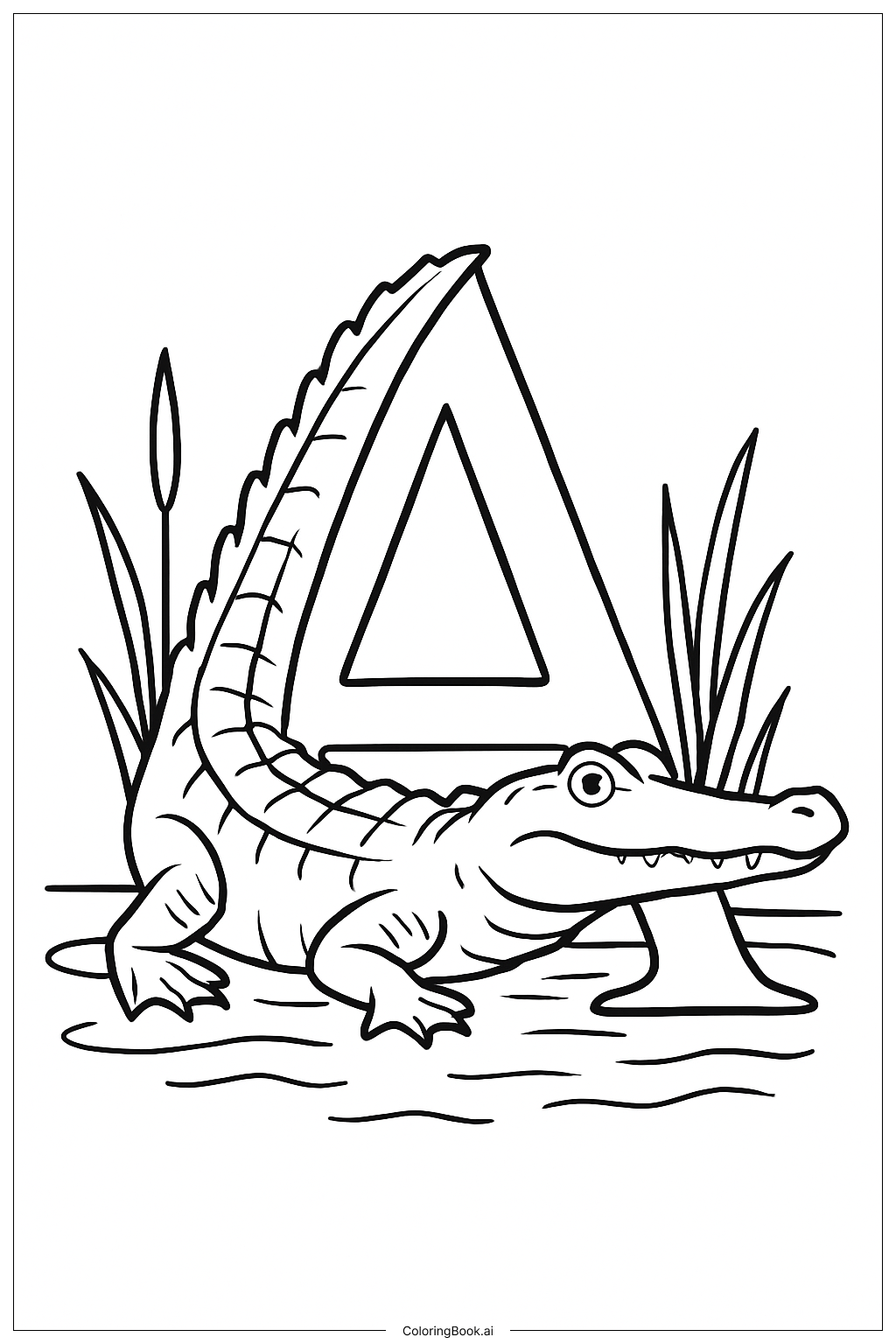
Coloring tips: How to color Letter A Alligator River Scene coloring page well?
Start with the alligator's body using shades of green. Try mixing light green for the belly and darker green for the back and tail to add depth. Use gray or brown for the rocky riverbank and stones. Color the river with light blue or aqua tones, leaving some areas lighter to suggest shimmering water. The lily pads look great in medium green with soft yellow or white flowers. Use warm yellows and oranges for the sandy ground. Fill the trees and bushes with a variety of greens to make the background feel lush and full of life. Color the letter A in a bold, bright color like red, orange, or yellow so it stands out clearly in the scene. Encourage kids to mix colors and experiment freely to make their version unique and personal.
Coloring challenges: Which parts are difficult to color and need attention for Letter A Alligator River Scene coloring page?
• Alligator Scale Texture: The alligator's body is covered in small, repeating scale patterns. Staying within each individual scale while keeping color consistent across the whole body requires patience and a steady hand. Young children may find it helpful to use a single shade of green first, then add darker tones on top for shading.\n\n• River Water Details: Coloring water realistically can be tricky. The river area may have ripple lines or wave details that need careful blending of blue and white tones. Using light pressure with colored pencils or diluted watercolors can help achieve a natural water effect without overcoloring.\n\n• Dense Background Foliage: The trees, reeds, and bushes in the background contain many overlapping shapes. Keeping each leaf or plant section a slightly different shade of green helps prevent the background from looking flat. This area demands attention to avoid coloring outside the many small boundaries.\n\n• Letter A Integration: The prominent letter A is placed within the scene and must stand out visually. Choosing the right bold color that contrasts with the greens and blues around it, without clashing, can be a challenge for younger colorists. Bright primary colors like red or yellow tend to work best.\n\n• Small Foreground Details: Stones, lily pads, and reed stalks along the riverbank are small and closely spaced. Using a fine-tipped colored pencil or thin marker is strongly recommended to fill these tiny areas neatly and avoid smudging neighboring sections.
Benefits of coloring books: Advantages of drawing Letter A Alligator River Scene coloring page
Coloring this Letter A Alligator River Scene offers a wonderful mix of fun and learning for children. Filling in the alligator's detailed scales and the busy river environment helps build fine motor skills and improves hand-eye coordination. These are important skills that support handwriting and other everyday tasks. The scene also reinforces early literacy by connecting the letter A to the word alligator, making the alphabet feel exciting and memorable. Children practice color recognition and color mixing as they choose shades for the water, plants, and animal. Deciding which colors to use encourages creative thinking and independent decision-making. The rich nature setting, with its river, plants, and wildlife, sparks curiosity about animals and the natural world, gently supporting early science learning. Spending focused time on a coloring page also helps children develop concentration and patience. Completing the page gives a sense of pride and accomplishment, which boosts confidence and self-esteem. Overall, this coloring page turns a simple activity into a rewarding experience that supports cognitive, creative, and emotional growth in young children.