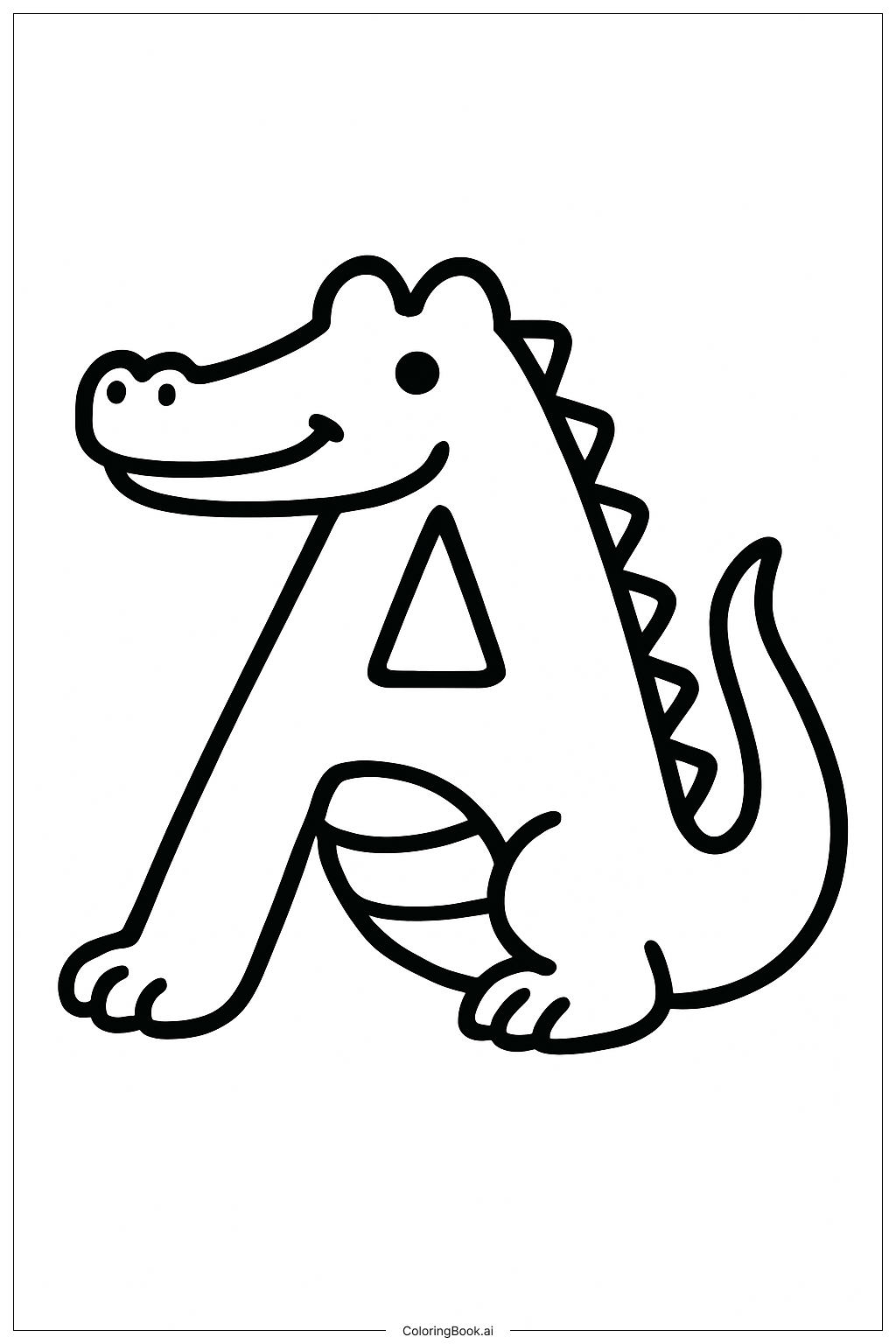
Coloring tips: How to color Letter A Alligator coloring page well?
Use different shades of green for the alligator’s body to give it a natural look. Try a lighter or yellowish green for the belly stripes to make them stand out. The spikes along the back can be colored with a darker green or even a contrasting color like brown or orange to add fun detail. The eyes and nostrils should be colored black or dark brown. For the background, you can use blue to represent water or light blue for the sky. You can also add some grass or plants in different greens to make the picture more lively and colorful.
Coloring challenges: Which parts are difficult to color and need attention for Letter A Alligator coloring page?
1. Keeping the colors inside the thick black outlines can be tricky for younger children who are still developing fine motor skills. 2. The small triangular spikes on the back require careful coloring because they are small and close together. 3. Coloring the belly stripes evenly might be difficult to keep a smooth look without mixing colors outside the lines. 4. Choosing the right shades of green to create contrast between the body, belly, and spikes might be challenging. 5. Adding background details without making the image too crowded or messy may require some planning.
Benefits of coloring books: Advantages of drawing Letter A Alligator coloring page
Coloring this alligator helps children improve their hand-eye coordination and fine motor skills by practicing staying within the lines. It also encourages creativity in choosing colors and blending shades to create a natural look. This activity helps kids learn about the letter A and associate it with an animal, which supports early literacy skills. Color selection and arrangement introduce concepts of contrast and balance, strengthening cognitive development. Lastly, coloring appeals to concentration and patience, making this a fun but educational task.