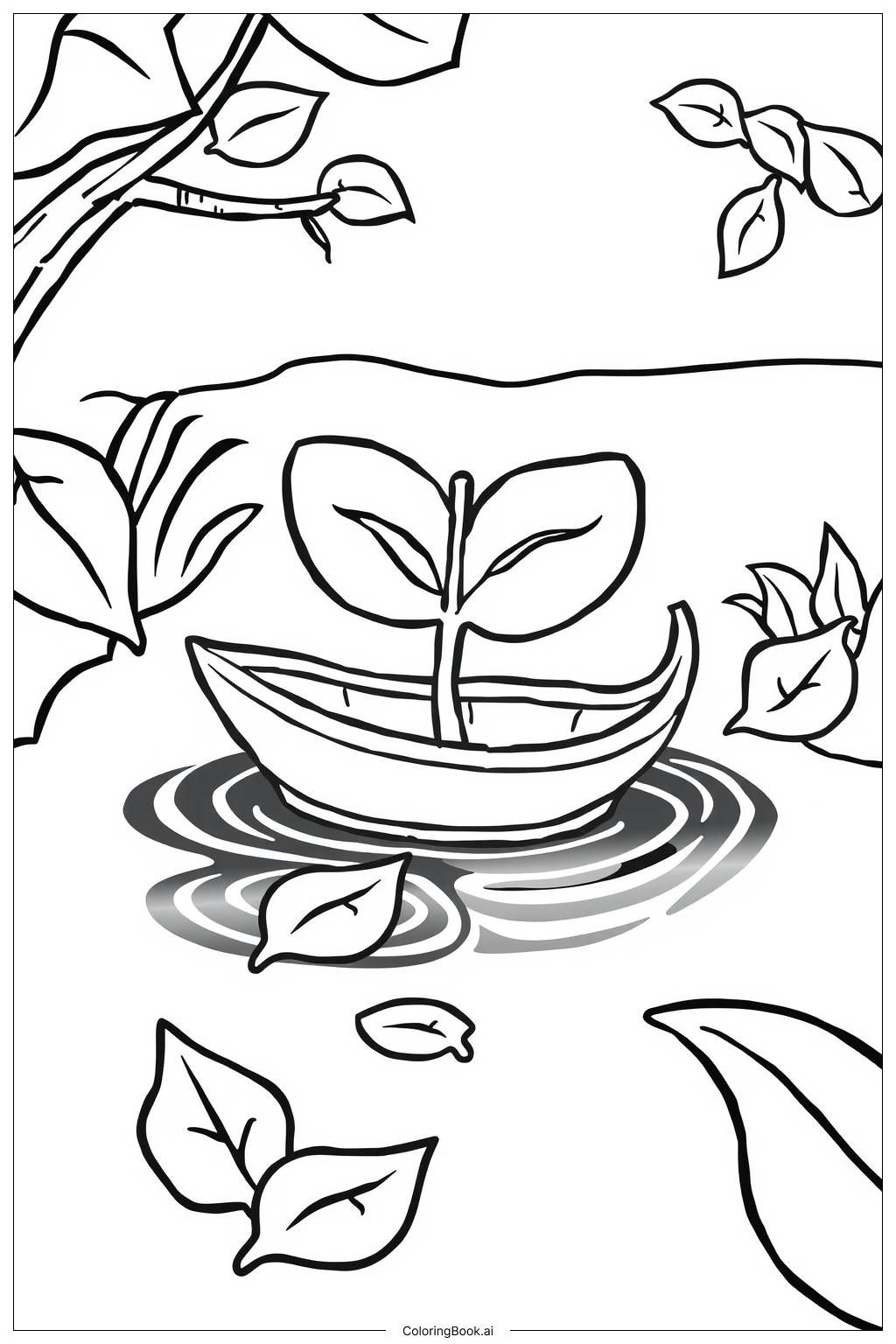
Coloring tips: How to color Leaf Boat Floating Stream coloring page well?
Start by choosing vibrant greens and yellows for the leaf boat to show its natural freshness. Use different shades of green to highlight the leaf’s veins and shape. For the water, try blues and gentle teals to create a cool, flowing effect. Light blue or white accents can be added to show shining reflections and movement on the surface. The grasses and flowers by the bank are great chances to use soft greens, pinks, or purples. Finally, use browns or tans for any small sticks or soil by the stream to add variety. Keep your coloring soft and blend shades to create a calm, natural look.
Coloring challenges: Which parts are difficult to color and need attention for Leaf Boat Floating Stream coloring page?
• Leaf Texture: The leaf boat has many fine lines and veins that need careful coloring to show depth without making the image too busy. Staying inside these delicate lines is challenging, especially for younger artists.
• Water Ripples: Creating realistic water movement requires gradual blending of blues and adding highlights. It can be tricky to keep the ripples smooth and natural looking.
• Small Details: The grasses, flowers, and streamside elements are small and require precise coloring. Busy nature details can be hard to color neatly.
• Shading and Light: To make the leaf boat look three-dimensional, subtle shading is necessary. Applying the right amount of shadow without over-darkening can be difficult.
• Keeping Contrast: Balancing colors between the leaf boat and water so the boat stands out can take practice with color choice and pressure on pencils or markers.
Benefits of coloring books: Advantages of drawing Leaf Boat Floating Stream coloring page
Coloring this image helps improve focus and fine motor skills because of the detailed leaf veins and small natural elements. It encourages observation of nature and learning about different shades of greens and blues. Choosing colors and shading also develops creativity and decision-making. For children, it can be calming to color a peaceful natural scene, promoting mindfulness. Additionally, practicing careful coloring inside lines strengthens hand-eye coordination and patience. Overall, this image allows colorists to explore blending and texture techniques in a fun and engaging way.