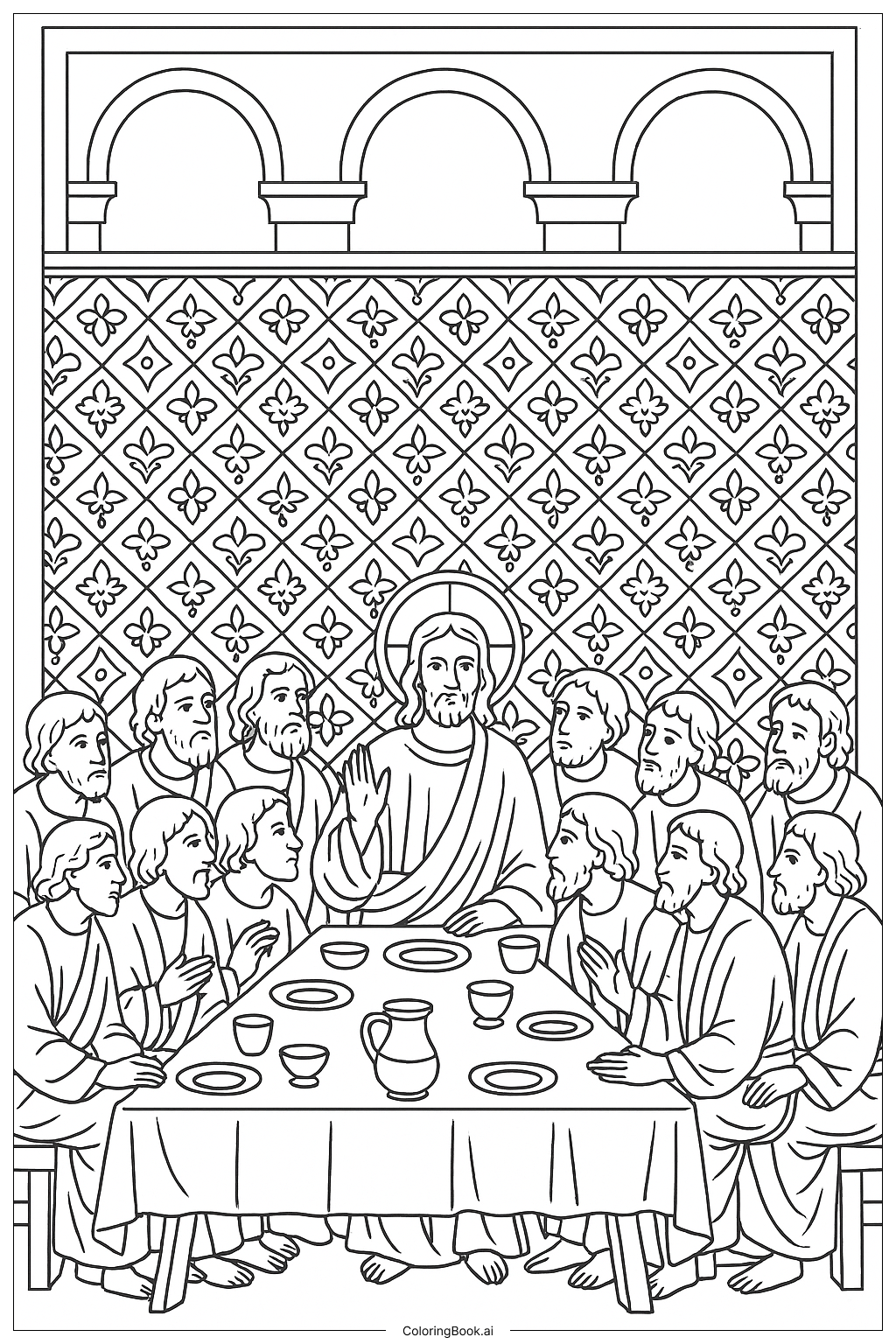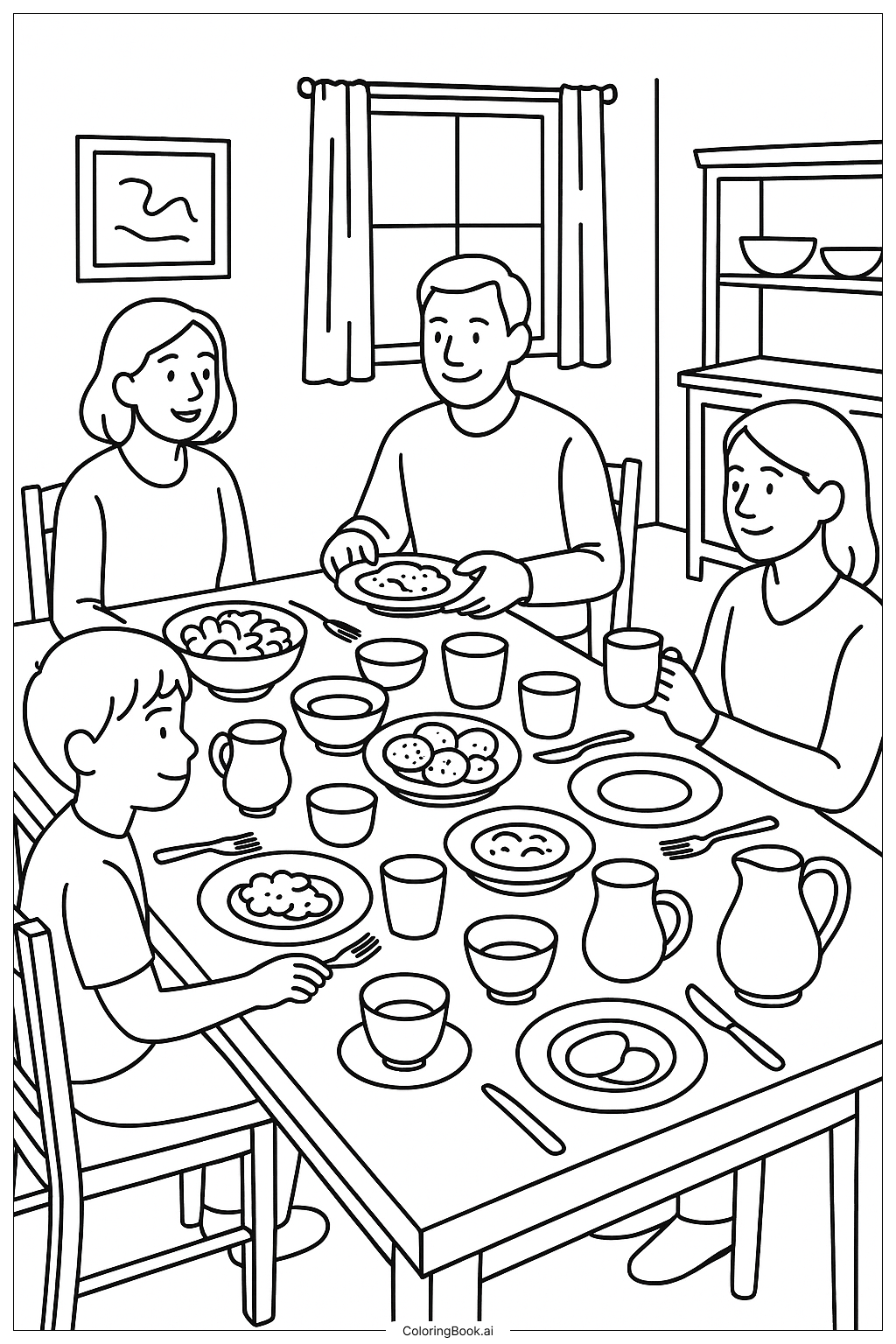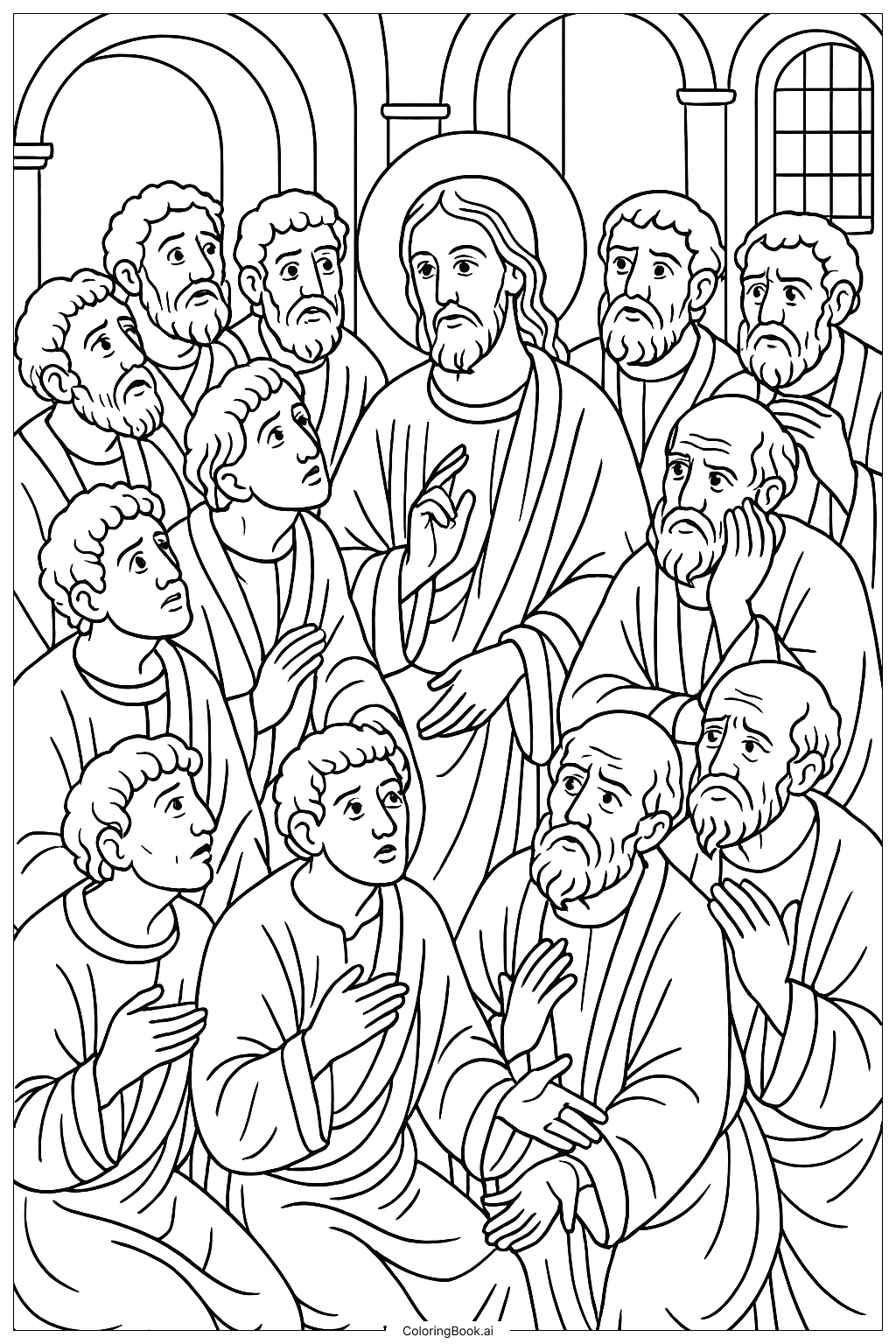
Coloring tips: How to color Last Supper Layered Table Scene coloring page well?
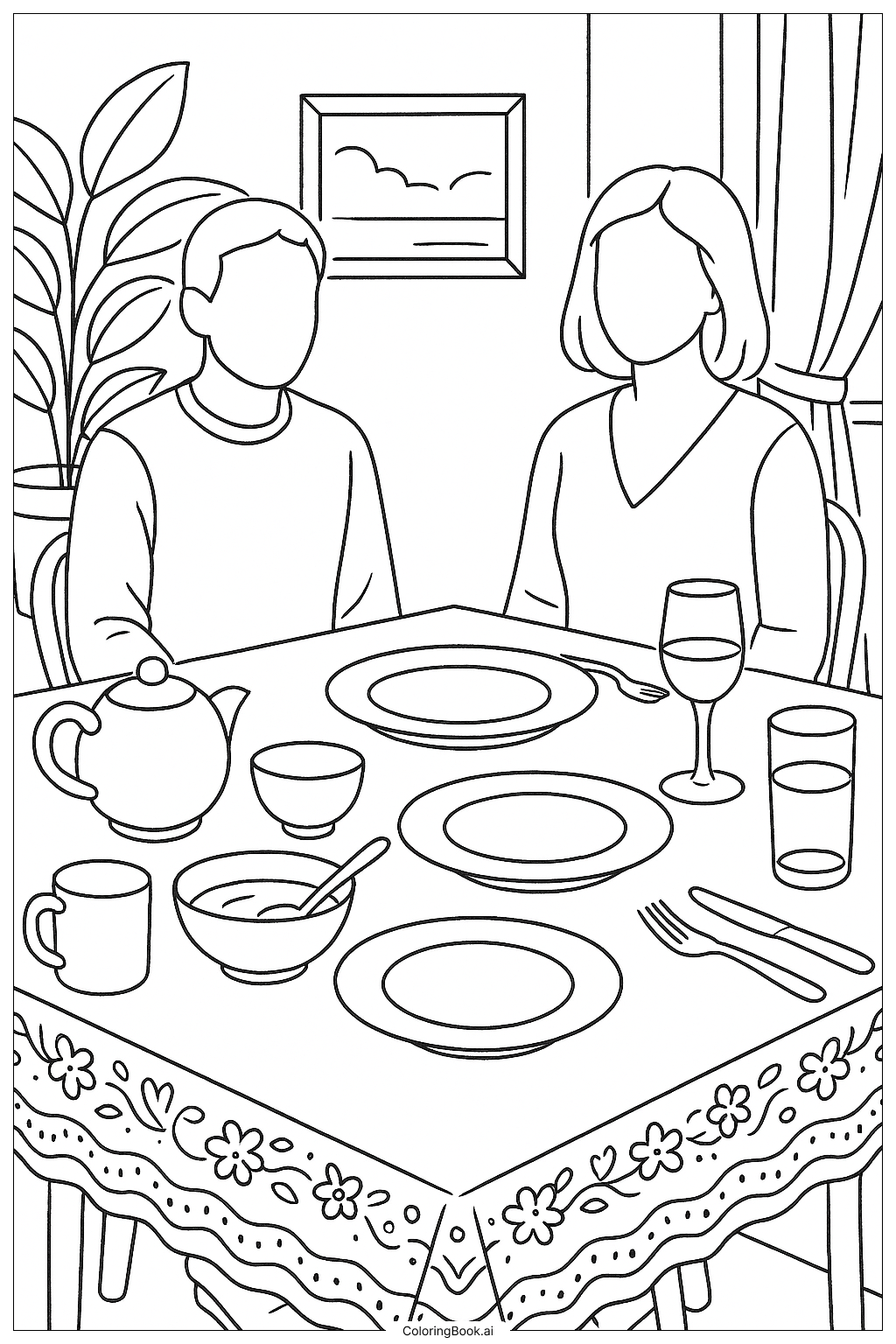
For coloring, use warm colors like red, orange, and yellow for the tablecloth to make the floral pattern stand out. The dishes can be colored in light blues or greens for contrast. Color the teapot and cups in soft pastel shades to keep the scene gentle. Use natural colors like brown or beige for the table and chairs. For the people’s clothes, choose two different colors to make them distinct but harmonious. The plant can be shaded with various greens, and the background walls can be light neutral colors for balance. Try adding light shading on the glass to show reflections and make it realistic. Use your imagination to add bright colors for the picture frame and curtains.
Coloring challenges: Which parts are difficult to color and need attention for Last Supper Layered Table Scene coloring page?
1. Small Details on the Tablecloth: The floral and heart pattern is intricate and needs careful coloring within small spaces.
2. Glass Reflection: Coloring the wine glass and water glass to look realistic can be tricky because it needs shading and highlights.
3. Faces without Features: Since the people’s faces have no facial details, it can be challenging to add personality through shading or color choices.
4. Overlapping Objects: Some items like the plates, spoon, and cups overlap, making it important to color each object clearly without mixing colors.
5. Balancing Colors: Making sure the colors of the table, dishes, and people look balanced and not too busy can require planning.
Benefits of coloring books: Advantages of drawing Last Supper Layered Table Scene coloring page
Coloring this picture helps improve focus and attention to detail, especially with the small designs on the tablecloth. It encourages creativity in choosing colors for different objects and clothing. It also teaches how to use shading to show reflections on glass objects. This activity can relax your mind and make you feel calm while practicing fine motor skills by carefully coloring inside the lines. Coloring this scene allows you to explore how colors can create mood and atmosphere in a setting.