Coloring tips: How to color Last Supper Central Figure coloring page well?
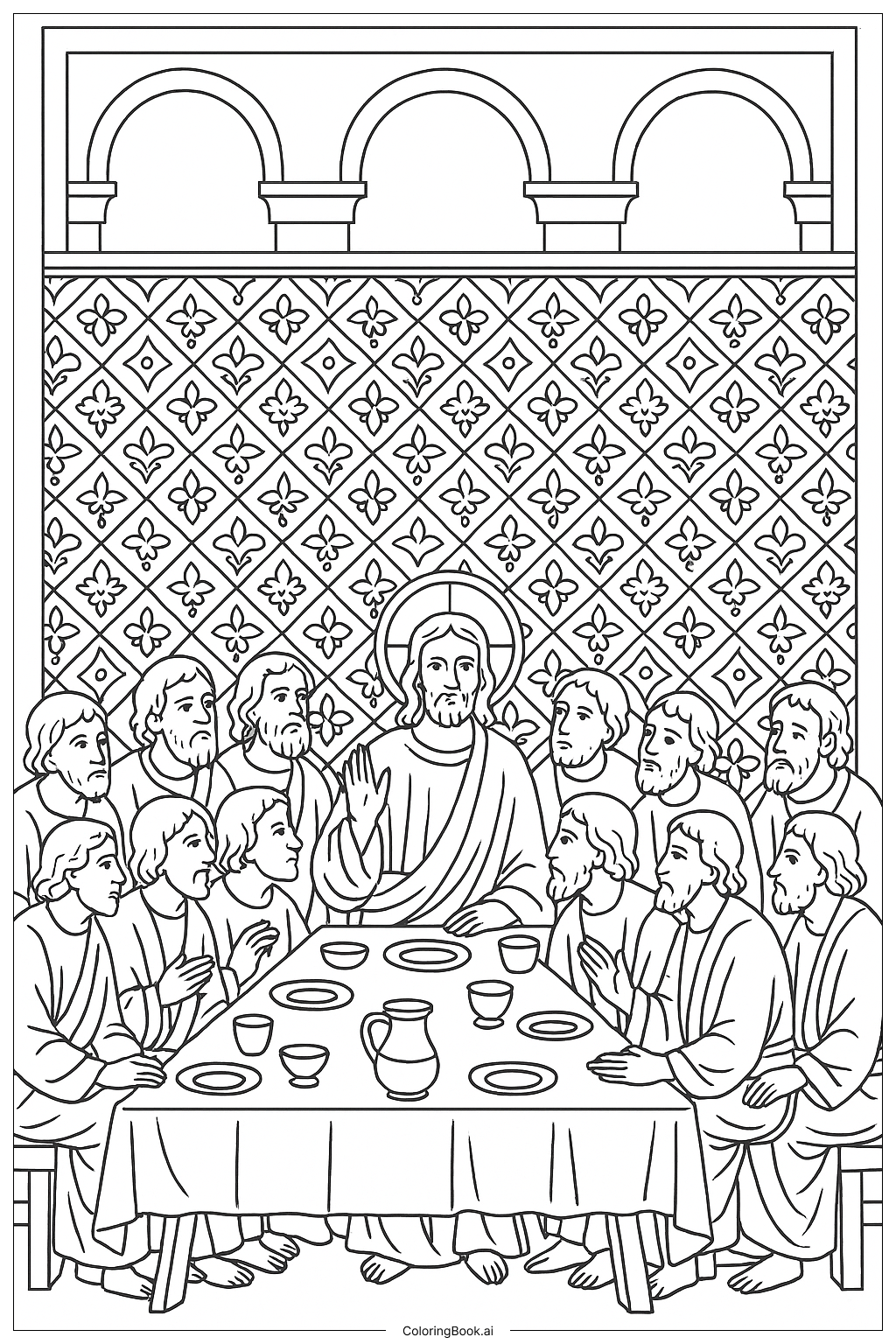
Start with Jesus's robes. Traditionally, his inner robe is colored red or deep crimson, and his outer cloak is a rich blue. These colors carry deep meaning and are recognized across many paintings of this scene. Use smooth, even strokes to fill the large fabric areas first. For the face and hands, choose warm, light skin tones and add gentle shading along the edges to give a soft, natural look. The hair can be done in medium brown tones. Color the table and objects on it in warm earth tones like tan and brown. For the background arches and curtains, try soft gold, muted green, or warm gray to suggest an old stone setting. Younger colorists can keep it simple with flat colors throughout. Older kids and Adults can try blending or layering colors to add depth. There is no single correct color choice here, so feel free to use what feels meaningful or beautiful to you.
Coloring challenges: Which parts are difficult to color and need attention for Last Supper Central Figure coloring page?
• Robe Folds and Drapery: The flowing robes of the central figure have many overlapping folds and curved lines. Staying within these shapes while following the natural direction of each fold requires careful attention. Beginners may find it tricky to shade along the curves without crossing into neighboring sections.\n\n• Facial Features and Expression: The face is the emotional heart of this image. Coloring the eyes, nose, and mouth with enough care to preserve the serene expression is challenging. Small areas like the eyes and lips need a fine-tipped tool, and blending skin tones around the cheeks and forehead takes patience.\n\n• Hands and Gesture: The outstretched hands have small, detailed fingers and subtle curves at the knuckles. These tight areas are easy to color outside of, especially for younger colorists. Taking time to outline the fingers lightly before filling them in can help keep colors controlled.\n\n• Table Objects and Setting: Items on the table such as the cup and bread are small and closely spaced. Coloring each one separately without bleeding into the tablecloth or neighboring items calls for a steady hand and possibly a thin-tipped marker or colored pencil.\n\n• Background Architecture: The arched windows and draped fabric in the background have their own detail. Deciding how light or dark to color this area is important because a too-dark background can overpower the central figure. Keeping background tones soft and muted helps the main figure remain the clear focus of the page.
Benefits of coloring books: Advantages of drawing Last Supper Central Figure coloring page
Coloring this image of the Last Supper's central figure offers a meaningful and calming experience for people of all ages. For children, it builds fine motor skills as they navigate the detailed folds of the robes, the small objects on the table, and the delicate facial features. Staying within the lines trains hand control and focus in a gentle, engaging way. For older kids and Adults, the process encourages mindfulness. Choosing colors thoughtfully and working slowly through each section of the image creates a quiet, meditative state that can reduce stress and promote relaxation. Because this image carries deep spiritual and historical significance, coloring it can also spark curiosity about art history, religious traditions, and the famous paintings that have depicted this scene for centuries. It opens natural conversations between children and adults about faith, community, and the meaning of shared meals. Creative thinking is also exercised as colorists decide which tones to use, how to shade the fabric, and how to make the central figure stand out. Whether used in a classroom, at home, or as a reflective personal activity, this Coloring Pages page offers a blend of artistic growth and meaningful engagement that goes well beyond simple entertainment.