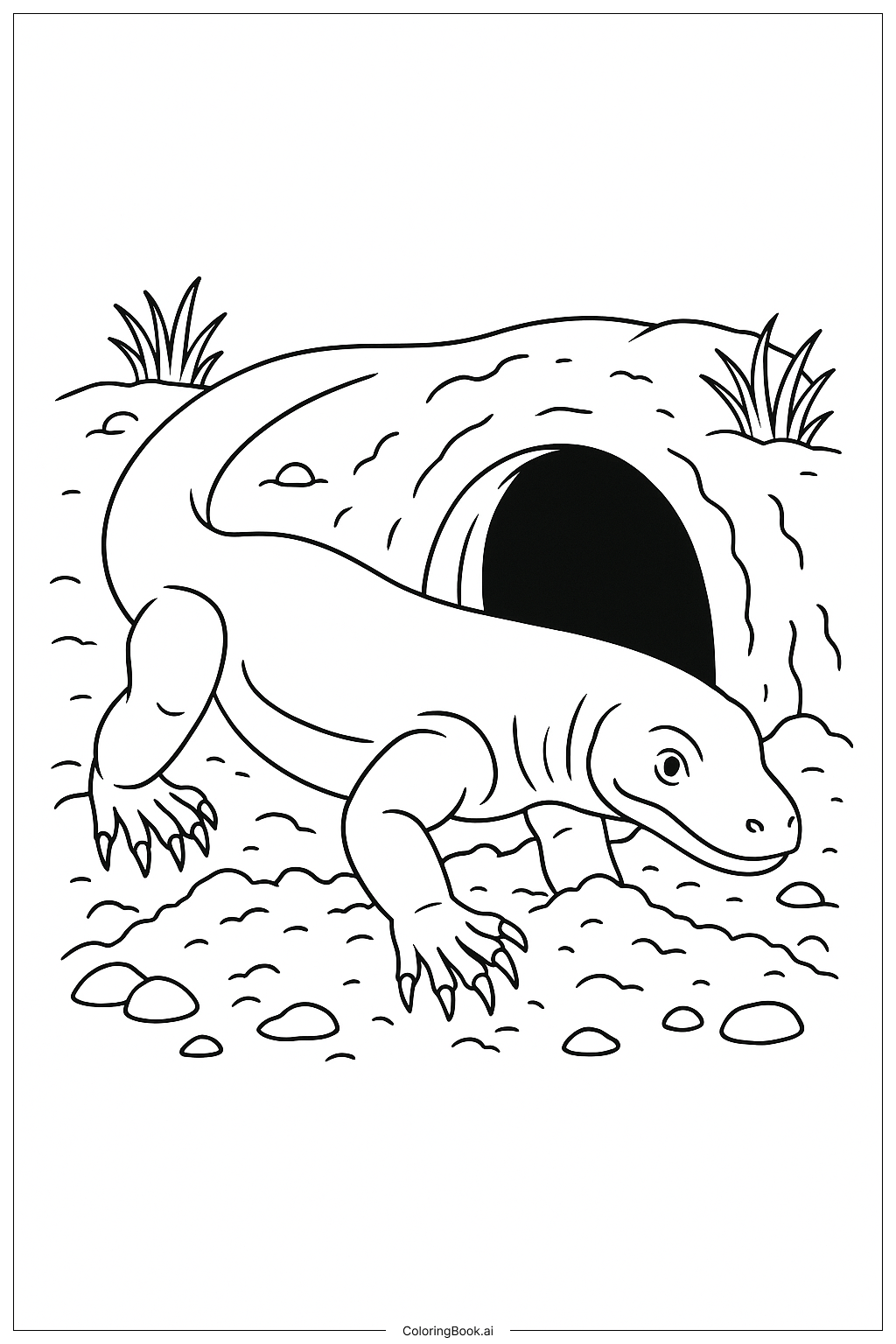
Coloring tips: How to color Komodo Dragon Digging A Burrow coloring page well?
Start with the Komodo dragon's body. Use shades of brown, olive green, and gray for its scaly skin. Add darker tones along the back and lighter tones on the belly to create depth. The claws can be a pale yellow or off-white. Use a dark pink or red for the forked tongue. For the ground and burrow, use earthy tones like tan, dark brown, and reddish-brown to show disturbed soil and dirt. Scattered rocks can be light gray or beige. Color the surrounding grass with shades of green, adding yellow-green for dry or sun-lit patches. Dry leaves can be orange, brown, or golden yellow. Feel free to mix colors to make the scene look natural and lively. There is no single right way — let your creativity guide you!
Coloring challenges: Which parts are difficult to color and need attention for Komodo Dragon Digging A Burrow coloring page?
• Scale Texture on the Body: The Komodo dragon's body is covered in hundreds of small, bumpy scales. Coloring each scale individually takes patience. Try using a base color first, then adding darker shading between the scales to make them stand out. This area requires steady hands and careful attention to detail.
• Shading and Depth on the Skin: The dragon's body is three-dimensional and rounded. To make it look realistic, you need to add lighter colors where light hits and darker colors in the shadowed areas. Blending smoothly between light and dark tones can be tricky, especially for younger colorists.
• The Burrow and Disturbed Soil: The loose dirt, clumps of earth, and scattered rocks around the burrow entrance all need different shades of brown and gray. Keeping these colors varied but still natural-looking can be challenging. Mixing too many similar tones in a small area may make the ground look flat or muddy.
• The Surrounding Environment: The background includes grass, dry leaves, and small pebbles. Each of these elements has its own color and texture. Switching between many small details without making the scene look too busy or cluttered requires planning and color control.
• The Claws and Tongue: These are small but important details. The claws are narrow and close to the ground, making them hard to color neatly. The forked tongue is tiny and requires a precise, steady hand to fill in without going outside the lines.
Benefits of coloring books: Advantages of drawing Komodo Dragon Digging A Burrow coloring page
Coloring this Komodo dragon scene offers a wonderful mix of fun and learning. As you fill in the dragon's scales, claws, and surroundings, you build important skills that help in school and everyday life.
Working on the fine details of the scales and soil helps improve hand-eye coordination and fine motor skills. These are skills children use every day for writing, drawing, and other tasks.
Choosing the right earth tones, greens, and grays for each part of the scene encourages creative thinking and color awareness. Kids learn how colors work together to create something that looks natural and beautiful.
Focusing on a detailed image like this also helps build concentration and patience. Finishing a complex picture gives a strong sense of accomplishment and boosts confidence.
Learning about Komodo dragons while coloring is a bonus. Kids can discover that these amazing reptiles are real animals that dig burrows for shelter and nesting. This connects art with nature and science in a fun way.
For adults, coloring this scene is a calming and meditative activity. It helps reduce stress and quiet a busy mind. The rich textures and natural setting make it a satisfying and rewarding coloring experience for all ages.