Coloring tips: How to color Kitten's first visit to the vet coloring page well?
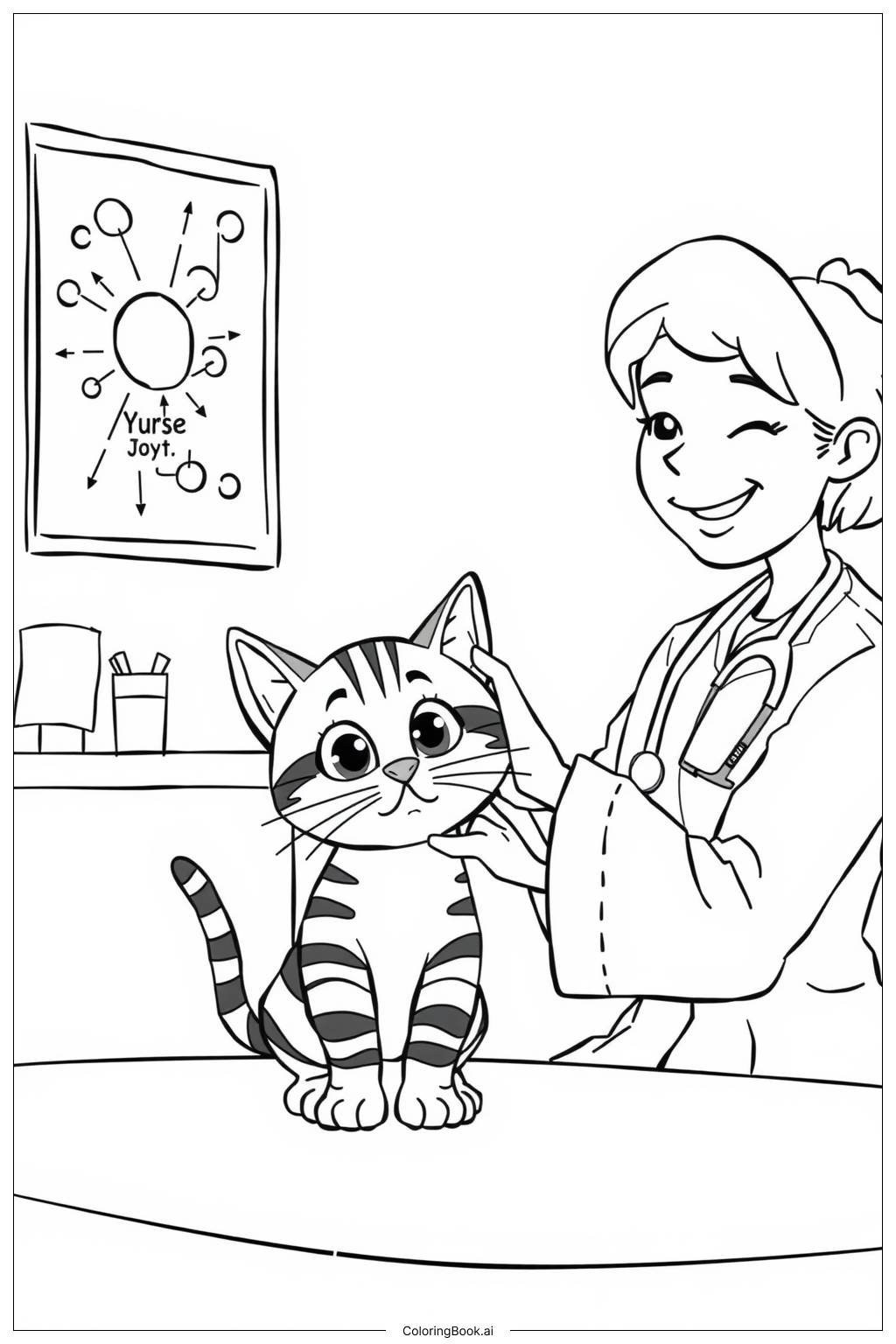
Use soft and warm colors to bring this heartwarming scene to life. The kitten could be colored with shades of light gray, orange, or cream to show its fluffy fur. Bright green or blue eyes can add sparkle. For the vet’s clothes, consider calming colors like light blue or white to represent cleanliness and care. The adults' clothing can have gentle tones like pastel pink, green, or yellow to create a friendly atmosphere. The background elements like the window and shelves can use daylight shades such as sky blue and soft wooden browns. Don’t forget to add little colorful details to the bottles and charts on the wall to make the room inviting and playful. Remember to use gentle blending for the kitten's fur to give it a fluffy look.
Coloring challenges: Which parts are difficult to color and need attention for Kitten's first visit to the vet coloring page?
• Fur texture: Coloring the kitten’s fur requires attention to subtle shading to reflect softness and fluffiness. Using short, light strokes will help to create a realistic fur effect. • Small details: The tiny paws, whiskers, and the kitten’s expressive eyes require precision to keep them clear and delicate. Coloring inside these small areas carefully is necessary. • Background elements: The shelves, bottles, and medical tools have varying shapes and details that can be tricky to color without overlapping or mixing colors. Careful outlining and color choice will help keep these neat. • Light and shadow: Capturing the natural light coming from the window and its effect on the kitten and surrounding people poses a challenge. Shading correctly will add depth and dimension. • People’s expressions: The caring faces and gentle hands holding the kitten need smooth, soft coloring to convey warmth and tenderness without harsh lines.
Benefits of coloring books: Advantages of drawing Kitten's first visit to the vet coloring page
Coloring this image helps children develop their fine motor skills by practicing control in small and detailed areas like the kitten’s paws and facial features. It encourages an understanding of textures, such as how to illustrate fluffy fur with coloring techniques. The scene also promotes empathy and kindness by highlighting a caring moment between people and their pet. Using calm and gentle colors supports emotional relaxation and creativity. Additionally, children can learn about the vet’s role in keeping animals healthy, making the experience both fun and educational. Coloring this image boosts focus and patience while inspiring love for animals.