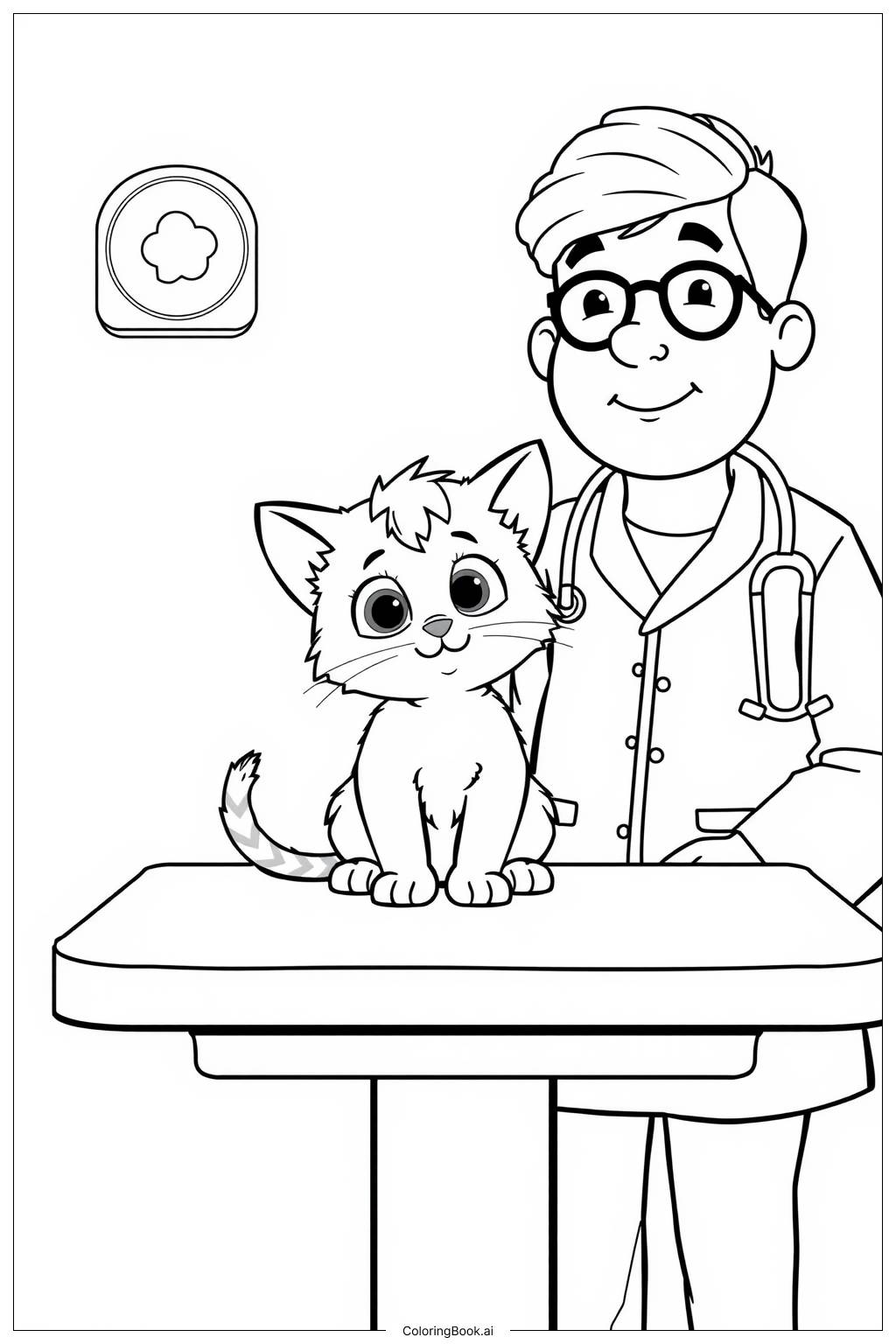
Coloring tips: How to color Kitten's First Visit to the Vet coloring page well?
Start with the kitten's fur. A soft gray, orange tabby, or creamy white works beautifully. Use light pencil strokes to show texture and fluffiness. Add a slightly darker shade along the edges to give the fur depth and dimension.
For the veterinarian, try a clean white coat with light blue or green scrubs underneath. Skin tones can range from warm peach to rich brown — pick what feels natural to you.
The clinic background can use cool, calm colors like pale blue or mint green for the walls. Equipment like the stethoscope looks great in silver or dark gray with a pop of color on the ear tips.
The examination table can be a light beige or pale blue. Keep the overall palette soft and friendly to match the gentle mood of the scene. Have fun adding small details like a pink nose and bright eyes on the kitten to make it truly come alive.
Coloring challenges: Which parts are difficult to color and need attention for Kitten's First Visit to the Vet coloring page?
• Kitten Fur Texture: Capturing the look of soft, fluffy fur is one of the trickiest parts of this page. You need to use short, feathery strokes rather than filling in large areas with flat color. Blending two or three close shades will help show depth and make the fur look realistic rather than flat.
• Small Facial Details: The kitten's face has tiny features — small eyes, a little nose, and delicate whiskers. Coloring these accurately requires a sharp pencil or a fine-tipped marker. Going outside the lines here can easily change the kitten's expression, so take your time and work slowly.
• Medical Equipment: Items like the stethoscope, examination tools, and background clinic objects have small parts and hard edges. These require careful attention when switching between colors to keep each item looking neat and clearly defined.
• Figure Proportions and Clothing: The veterinarian's white coat has folds and layers that need shading to look three-dimensional. Light and shadow on clothing can be challenging for younger colorists, so using a slightly darker version of the base color along the folds is a helpful trick.
• Background Depth: The clinic setting includes multiple background elements. Keeping the background colors lighter than the foreground helps the main characters — the kitten, vet, and owner — stand out clearly. Balancing all these layers without making the image feel crowded takes patience and planning.
Benefits of coloring books: Advantages of drawing Kitten's First Visit to the Vet coloring page
Coloring this sweet scene offers a wonderful mix of fun and learning for children of all ages.
For younger kids, tracing the gentle curves of the kitten and the rounded shapes of the clinic helps build fine motor skills and hand-eye coordination. It also teaches color recognition and encourages creativity as they choose fur colors and background shades.
For older children, this page introduces the concept of careful shading and blending to create texture — skills that carry over into drawing and art projects.
Beyond the art side, this image also opens the door for conversations about caring for animals, visiting the vet, and the importance of keeping pets healthy. It can help children who feel nervous about their own doctor visits see that checkups can be friendly and safe.
Spending quiet time coloring is also a great way to reduce stress and improve focus. The detailed scene encourages patience as kids work through each section thoughtfully.
Most of all, it is simply an enjoyable and heartwarming activity. Bringing a tiny kitten and its caring vet to life with color is a rewarding experience that leaves kids feeling proud of what they have created.