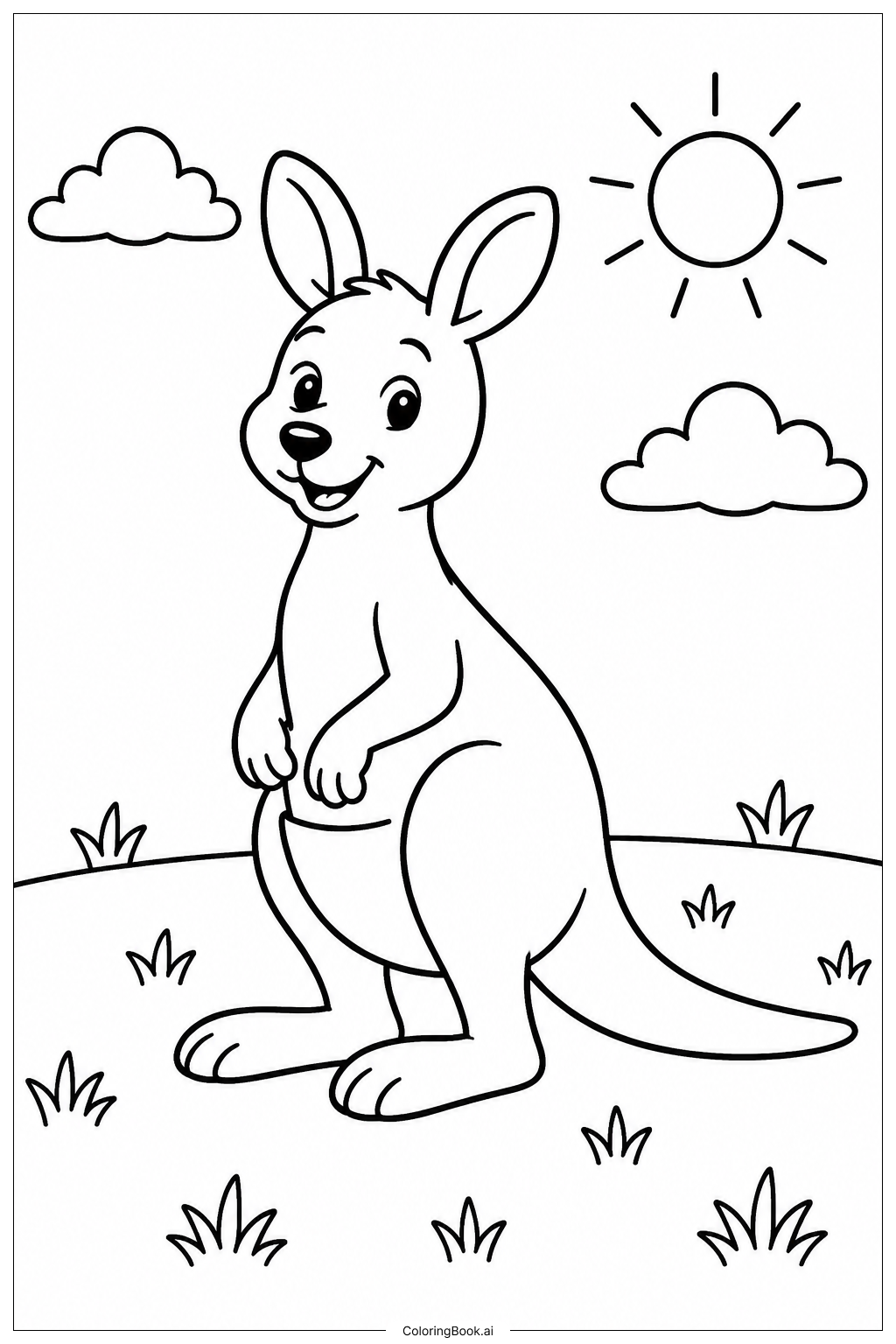
Coloring tips: How to color Kangaroo In Meadow coloring page well?
For this picture, try using warm brown and golden tones to color the kangaroo’s fur. You can add lighter cream or beige on its belly to create a realistic look. The meadow is a great place to use many shades of green, from fresh spring green to deeper forest tones. You might also add bits of yellow, purple, or pink to the wildflowers for a colorful touch. The sky can be colored soft blue with white clouds, or you could try a sunset with orange and pink hues. Don’t forget to blend colors smoothly to show the natural textures of fur, grass, and sky.
Coloring challenges: Which parts are difficult to color and need attention for Kangaroo In Meadow coloring page?
- The kangaroo’s fur has many small details that need careful coloring to show texture and depth, which can be tricky for younger artists.
- The long tail and legs require even coloring, as uneven strokes might stand out against the simpler meadow background.
- Coloring the grass realistically means mixing several green tones without making it look messy or too uniform.
- Adding flowers with small petals needs patience and precision to keep lines inside the shapes.
- The sky’s gradual color changes, like a blue gradient or sunset tones, can be difficult to blend smoothly without harsh lines.
Benefits of coloring books: Advantages of drawing Kangaroo In Meadow coloring page
Coloring this kangaroo in a meadow helps improve fine motor skills by practicing small, detailed strokes on the fur and flowers. It encourages focus and patience as kids work carefully on different textures like grass and sky. Choosing colors enhances creativity and decision-making while learning about natural colors found in wildlife and landscapes. This image also sparks interest in animals and nature, promoting observational skills and curiosity about the outdoors. Overall, it’s a relaxing and educational activity that builds confidence and artistic ability.