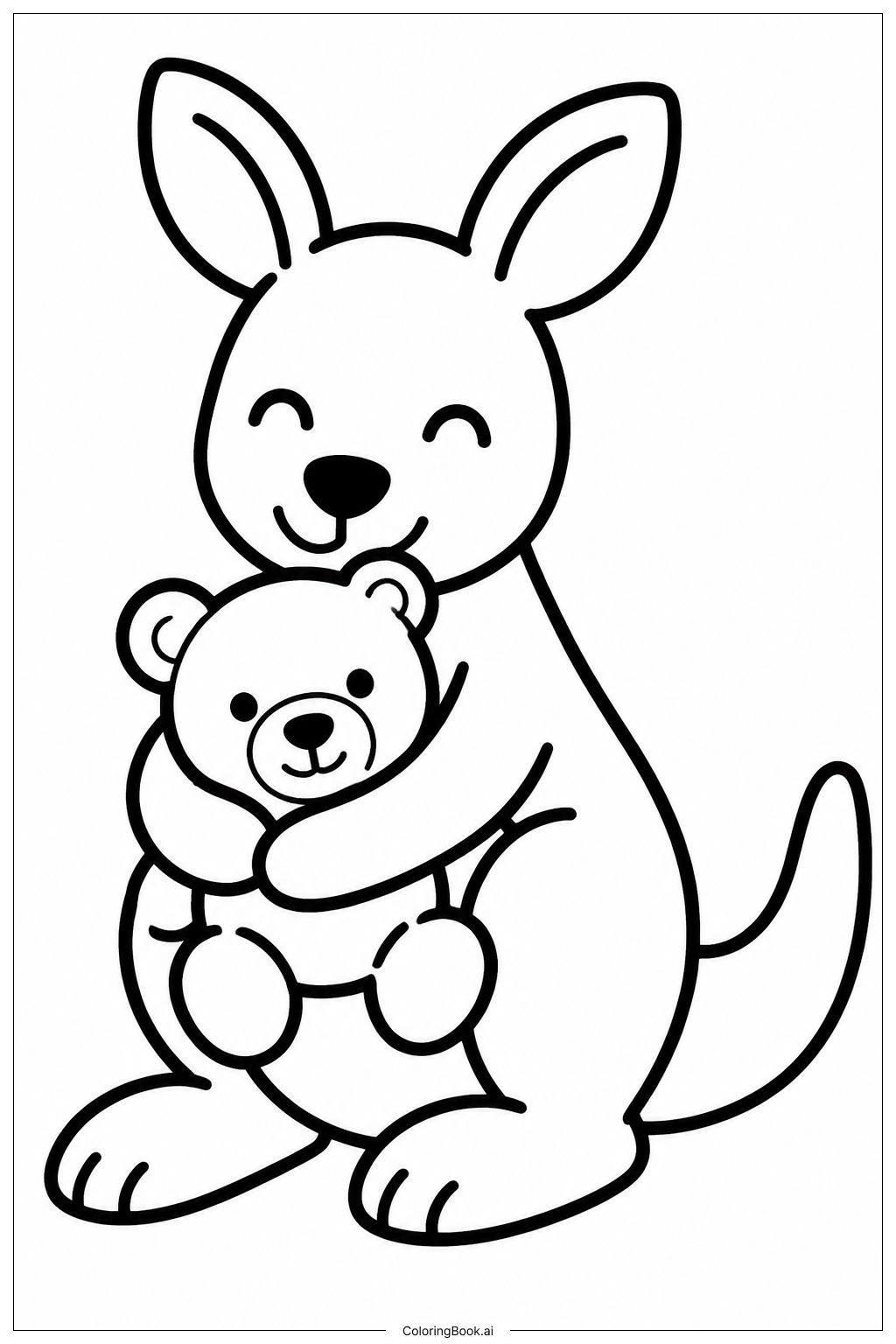
Coloring tips: How to color Kangaroo Hugging Toy coloring page well?
You can color the Kangaroo with warm, natural shades like light brown or soft tan for its fur. Try using a cream or soft beige for the tummy and inside of the ears to make it look realistic. For the plush toy, feel free to be creative with bright colors like blue, pink, or green to make it stand out as a special treasure. Adding soft shading with darker browns can help show the Kangaroo’s contours. Don’t forget to color the eyes and nose in black or dark brown to bring the face to life. You can also add a colorful background like grass or flowers to make the whole picture cheerful and complete.
Coloring challenges: Which parts are difficult to color and need attention for Kangaroo Hugging Toy coloring page?
• Fine Details: The Kangaroo’s face has small but important features such as eyes, nose, and whiskers that require careful coloring to avoid going outside the lines.
• Different Textures: Coloring the Kangaroo’s fur in a soft, smooth way while making the plush toy look fluffy may be tricky because each texture needs a different shading technique.
• Overlapping Objects: With the Kangaroo hugging the toy, you need to carefully color around where the arms and toy overlap to keep the shapes clear.
• Tail and Feet: The tail is long and wraps around, and the feet have small toes, which can be challenging to color neatly.
• Balancing Colors: Choosing colors for both the Kangaroo and the toy that look good together without clashing can take some thought and experimentation.
Benefits of coloring books: Advantages of drawing Kangaroo Hugging Toy coloring page
Coloring this image helps children develop their fine motor skills by practicing careful coloring inside small spaces and around overlapping parts. It encourages creativity when deciding colors for both the Kangaroo and its plush toy, promoting color recognition and combination skills. The peaceful, loving scene also inspires emotional expression as kids connect with the gentle mood of the image. Additionally, focusing on different textures enhances attention to detail, making this a rewarding and educational activity that supports concentration and patience.