Coloring tips: How to color Jurassic Park Triceratops Family coloring page well?
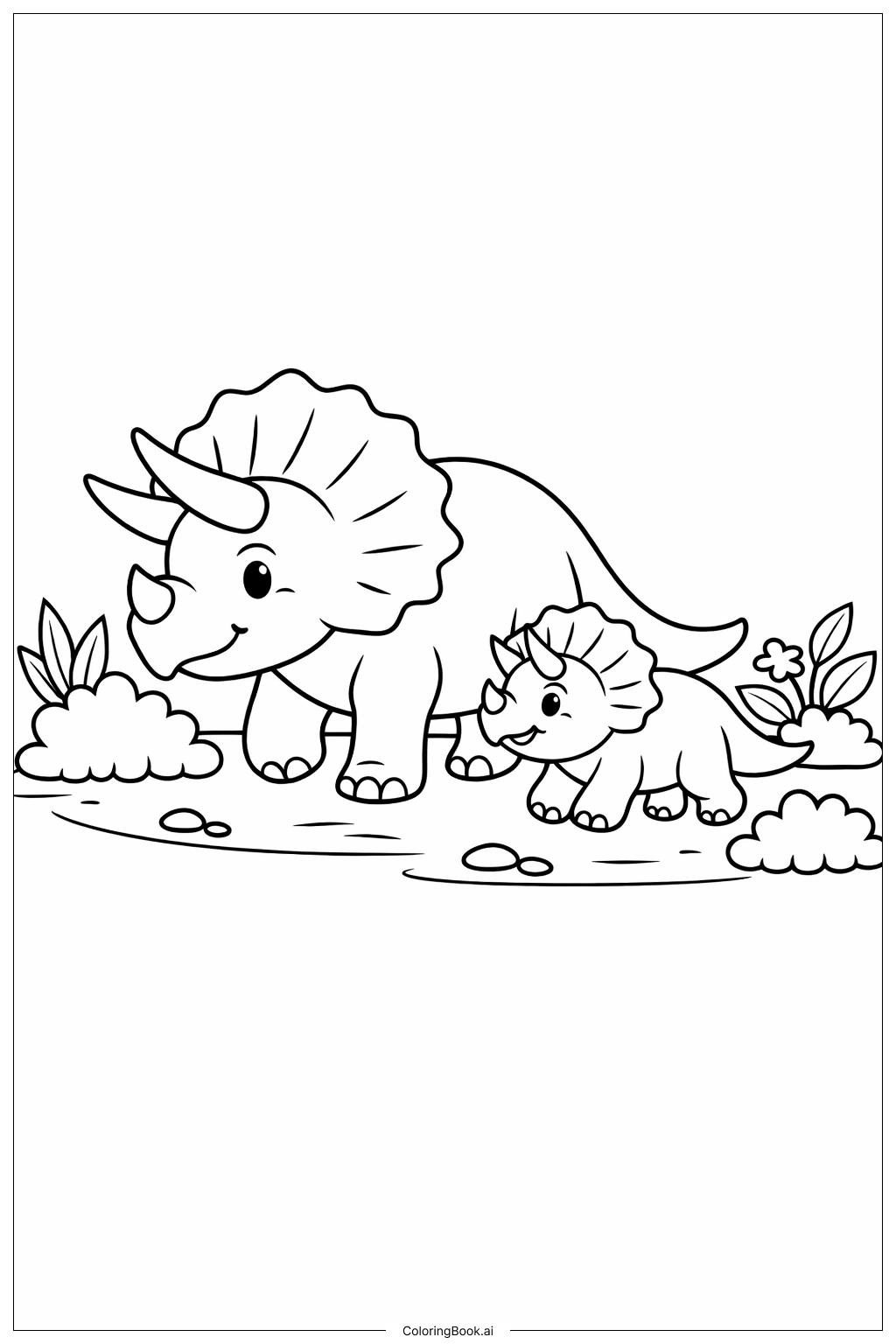
When coloring this picture, try using earthy tones like different shades of green, brown, and gray for the dinosaurs' bodies. You can use lighter shades for the baby dinosaur to show its youth. For the horns and frills, consider using slightly darker or contrasting colors to make them stand out. The plants and bushes can be bright green and add a splash of color with flowers in yellow, red, or orange. Don’t forget to color the ground in soft brown or beige shades to complete the natural look.
Coloring challenges: Which parts are difficult to color and need attention for Jurassic Park Triceratops Family coloring page?
1. Small Areas: The little details on the horns and the toes may be hard to color neatly.
2. Frill Texture: The frill around the neck has lines that can be tricky to shade evenly.
3. Overlapping Shapes: The baby dinosaur partly overlaps the parent, which requires careful coloring to keep the edges clean.
4. Plant Details: The small leaves and flowers have fine lines that need attention.
5. Smooth Coloring: Coloring the large dinosaur bodies smoothly without streaks can be challenging for beginners.
Benefits of coloring books: Advantages of drawing Jurassic Park Triceratops Family coloring page
Coloring this picture helps improve hand-eye coordination as children focus on staying inside lines and handling small spaces. It encourages creativity by allowing them to choose colors and imagine how dinosaurs might look. Working on this coloring page can also improve patience and concentration, especially when dealing with detailed parts like horns and plants. Finally, it provides a fun way to learn about dinosaurs and nature while practicing fine motor skills.