Coloring tips: How to color Jurassic Park Jungle Path coloring page well?
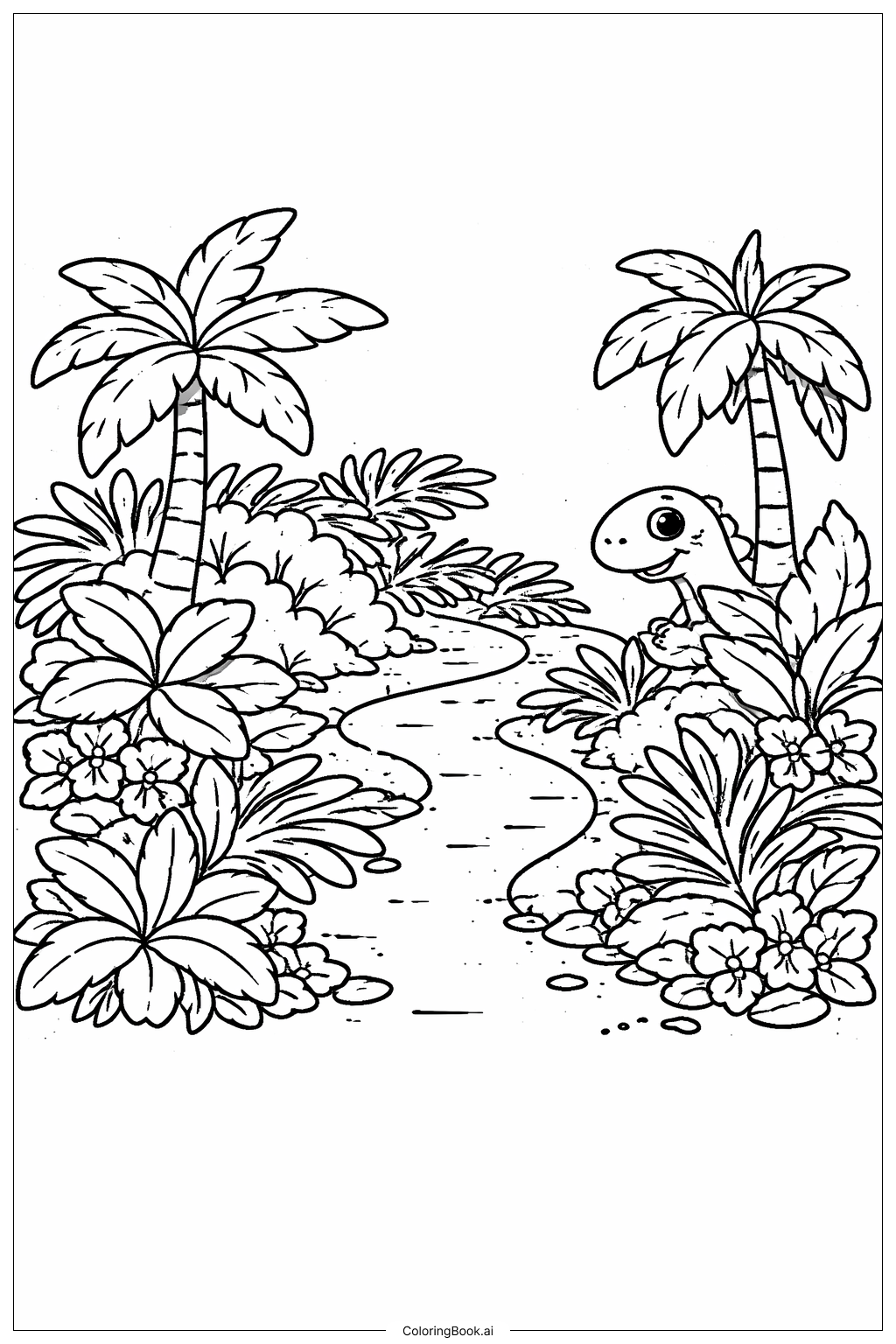
For this image, try using several shades of green for the different plants and trees to show depth and variety in the jungle. Use darker greens for the shaded areas under the tree canopy and lighter greens or yellow-greens for leaves that catch more sunlight. The path can be a mix of browns and grays to represent dirt, stones, and roots. Adding some touches of earthy colors like reddish-brown and burnt orange will give the jungle floor a natural look. To make the scene more lively, you can color the vines a slightly different green or even add some tiny bright flowers in pink or yellow among the bushes. Keep colors soft and natural to capture the lush, wild feel of Jurassic Park Jungle Path.
Coloring challenges: Which parts are difficult to color and need attention for Jurassic Park Jungle Path coloring page?
• Fine Details: The dense layers of leaves, vines, and small plants require careful coloring to keep them distinct and avoid blending all the elements together. Patience is needed to color each part clearly.
• Depth and Shadows: Showing the depth of the jungle means using a range of colors for light and shadow. Deciding where the light hits and where it’s darker under the canopy can be tricky but important.
• Textures: The rough tree bark, smooth leaves, and rocky path each have different textures. Using different strokes or color intensity helps capture these, but it requires attention to detail.
• Uneven Path: The winding path with roots and stones means coloring irregular shapes and small spaces accurately, which can be harder for younger colorists.
• Overlapping Plants: Many plants overlap, making it important to color the front leaves brighter and the background foliage darker to keep a clear visual separation.
Benefits of coloring books: Advantages of drawing Jurassic Park Jungle Path coloring page
Coloring this Jurassic Park Jungle Path image can help develop fine motor skills because it involves careful handling of small and detailed areas. It encourages focus and patience as the user works through the layers of plants and textures. The image also stimulates creativity by allowing the person to experiment with different shades of green and earthy colors for a realistic jungle feel. This activity can improve understanding of light and shadow in picture composition, helping young artists learn how colors affect depth and mood. Overall, coloring this scene is a fun way to engage with nature themes and inspire imagination about prehistoric adventures.